
- BGG-Rang
- BGG #3.751
- BGG-Bewertung
- 6,6
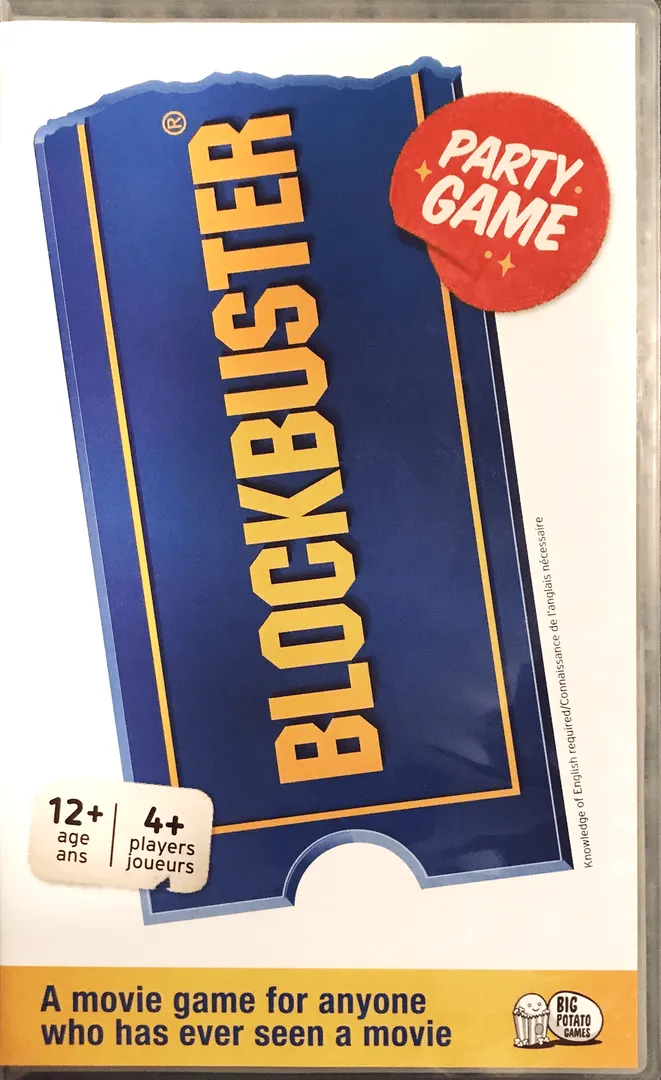
Blockbuster
- 4–10 Spieler
- 30–60 Min.
- Komplexität 1,1/5
- 2019
2006
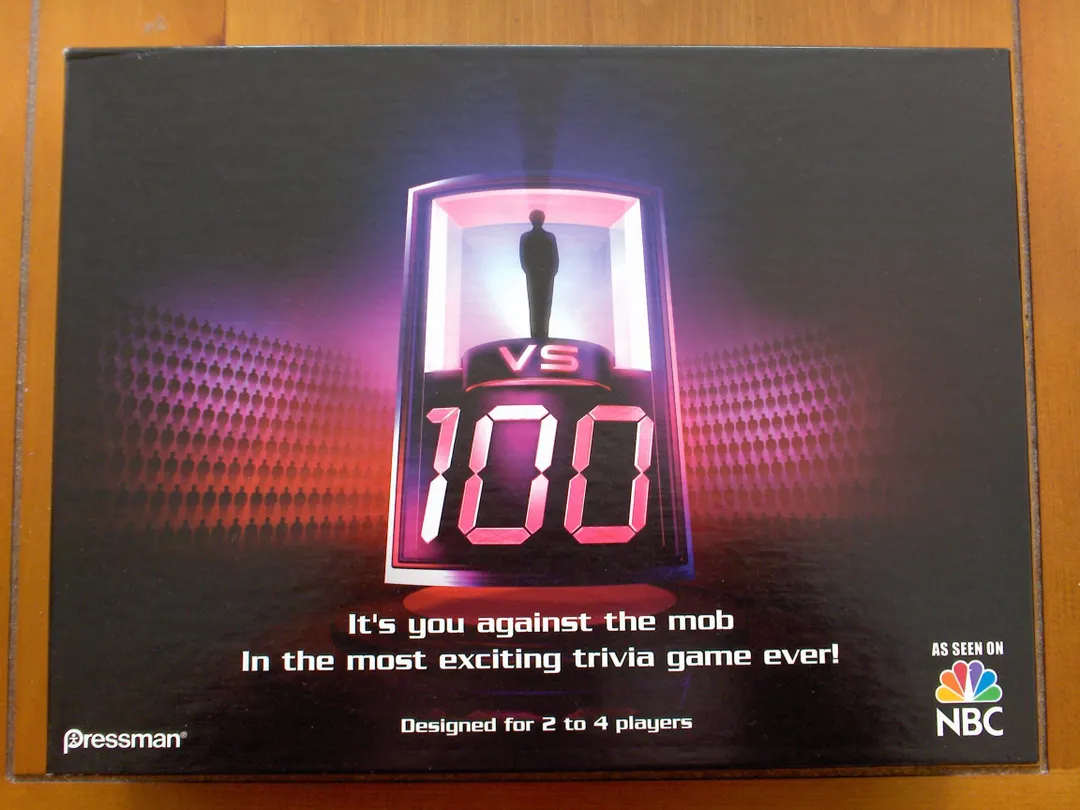
Regelhilfe für 1 vs. 100 Board Game
Verständliche Erklärungen zu Spielzügen, Karteneffekten und strittigen Situationen mit Verweisen auf offizielle Quellen und gespeichertem Fragenverlauf.
Für 2 Personen
Was möchtest du wissen?
Antworten stammen aus dem offiziellen Regelheft, mit Seitenangabe zum Nachprüfen.
1 vs. 100 Board Game ist ein Brettspiel aus dem Jahr 2006 für 2–4 Personen und ab 12 Jahren.



Auf Englisch
From the box: It's you against the mob in the most exciting trivia game ever. Contents: 275 question cards (825 questions), card holder, wipe-off mob board with stand, 51 mob tokens, 4 cardboard shields, 5 answer photos, 3 answer cards, wipe-off money board, score pad, wipe-off pen, and instructions Gameplay: One player is the contestant. The other player(s) become the mob. The mob divides one hundred mob tokens as evenly as possible. One mob player, acting as host, reads a question and its three possible answers aloud. The mob players use their tokens to secretly choose one or more answers. When the mob players have finished distributing all of their tokens, the contestant may ask for one of three helps before giving a response to the question. The helps one response of the contestant’s choosing), Trust the Mob (the contestant is forced to choose whichever response has the most tokens on it) or Ask the Mob (this eliminates one wrong response). The contestant can use each help only once. If the contestant gives the correct response, the money is added to the bank equal to the level the player is on multiplied by the number of tokens the mob has put on the wrong responses. The levels start at $1000 and ascend to $10,000. The mob tokens that are on the incorrect responses are out of play. The game is over when the contestant gives an incorrect response. This means the money in the bank is divided among the mob players who still have tokens. The contestant wins $1,000,000 when the mob loses all its tokens. The contestant can quit the game before ascending to the next level and keep whatever money has been accumulated in the bank. Players continue the game until each player has been the contestant. A running total of the scores of each game is kept. The player with the highest score is the winner. Considering that the television series uses 101 contestants, this is reasonable faithful translation of the television series. Intended for 2 - 4 players Ages 12 and up
Laut Katalog unterstützt 1 vs. 100 Board Game 2–4 Personen. Diese Spanne entspricht der vom Verlag angegebenen Spielerzahl, das Spiel lässt sich also für jede Gruppengröße innerhalb dieser Spanne aufbauen. Aufbau, einzelne Regeln und Wertungsdetails können je nach Personenzahl trotzdem abweichen; prüfe daher die genaue Konfiguration in der Anleitung deiner Ausgabe.
Im Katalog wird 1 vs. 100 Board Game ab 12 Jahren empfohlen. Das ist die Empfehlung des Verlags und berücksichtigt Leseanforderungen, Regelkomplexität und Kleinteile, nicht nur das Thema. Jüngere Kinder können oft mit Hilfe eines Erwachsenen mitspielen; beachte die Altersangabe deiner Ausgabe und die Brettspielerfahrung deiner Gruppe.
1 vs. 100 Board Game hat bei BoardGameGeek eine Komplexitätswertung von 2,0 von 5 und gilt damit als eher leichtes Spiel. Die Wertung zeigt, wie viel Regelwissen, Planung und Entscheidungen eine typische Partie verlangt. Schwerere Spiele brauchen bei der ersten Erklärung mehr Zeit, daher hilft vor dem Spieleabend eine Vorbereitungsanleitung.
1 vs. 100 Board Game gehört zu diesen Kategorien: Movies / TV / Radio theme, Abstract Strategy und Trivia. Kategorien beschreiben Thema, Setting und Stil eines Spiels, nicht seine Regeln. Filtere den Katalog nach derselben Kategorie, um ähnliche Spiele zu finden, wenn dir 1 vs. 100 Board Game gefallen hat und du etwas Vergleichbares für den nächsten Spieleabend suchst.
Im Katalog ist 1 vs. 100 Board Game als Grundspiel aufgeführt. Es lässt sich eigenständig mit dem Material aus der Schachtel spielen und benötigt keinen weiteren Titel. Erweiterungen, sofern es welche gibt, ergänzen neues Material oder neue Regeln und sind im Katalog separat mit einem Verweis auf dieses Grundspiel aufgeführt.