
- BGG-Rang
- BGG #8.883
- BGG-Bewertung
- 7,8
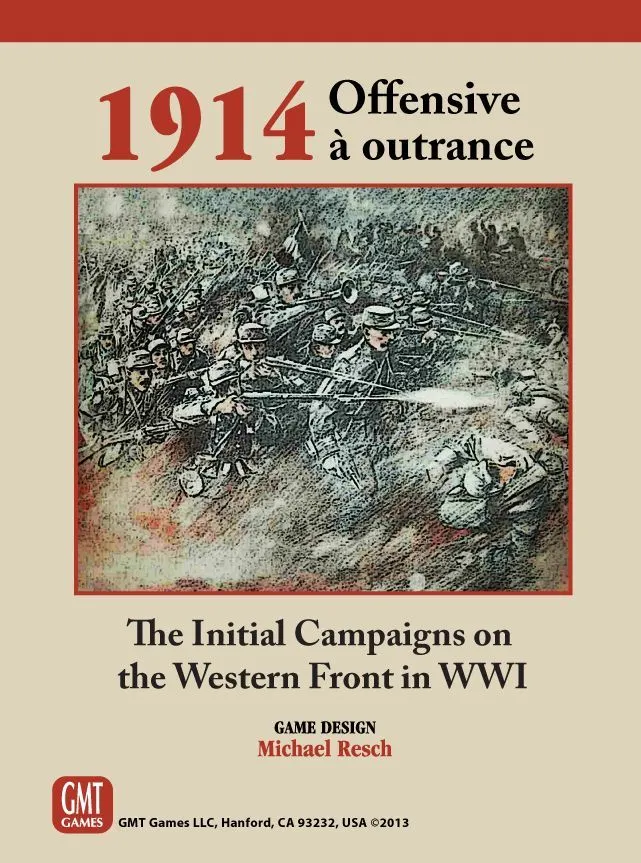
1914: Offensive à outrance
- 1–4 Spieler
- Komplexität 4,0/5
- 2013
Regelhilfe für 1914: Dispatches – Twilight in the East
Verständliche Erklärungen zu Spielzügen, Karteneffekten und strittigen Situationen mit Verweisen auf offizielle Quellen und gespeichertem Fragenverlauf.
Was möchtest du wissen?
Antworten stammen aus dem offiziellen Regelheft, mit Seitenangabe zum Nachprüfen.
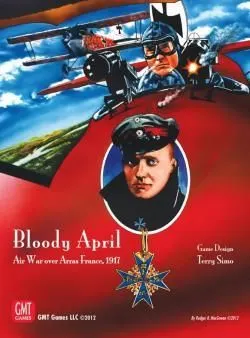
1914: Dispatches – Twilight in the East ist eine Erweiterung für 1914: Twilight in the East aus dem Jahr 2012 für 2–6 Personen. Entwickelt wurde es von Michael Resch; die wichtigsten Mechaniken sind Dice Rolling, Hexagon Grid und Simulation.






Auf Englisch
1914: Dispatches is the first issue of Oregon ConSim Journal (a Charles S Roberts Award winning magazine), is a support magazine that focuses on the Eastern Front during 1914 by expanding on the CSR Award winning WWI simulation game 1914: Twilight in the East (TitE). During the design of 1914 TitE a great deal of research material was accumulated that was not incorporated due to space (and time) limitations. The Journal allows some of this material to be brought to light, more thoroughly covering the fascinating 1914 time period. The centerpiece of the publication is a collection of three well-researched historical articles that are paired with new scenarios allowing the subject to be accurately simulated. The time period October–November 1914 contained two distinct campaigns that culminated in very large battles fought in Russian Poland: The Battle of Ivangorod and Battles of Lodz and Krakau. These battles are the topics chosen for two of the scenarios found in the journal. The first, “The Battle of Ivangorod,” is a small introductory scenario that covers the time period 22–26 October when the Austro-Hungarian First Army unsuccessfully fought to clear the Russians from their Vistula River bridgeheads at Ivangorod and Kozienice. Following the Battle of Ivangorod, in early November the German high command acted to regain the operational initiative and protect Germany from the ravages of invasion. Using their excellent railroad network to transfer large bodies of troops, they launched an offensive to penetrate deep into the main Russian forces’ flank and rear. The epic operation is the subject of the Journal’s second scenario, “The Battles of Lodz and Krakau.” This expert scenario, intended for veteran players, is huge, requiring all five maps and almost the entire counter mix. A well known military axiom states: mistakes made in the deployment of troops at the start of operations cannot be righted in the course of the whole campaign. At the outset of WWI this was true for all fronts but nowhere was it more pertinent than on the Eastern Front. The Journal’s third article, “Austria-Hungary’s Botched Deployment in 1914” concentrates on that nation’s botched initial strategic deployment. The game strategy article Playing Both Sides in Galicia details successful opening moves on the Galician front. Based on years of gameplay experience by the designer, the article presents a corps-by-corps breakdown of Austro-Hungarian and Russian armies and offers tested solutions for the challenges they face. Rounding out the contents are two enhanced, professionally-produced Player Aid Cards designed to speed combat resolution in 1914, Twilight in the East. Journal Contents (64 pages): The Austro-Hungarian Army and National Identity 1867–1914 Austria-Hungary’s Botched Deployment in 1914 associated scenario: The Austro-Hungarian Deployment Plan as of Winter 1913/14 (18 counters to be mounted - see expansion counters) Playing Both Sides in Galicia — Galicia Campaign Strategies Prelude to Ivangorod associated scenario: The Battle of Ivangorod (introductory scenario GT 28-29) The Lodz Campaign: Defeating the Russian Steamroller associated scenario: The Battles of Lodz & Krakau (complete scenario GT 36-47) The Polish Legion in 1914 Revised Victory Conditions for the Grand Campaign scenario Also included: Two replacement Player Aid Cards for 1914, Twilight in the East See preview pages. (Source: publisher and BGG user)
Laut Katalog unterstützt 1914: Dispatches – Twilight in the East 2–6 Personen. Diese Spanne entspricht der vom Verlag angegebenen Spielerzahl, das Spiel lässt sich also für jede Gruppengröße innerhalb dieser Spanne aufbauen. Aufbau, einzelne Regeln und Wertungsdetails können je nach Personenzahl trotzdem abweichen; prüfe daher die genaue Konfiguration in der Anleitung deiner Ausgabe.
1914: Dispatches – Twilight in the East hat bei BoardGameGeek eine Komplexitätswertung von 3,0 von 5 und gilt damit als mittelschweres Spiel. Die Wertung zeigt, wie viel Regelwissen, Planung und Entscheidungen eine typische Partie verlangt. Schwerere Spiele brauchen bei der ersten Erklärung mehr Zeit, daher hilft vor dem Spieleabend eine Vorbereitungsanleitung.
1914: Dispatches – Twilight in the East gehört zu diesen Kategorien: Wargame, Expansion for Base-game und World War I. Die wichtigsten Mechaniken sind Dice Rolling, Hexagon Grid und Simulation. Kategorien beschreiben Thema und Setting eines Spiels, Mechaniken dagegen, was die Spielenden in ihrem Zug tatsächlich tun. Jede Mechanik führt zu einer Katalogseite mit ähnlichen Spielen, falls du etwas Vergleichbares suchst.
Als Autoren von 1914: Dispatches – Twilight in the East sind angegeben: Michael Resch. Diese Angaben stammen aus den veröffentlichten Spieldaten und nennen die für das Spieldesign verantwortlichen Personen, nicht die Illustratoren oder Verlage. Die Autorenseiten auf MeepleRules sammeln weitere Titel derselben Autoren – praktisch, wenn dir ein Spiel gefällt und du ähnliche Spiele suchst.
Im Katalog ist 1914: Dispatches – Twilight in the East als Erweiterung zu 1914: Twilight in the East aufgeführt. Erweiterungen ergänzen das Grundspiel um neues Material, neue Regeln oder Szenarien und sind meist nicht eigenständig spielbar; du brauchst also 1914: Twilight in the East, um sie zu nutzen. Prüfe, ob deine Ausgabe von 1914: Twilight in the East kompatibel ist, da manche Erweiterungen zwischen den Auflagen überarbeitet wurden.