
- BGG-Rang
- BGG #8.129
- BGG-Bewertung
- 7,3
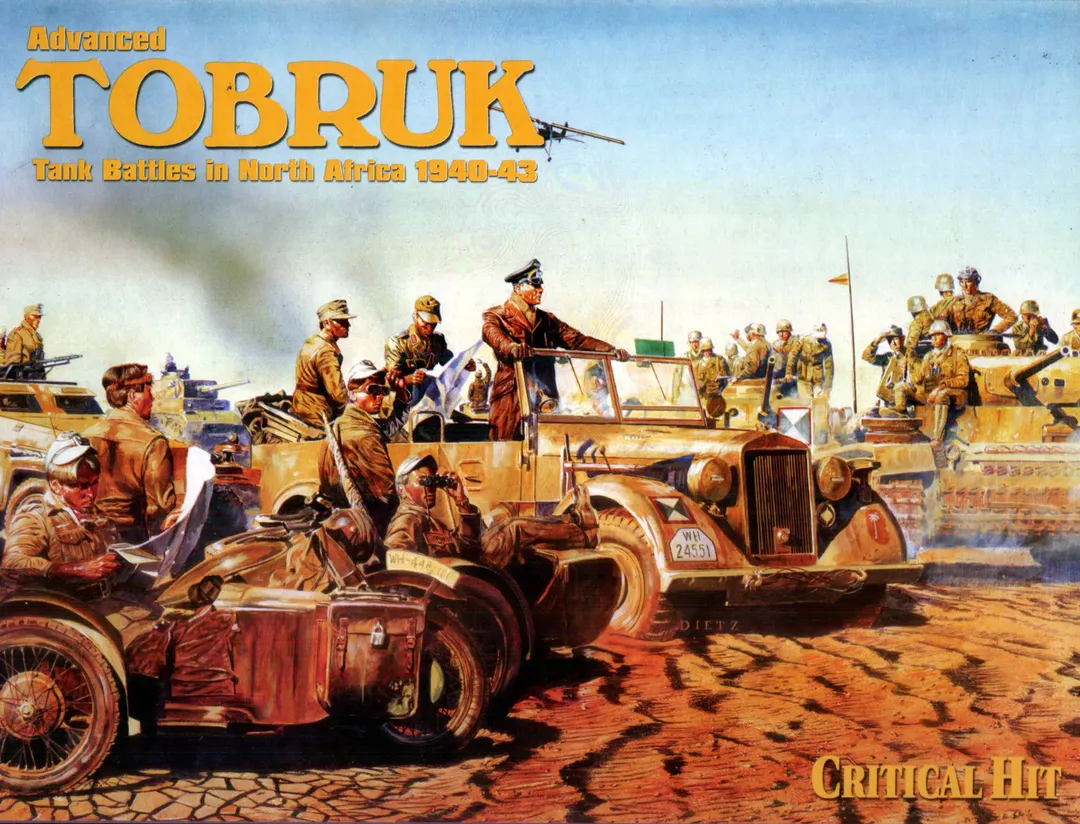
Advanced Tobruk: Tank Battles in North Africa 1940-43
- 2 Spieler
- 180 Min.
- Komplexität 4,1/5
- 2002
2012
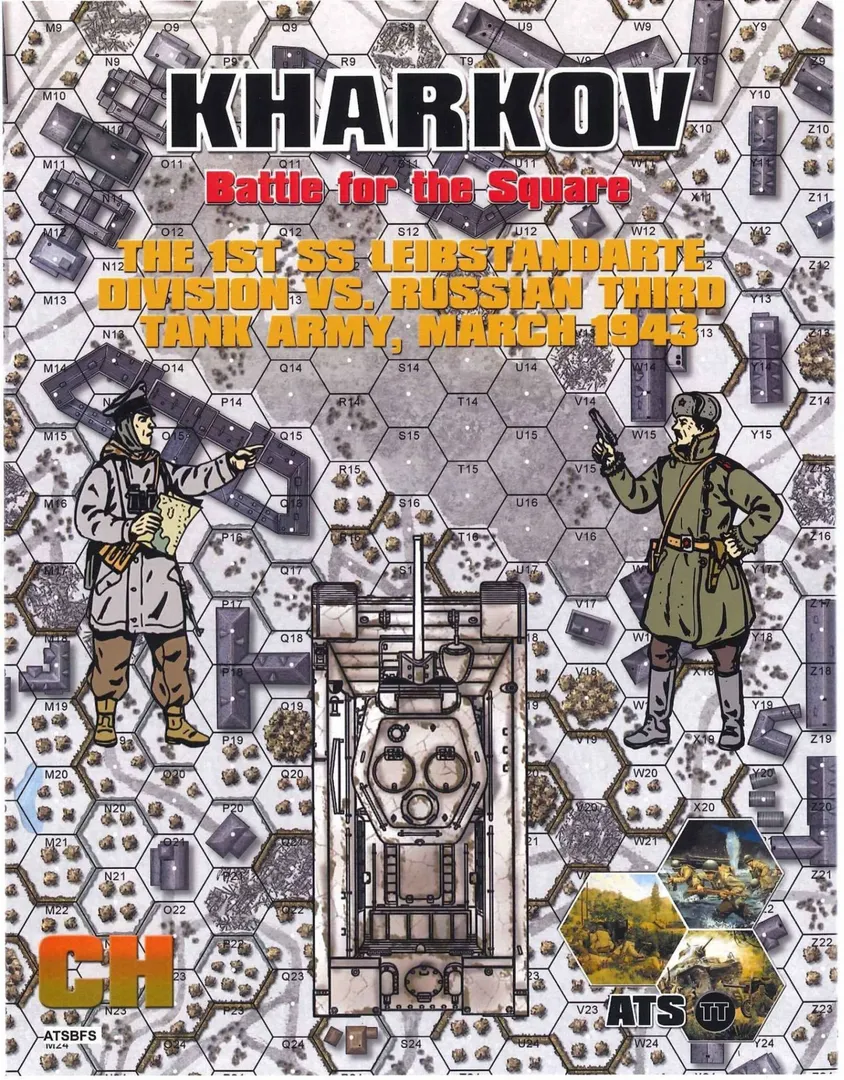
Regelhilfe für ATS TT: Kharkov – Battle for the Square
Verständliche Erklärungen zu Spielzügen, Karteneffekten und strittigen Situationen mit Verweisen auf offizielle Quellen und gespeichertem Fragenverlauf.
Was möchtest du wissen?
Antworten stammen aus dem offiziellen Regelheft, mit Seitenangabe zum Nachprüfen.
ATS TT: Kharkov – Battle for the Square ist eine Brettspiel-Erweiterung aus dem Jahr 2012 für 2 Personen, mit 240 Minuten pro Partie und ab 12 Jahren. Entwickelt wurde es von Ray Tapio und Larry Winslow; die wichtigsten Mechaniken sind Hexagon Grid.



Auf Englisch
KHARKOV, UKRAINE, 10 March 1943: The SS Forces under Obersturmbannführer Kurt 'Panzer' Meyer led his recon unit to drive through the Russians and form a blocking position in the southeast section of the surrounded city, around the cemetery. Meyer's men passed through the city center and held a blocking position despite being surrounded for two days, armed with the new MG 42 belt fed machine guns aided greatly in their defense, until contact was reestablished by a sister battalion commanded by Major Peiper. Lt. General Rybalko's forces in the city were composed of a Tank Brigade and NKVD security troops of his Third Tank Army. General Rybalko ordered his units to block the German units from moving through the city, establishing defense lines along the small river meandering through Kharkov. The local militias were called up to aid in the defense of the city and many were thrown piece meal against the SS units armed with new "wonder" weapons. Those new weapons included the MG 42, whose rate of fire almost doubled over the previous MG 34, from 600-800 rpm to 1100 to 1200 rpm. The German forces would begin to have a new type of problem, an inability to maintain a high enough level of supply of ammunition to take advantage of the high rate of fire of the MG42. Many soldiers interviewed after the battle were quoted to say that the rate of fire was so high it was impossible to discern acoustically the individual shells firing. Many cited that the machine guns sounded like the tearing of canvas. On 12 March, the LSSAH made progress into the center of the city of Kharkov, breaking through hardened enemy defenses in the northern suburbs. What followed was a house-to-house bloodbath as the Germans pressed ever closer to city center. By the end of the day, the division had reached a position just two blocks north of Dzerzhinsky Square. The 2nd Panzergrenadier Regiment's 2nd Battalion was able to surround the square, after taking heavy casualties from Soviet snipers and other defenders, by evening. When taken, the square was renamed Platz der Leibstandarte. That night, 2nd Panzergrenadier Regiment's 3rd Battalion, under the command of Joachim Peiper, linked up with the 2nd Battalion in Dzerzhinsky Square and attacked southwards, crossing the Kharkov River and creating a bridgehead, opening the road to Moscow Avenue. Meanwhile, the division's left wing reached the junction of the Volchansk and Chuhuiv exit roads and went on the defensive, fighting off a number of enemy counter-attacks. In the aftermath of the debacle at Stalingrad it almost defies belief that German soldiers, in this some of the last elite units available on the Eastern Front ... would plunge into the heart of a massive urban center and initiate house-to-house combat. But that's exactly what took place in Kharkov during the winter of 1943 and the results were a victory ... of sorts. The decline of German fortunes in the East were halted and the desire of Hitler to launch another offensive, to eliminate the Kursk Salient, was whetted. The battle also pointed some historians toward an answer to the 'what if' ... as in what if Hitler had assigned Waffen SS units to attack Stalingrad. KHARKOV: BATTLE FOR THE SQUARE places you in the heart of an urban battlefield with nothing to fight with but elite units on both sides. The counter collection is impressive: ALL THE COMBAT COUNTERS NEEDED TO PLAY ALL OF THE SCENARIOS ... in ALL NEW presentations ... Germans AND Russians in Winter 1943 uniforms. And all AFV counters are 'winterized' ... aka 'whitewashed' ... to be more evocative than ever. What's more, the battlefield map is also done up in winter colors! Players take the side of Either the German or Russian troops fighting in the City of Kharkov. They fight historical battles/scenarios and try to win by fulfilling a set of victtory conditions
Laut Katalog unterstützt ATS TT: Kharkov – Battle for the Square 2 Personen. Das ist die vom Verlag angegebene Spielerzahl, das Spiel ist also genau für diese Anzahl von Mitspielenden ausgelegt. Varianten für andere Gruppengrößen sind, sofern vorhanden, in der Anleitung deiner Ausgabe beschrieben; prüfe sie, bevor du eine andere Konfiguration aufbaust.
Die angegebene Spieldauer für ATS TT: Kharkov – Battle for the Square beträgt 240 Minuten. Das ist die Schätzung des Verlags für eine vollständige Partie. Die tatsächliche Dauer hängt von der Gruppe, der Personenzahl und der Regelkenntnis ab: Erste Partien dauern meist länger, erfahrene Gruppen sind oft schneller fertig. Aufbau und Regelerklärung sind in dieser Schätzung nicht enthalten.
Im Katalog wird ATS TT: Kharkov – Battle for the Square ab 12 Jahren empfohlen. Das ist die Empfehlung des Verlags und berücksichtigt Leseanforderungen, Regelkomplexität und Kleinteile, nicht nur das Thema. Jüngere Kinder können oft mit Hilfe eines Erwachsenen mitspielen; beachte die Altersangabe deiner Ausgabe und die Brettspielerfahrung deiner Gruppe.
ATS TT: Kharkov – Battle for the Square hat bei BoardGameGeek eine Komplexitätswertung von 4,0 von 5 und gilt damit als schweres Spiel. Die Wertung zeigt, wie viel Regelwissen, Planung und Entscheidungen eine typische Partie verlangt. Schwerere Spiele brauchen bei der ersten Erklärung mehr Zeit, daher hilft vor dem Spieleabend eine Vorbereitungsanleitung.
ATS TT: Kharkov – Battle for the Square gehört zu diesen Kategorien: World War II und Expansion for Base-game. Die wichtigsten Mechaniken sind Hexagon Grid. Kategorien beschreiben Thema und Setting eines Spiels, Mechaniken dagegen, was die Spielenden in ihrem Zug tatsächlich tun. Jede Mechanik führt zu einer Katalogseite mit ähnlichen Spielen, falls du etwas Vergleichbares suchst.
Als Autoren von ATS TT: Kharkov – Battle for the Square sind angegeben: Ray Tapio und Larry Winslow. Diese Angaben stammen aus den veröffentlichten Spieldaten und nennen die für das Spieldesign verantwortlichen Personen, nicht die Illustratoren oder Verlage. Die Autorenseiten auf MeepleRules sammeln weitere Titel derselben Autoren – praktisch, wenn dir ein Spiel gefällt und du ähnliche Spiele suchst.
Im Katalog ist ATS TT: Kharkov – Battle for the Square als Erweiterung aufgeführt. Erweiterungen ergänzen ein bestehendes Grundspiel um neues Material, neue Regeln oder Szenarien und sind meist nicht eigenständig spielbar. Prüfe auf der Schachtel oder in der Verlagsbeschreibung, welches Grundspiel genau benötigt wird und ob deine Ausgabe dieses Spiels mit der Erweiterung kompatibel ist.