
- BGG-Rang
- BGG #6.968
- BGG-Bewertung
- 7,8
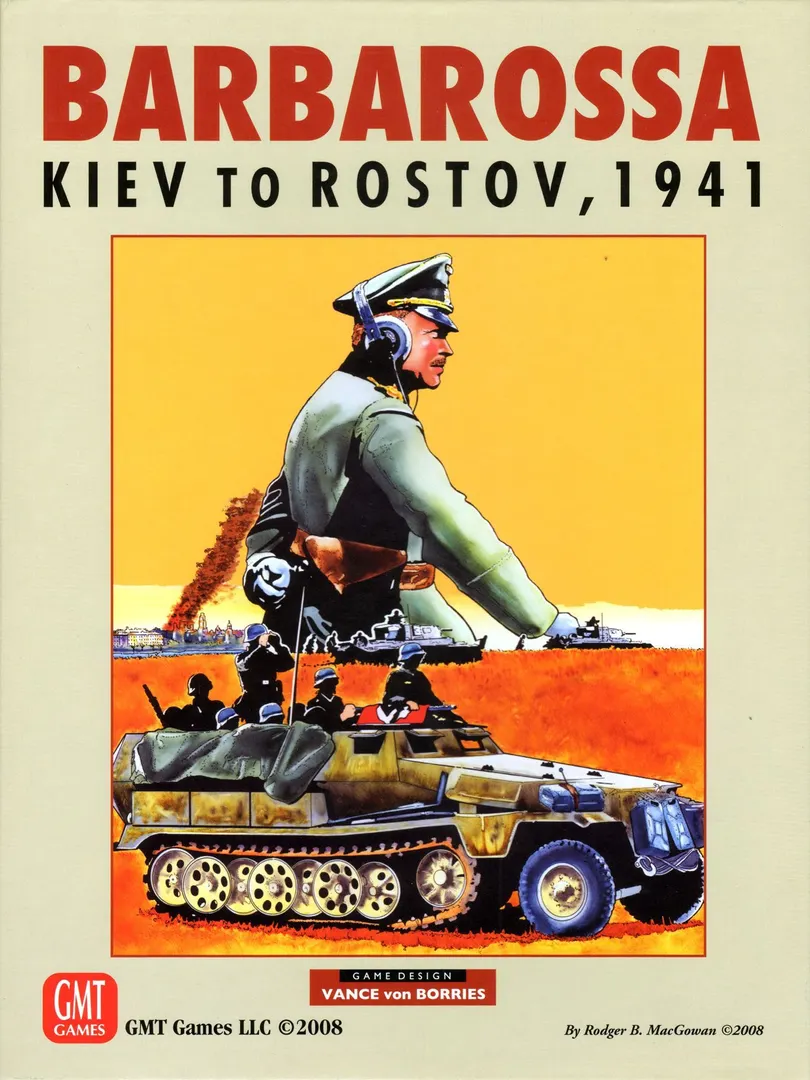
Barbarossa: Kiev to Rostov, 1941
- 1–4 Spieler
- 240 Min.
- Komplexität 4,2/5
- 2008
1996
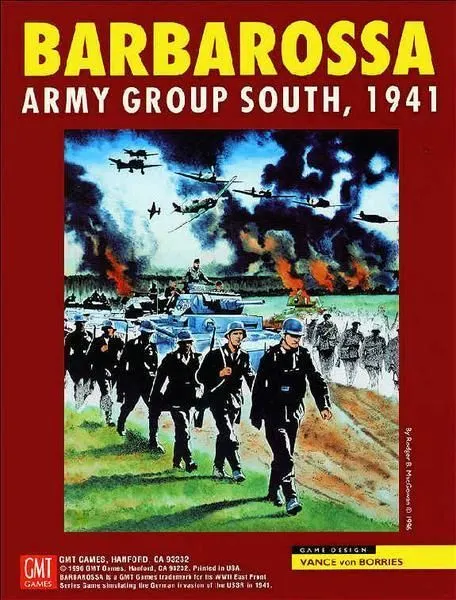
Regelhilfe für Barbarossa: Army Group South, 1941
Verständliche Erklärungen zu Spielzügen, Karteneffekten und strittigen Situationen mit Verweisen auf offizielle Quellen und gespeichertem Fragenverlauf.
Für 1 Person
Was möchtest du wissen?
Antworten stammen aus dem offiziellen Regelheft, mit Seitenangabe zum Nachprüfen.
Barbarossa: Army Group South, 1941 ist ein Brettspiel aus dem Jahr 1996 für 1–4 Personen, mit 240 Minuten pro Partie und ab 12 Jahren. Entwickelt wurde es von Vance von Borries; die wichtigsten Mechaniken sind Dice Rolling und Hexagon Grid.
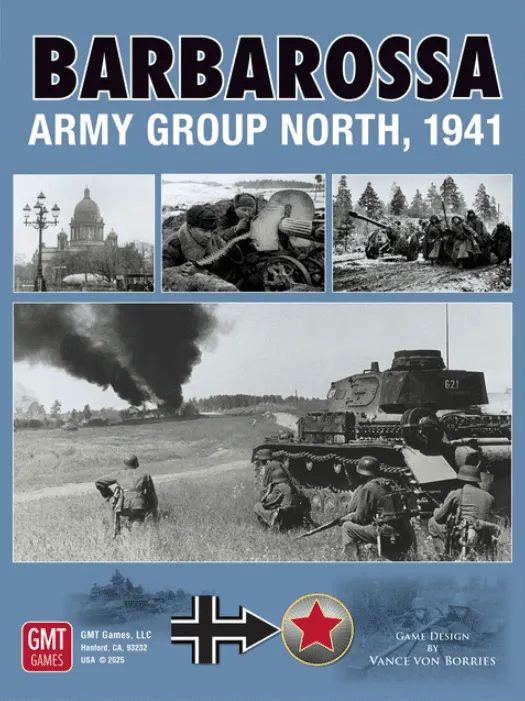
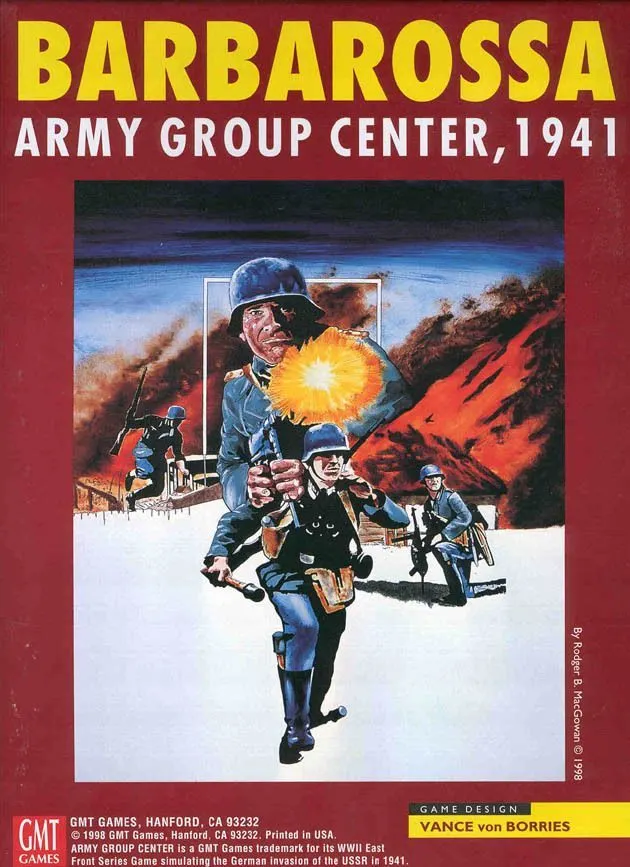






Auf Englisch
June 1941 -- the German juggernaut rolls over the Soviet Army. As the tally of encirclements and surrenders mounts, the German advance appears unstoppable to Hitler and many others. However, the officers and men at the front are beginning to have serious misgivings -- not in themselves, but in the pre-war intelligence estimates that they had received. They had not been prepared to encounter hundreds of KV-1's and T-34's, tanks far superior to anything they possessed. For the moment, German tactics provided the margin of victory over better material, but the Russians were proving to be quick learners. Worse yet, by western European standards, Russian losses had been so staggering that there should have been no army left to fight. Not so. There seemed to be no end to these tenacious Russian defenders. As the German forces continued their eastward advance, more and more soldiers began asking, "What have we gotten ourselves into?" Kiev, the first major German objective in the south, did not fall on schedule. In fact, Soviet resistance was so fierce that it required diverting Guderian's Panzer Group away from the advance on Moscow. Kiev fell in one of the greatest encirclements of the Second World War, but the German advance on Moscow was delayed for several critical weeks. Quite possibly the delay at Kiev might have cost the German forces victory in the battle for Moscow. 840 full-color two-sided counters. MAPS Three 22x34" and one 17x22" full-color mapsheets OTHER One 10-sided die 36-page Rule Book 36-page Play Book Player Aid Cards: four two-sided Soviet Set-Up cards, four two-sided Axis Set-Up cards, Soviet Status card, Axis Status card, two 11x17 two-sided game chart cards, two cards of additional scenario charts. Eight scenarios allow players to vary their level of involvement, complexity, and starting point, from introductory to full campaign An asymmetrical sequence of play that highlights Axis armored breakthroughs and Soviet difficulties in combined arms warfare Detailed air rules that integrate with land combat and weather rules Incredibly detailed orders of battle, including special coverage of artillery, rocket artillery, engineers, bridge units, armored trains, and much more Modifications to the proven Typhoon system include revised overrun and Soviet surrender procedures, as well as a new non-op Soviet HQ system to simulate the rigid yet fragile Soviet Command structure Extensive bibliography and design/historical notes Scenarios include; Scenario #1 "Assault on Kiev" which uses a portion of map G. GT#21 to GT#28 Scenario #2 "Odessa" which uses a portion of Map F. GT#26 to GT#40 Scenario #3 "Rundstedt Attacks" which uses most of Map E. GT#1 to GT#6 Scenario #4 "Operation Munich" which uses portions of maps E and F, an optional rule allows map E to be omitted. GT#6 to GT#17 Scenario #5 "Campaign Game" which uses all of maps E,F, and G. GT#1 to GT#28 Scenario #6 "Uman Pocket" which uses maps F and G. GT#9 to GT#28 Scenario #7 "Rostov" which uses small map R. GT#T19 to GT#T33 (note Typhoon style game turn code). Scenario #8 "Counterattack" which uses small map R. GT#T30 to GT#T32
Laut Katalog unterstützt Barbarossa: Army Group South, 1941 1–4 Personen. Diese Spanne entspricht der vom Verlag angegebenen Spielerzahl, das Spiel lässt sich also für jede Gruppengröße innerhalb dieser Spanne aufbauen. Aufbau, einzelne Regeln und Wertungsdetails können je nach Personenzahl trotzdem abweichen; prüfe daher die genaue Konfiguration in der Anleitung deiner Ausgabe.
Die angegebene Spieldauer für Barbarossa: Army Group South, 1941 beträgt 240 Minuten. Das ist die Schätzung des Verlags für eine vollständige Partie. Die tatsächliche Dauer hängt von der Gruppe, der Personenzahl und der Regelkenntnis ab: Erste Partien dauern meist länger, erfahrene Gruppen sind oft schneller fertig. Aufbau und Regelerklärung sind in dieser Schätzung nicht enthalten.
Im Katalog wird Barbarossa: Army Group South, 1941 ab 12 Jahren empfohlen. Das ist die Empfehlung des Verlags und berücksichtigt Leseanforderungen, Regelkomplexität und Kleinteile, nicht nur das Thema. Jüngere Kinder können oft mit Hilfe eines Erwachsenen mitspielen; beachte die Altersangabe deiner Ausgabe und die Brettspielerfahrung deiner Gruppe.
Barbarossa: Army Group South, 1941 hat bei BoardGameGeek eine Komplexitätswertung von 4,2 von 5 und gilt damit als schweres Spiel. Die Wertung zeigt, wie viel Regelwissen, Planung und Entscheidungen eine typische Partie verlangt. Schwerere Spiele brauchen bei der ersten Erklärung mehr Zeit, daher hilft vor dem Spieleabend eine Vorbereitungsanleitung.
Barbarossa: Army Group South, 1941 gehört zu diesen Kategorien: Wargame und World War II. Die wichtigsten Mechaniken sind Dice Rolling und Hexagon Grid. Kategorien beschreiben Thema und Setting eines Spiels, Mechaniken dagegen, was die Spielenden in ihrem Zug tatsächlich tun. Jede Mechanik führt zu einer Katalogseite mit ähnlichen Spielen, falls du etwas Vergleichbares suchst.
Als Autoren von Barbarossa: Army Group South, 1941 sind angegeben: Vance von Borries. Diese Angaben stammen aus den veröffentlichten Spieldaten und nennen die für das Spieldesign verantwortlichen Personen, nicht die Illustratoren oder Verlage. Die Autorenseiten auf MeepleRules sammeln weitere Titel derselben Autoren – praktisch, wenn dir ein Spiel gefällt und du ähnliche Spiele suchst.
Im Katalog ist Barbarossa: Army Group South, 1941 als Grundspiel aufgeführt. Es lässt sich eigenständig mit dem Material aus der Schachtel spielen und benötigt keinen weiteren Titel. Erweiterungen, sofern es welche gibt, ergänzen neues Material oder neue Regeln und sind im Katalog separat mit einem Verweis auf dieses Grundspiel aufgeführt.