
- BGG-Bewertung
- 7,6
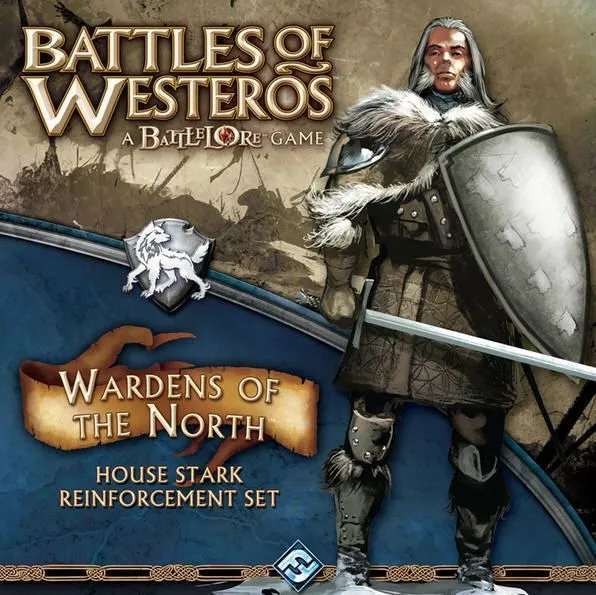
Battles of Westeros: Wardens of the North
- 2 Spieler
- Komplexität 2,8/5
- 2010
2010
Regelhilfe für Battles of Westeros
Verständliche Erklärungen zu Spielzügen, Karteneffekten und strittigen Situationen mit Verweisen auf offizielle Quellen und gespeichertem Fragenverlauf.
Für 2 Personen
Was möchtest du wissen?
Antworten stammen aus dem offiziellen Regelheft, mit Seitenangabe zum Nachprüfen.
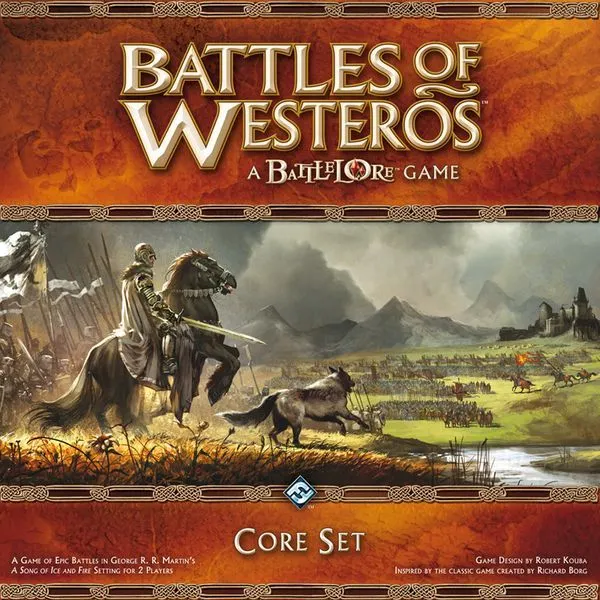
Battles of Westeros ist ein Brettspiel aus dem Jahr 2010 für 2 Personen, mit 60–120 Minuten pro Partie und ab 12 Jahren. Entwickelt wurde es von Robert A. Kouba; die wichtigsten Mechaniken sind Variable Player Powers, Hand Management und Dice Rolling.




Auf Englisch
Unfurl the banners of the Great Houses of Westeros! To secure power in the Seven Kingdoms and to ensure the survival of their lines, the Houses of Westeros each follow very different paths. Some forge strategic alliances, some create complex political intrigues, and still others use deceit and betrayal. But there is no more direct or lasting path to power than taking to the field of battle. In Battles of Westeros, two players recreate the military conflicts set in George R.R. Martin’s A Song of Ice and Fire series, taking part in battles directly from the books... or designing their own. In this epic board game of battlefield tactics, players control either House Stark, the wards of Winterfell who have called their hearty allies to defend their honor and lands, or House Lannister, an aggressive force funded by Casterly Rock’s endless supply of gold. Battles of Westeros is played over a series of included scenarios, called battles. Each of these has a battle plan that dictates the formation of the map (called the battlefield), starting positions of each House’s units, starting resources, special rules, and victory conditions for the game session. A battle is played over several rounds, with each round consisting of alternating player turns. The goals a player needs to accomplish to win a game of Battles of Westeros can vary (some battles require players to earn a certain number of victory points, while other battles require a player to take and hold strategic positions on the battlefield), but this collection of available scenarios, along with the ability to make your own exciting battles with the double-sided map board and over thirty map overlays, gives Battles of Westeros a wealth of replayability! Battles of Westeros also offers plenty of strategic complexity, resulting in a satisfying number of compelling choices in every game. For example, each player has a special randomized Leadership Deck, consisting of unique tactics and abilities; this deck will change based on the scenario being played and characters present. Is Jaime Lannister on the battlefield? If you draw the appropriate Leadership Card, he can order nearby troops to aggressively rush their opponents! Is Eddard Stark guiding his forces into battle? Special flanking maneuvers enter your Leadership Deck, to potentially be drawn into your hand. Battles of Westeros also features a level of realism that immerses you in the most significant conflicts of the War of the Five Kings. Each plastic figure base, which holds your infantry, archer, cavalry, and kennelmaster units, has a slot for a banner pole – a small flag-bearing attachment. The plastic banners that attach to each unit bear the crest of that unit’s house, and their orientation on the pole indicates at a glance whether that unit has been ordered yet. In addition to the intuitive and useful game effect this provides (differentiating the units you’ve activated from those you haven’t), the sight of your army’s banners spread impressively across the gorgeously designed game board will give you the sense that you are the clever Tywin Lannister, Lord of Casterly Rock... or the stoic Robb Stark, with his direwolf Grey Wind at his side!
Laut Katalog unterstützt Battles of Westeros 2 Personen. Das ist die vom Verlag angegebene Spielerzahl, das Spiel ist also genau für diese Anzahl von Mitspielenden ausgelegt. Varianten für andere Gruppengrößen sind, sofern vorhanden, in der Anleitung deiner Ausgabe beschrieben; prüfe sie, bevor du eine andere Konfiguration aufbaust.
Die angegebene Spieldauer für Battles of Westeros beträgt 60–120 Minuten. Das ist die Schätzung des Verlags für eine vollständige Partie. Die tatsächliche Dauer hängt von der Gruppe, der Personenzahl und der Regelkenntnis ab: Erste Partien dauern meist länger, erfahrene Gruppen sind oft schneller fertig. Aufbau und Regelerklärung sind in dieser Schätzung nicht enthalten.
Im Katalog wird Battles of Westeros ab 12 Jahren empfohlen. Das ist die Empfehlung des Verlags und berücksichtigt Leseanforderungen, Regelkomplexität und Kleinteile, nicht nur das Thema. Jüngere Kinder können oft mit Hilfe eines Erwachsenen mitspielen; beachte die Altersangabe deiner Ausgabe und die Brettspielerfahrung deiner Gruppe.
Battles of Westeros hat bei BoardGameGeek eine Komplexitätswertung von 3,2 von 5 und gilt damit als mittelschweres Spiel. Die Wertung zeigt, wie viel Regelwissen, Planung und Entscheidungen eine typische Partie verlangt. Schwerere Spiele brauchen bei der ersten Erklärung mehr Zeit, daher hilft vor dem Spieleabend eine Vorbereitungsanleitung.
Battles of Westeros gehört zu diesen Kategorien: Fantasy, Wargame und Miniatures. Die wichtigsten Mechaniken sind Variable Player Powers, Hand Management und Dice Rolling. Kategorien beschreiben Thema und Setting eines Spiels, Mechaniken dagegen, was die Spielenden in ihrem Zug tatsächlich tun. Jede Mechanik führt zu einer Katalogseite mit ähnlichen Spielen, falls du etwas Vergleichbares suchst.
Als Autoren von Battles of Westeros sind angegeben: Robert A. Kouba. Diese Angaben stammen aus den veröffentlichten Spieldaten und nennen die für das Spieldesign verantwortlichen Personen, nicht die Illustratoren oder Verlage. Die Autorenseiten auf MeepleRules sammeln weitere Titel derselben Autoren – praktisch, wenn dir ein Spiel gefällt und du ähnliche Spiele suchst.
Im Katalog ist Battles of Westeros als Grundspiel aufgeführt. Es lässt sich eigenständig mit dem Material aus der Schachtel spielen und benötigt keinen weiteren Titel. Erweiterungen, sofern es welche gibt, ergänzen neues Material oder neue Regeln und sind im Katalog separat mit einem Verweis auf dieses Grundspiel aufgeführt.