
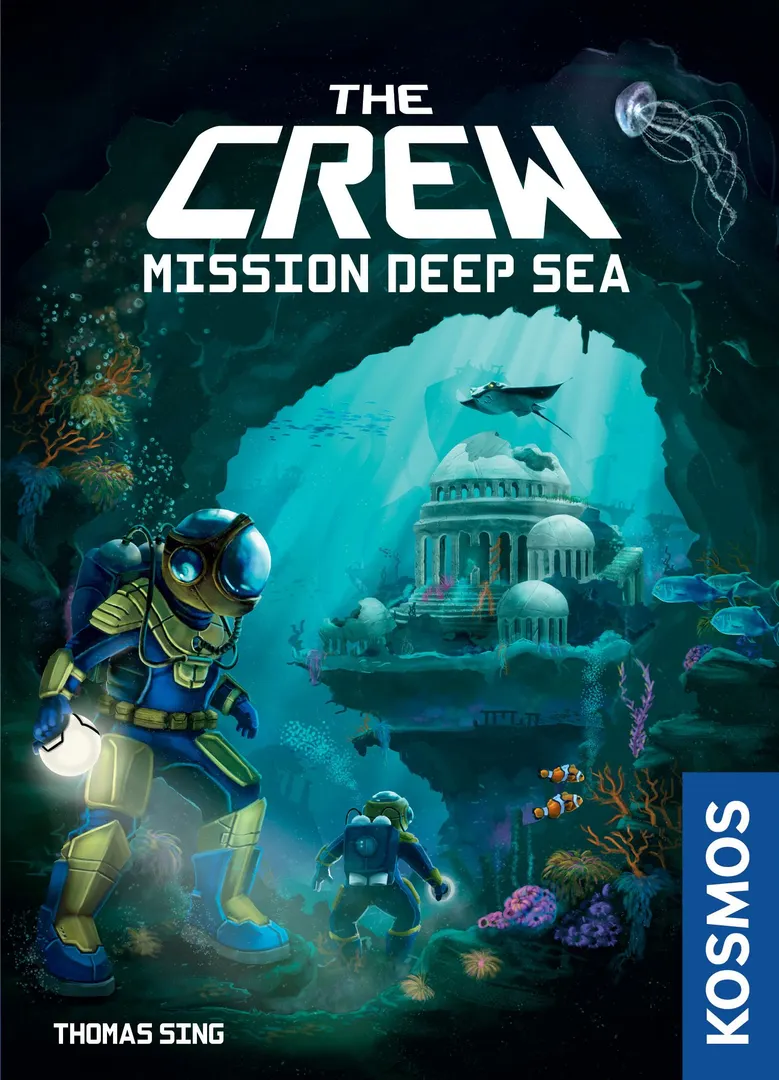
- BGG-Rang
- BGG #45
- BGG-Bewertung
- 8,0
The Crew: Mission Deep Sea
- 2–5 Spieler
- 20 Min.
- Komplexität 2,1/5
- 2021
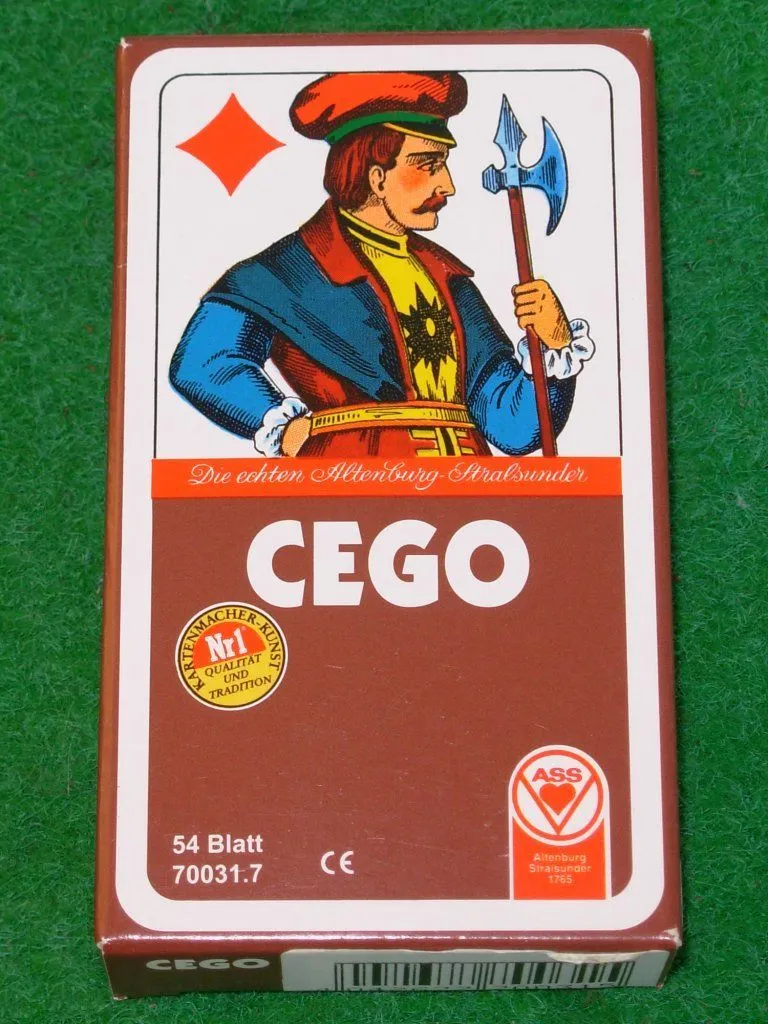
Regelhilfe für Cego
Verständliche Erklärungen zu Spielzügen, Karteneffekten und strittigen Situationen mit Verweisen auf offizielle Quellen und gespeichertem Fragenverlauf.
Was möchtest du wissen?
Antworten stammen aus dem offiziellen Regelheft, mit Seitenangabe zum Nachprüfen.
Cego ist ein Brettspiel für 3–4 Personen, mit 10 Minuten pro Partie und ab 12 Jahren. Die wichtigsten Mechaniken sind Trick-taking.






Auf Englisch
Cego, Zego or Ceco (from lat.caecus = blind) is a traditional German card game, for 3 or 4 players, played primarily in the Black Forest. Hardly a farm house which has no cego deck. The game is played mainly throughout the winter, when there is little work to do in the fields and few daylight hours. A Cego deck consists of 54 cards: 22 "Truck", that means trump cards, 16 "Bilder" or picture cards, king, queen, knight and jack in the 4 suits. and 16 "Leere" or empty cards, also in the 4 suits. The 22 trumps are numbered from 1 to 21, and a single picture card without suit, which would be #22, the highest trump, commonly called "Gsties", sometimes "Sküs" from ital. "scusa" = sorry (for taking the trick). The game is basically a trick tacking game, you've got to follow suit, if not available you have to trump. Usually one player will play against the other three, the player following the dealer will have to play if no one bids for the play. Cards are dealt 11 to each player and 10 face down in the middle (the Cego or blind cards). These 10 cards will go to the highest bidder, depending on his bid either remaining face down or he discards 9 or 10 cards from his hand and takes up the Cego cards. A simple play would be a bid for Cego, discarding 9 cards from your hand, taking up 10 cards, then choosing one additional card for your pile and starting play. This is the interesting and unusual part of this game. Your decision to bid depends on the cards which you will not have available for the coming game, but you will get to play with mainly unknown cards. Therefore the title "Blind". There are a lot of other options, available for every player or only the bidder, for example: -Solo play: when you have lots of trump in your initial play, no cards are discarded. -Räuber, rubber: when no one bids, every player on his own, you try to have fewest points. -Bettel: the bidder tries to get no cards. -Piccolo: the bidder tries to make exactly one trick. Scoring is done by counting out your points, only three trumps (Gstiess, 21 and 1) and all the pictures count. Points and counting method differ, but the bidder always need the majority of points, every 5 points over or under mean an additional factor.
Laut Katalog unterstützt Cego 3–4 Personen. Diese Spanne entspricht der vom Verlag angegebenen Spielerzahl, das Spiel lässt sich also für jede Gruppengröße innerhalb dieser Spanne aufbauen. Aufbau, einzelne Regeln und Wertungsdetails können je nach Personenzahl trotzdem abweichen; prüfe daher die genaue Konfiguration in der Anleitung deiner Ausgabe.
Die angegebene Spieldauer für Cego beträgt 10 Minuten. Das ist die Schätzung des Verlags für eine vollständige Partie. Die tatsächliche Dauer hängt von der Gruppe, der Personenzahl und der Regelkenntnis ab: Erste Partien dauern meist länger, erfahrene Gruppen sind oft schneller fertig. Aufbau und Regelerklärung sind in dieser Schätzung nicht enthalten.
Im Katalog wird Cego ab 12 Jahren empfohlen. Das ist die Empfehlung des Verlags und berücksichtigt Leseanforderungen, Regelkomplexität und Kleinteile, nicht nur das Thema. Jüngere Kinder können oft mit Hilfe eines Erwachsenen mitspielen; beachte die Altersangabe deiner Ausgabe und die Brettspielerfahrung deiner Gruppe.
Cego hat bei BoardGameGeek eine Komplexitätswertung von 2,6 von 5 und gilt damit als eher leichtes Spiel. Die Wertung zeigt, wie viel Regelwissen, Planung und Entscheidungen eine typische Partie verlangt. Schwerere Spiele brauchen bei der ersten Erklärung mehr Zeit, daher hilft vor dem Spieleabend eine Vorbereitungsanleitung.
Cego gehört zu diesen Kategorien: Card Game. Die wichtigsten Mechaniken sind Trick-taking. Kategorien beschreiben Thema und Setting eines Spiels, Mechaniken dagegen, was die Spielenden in ihrem Zug tatsächlich tun. Jede Mechanik führt zu einer Katalogseite mit ähnlichen Spielen, falls du etwas Vergleichbares suchst.
Im Katalog ist Cego als Grundspiel aufgeführt. Es lässt sich eigenständig mit dem Material aus der Schachtel spielen und benötigt keinen weiteren Titel. Erweiterungen, sofern es welche gibt, ergänzen neues Material oder neue Regeln und sind im Katalog separat mit einem Verweis auf dieses Grundspiel aufgeführt.