
- BGG-Rang
- BGG #21.794
- BGG-Bewertung
- 6,7
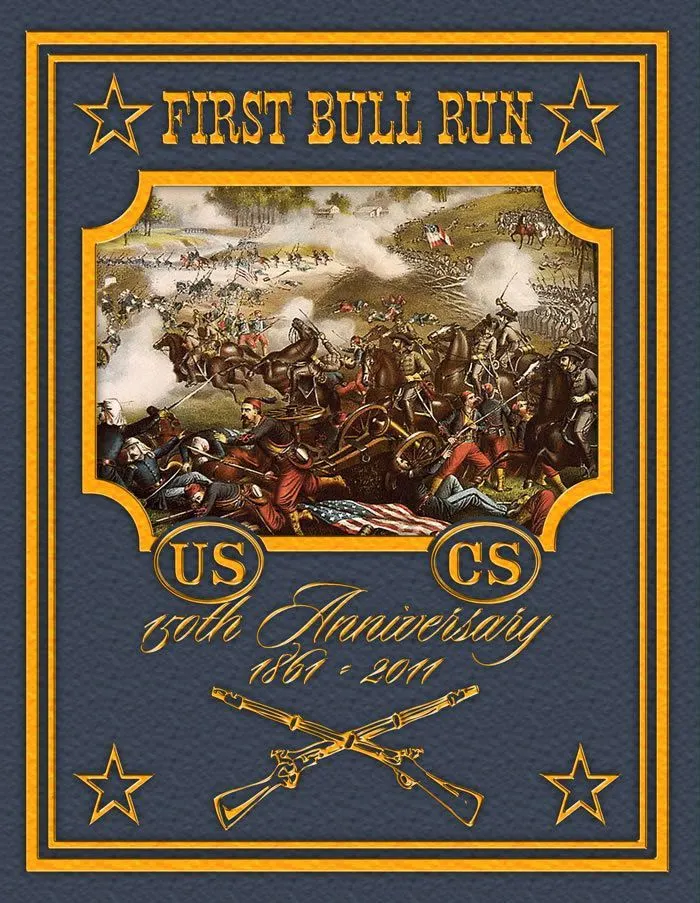
First Bull Run: 150th Anniversary Edition
- 1–2 Spieler
- 180 Min.
- Komplexität 2,6/5
- 2012
2009
Regelhilfe für Chainmail: Medieval Combat
Verständliche Erklärungen zu Spielzügen, Karteneffekten und strittigen Situationen mit Verweisen auf offizielle Quellen und gespeichertem Fragenverlauf.
Was möchtest du wissen?
Antworten stammen aus dem offiziellen Regelheft, mit Seitenangabe zum Nachprüfen.
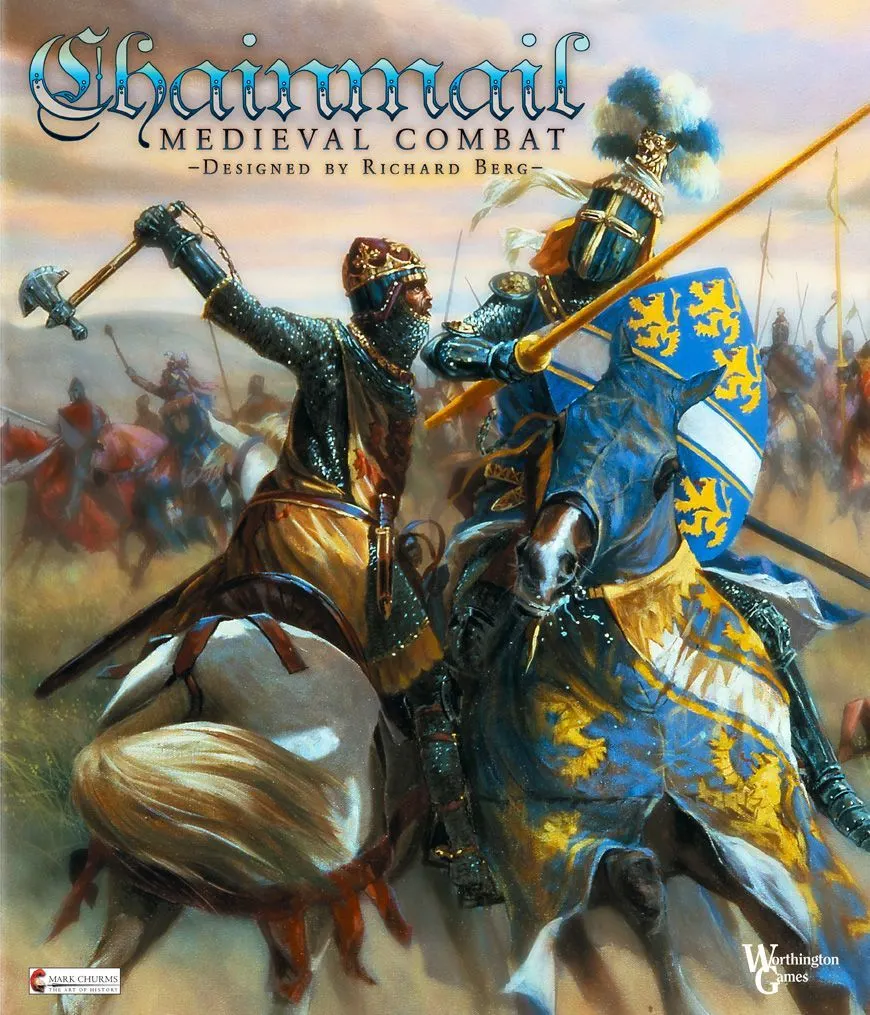
Chainmail: Medieval Combat ist ein Brettspiel aus dem Jahr 2009 für 1–2 Personen, mit 120 Minuten pro Partie und ab 12 Jahren. Entwickelt wurde es von Richard H. Berg; die wichtigsten Mechaniken sind Hand Management, Square Grid und Campaign / Battle Card Driven.


Auf Englisch
Not to be Confused With: Chainmail: Rules for Medieval Miniatures The game uses cards, one deck for each player (whose cards are somewhat different from those of the other player) to drive the game. Each player gets a certain number of cards each turn - but never his full deck. The cards are used to determine movement, combat, and actions such as Axemen, Knights Charge, Chivalry Charge, and Strategic Movement, among others. Players may play each card for only one of the possible three purposes. CHAINMAIL is thus a game of card play and management, which unfolds on the historical battle map - it uses squares, rather than hexes – with the use of some beautiful, super-size counters. This is a game of position, feint, and sudden attack with what you hope are better odds (since you don’t know what cards your opponent will play, if any, and you never know what his final strength will be). No dice are used. And there are no CRT’s. Skill determines the outcome. The game thus becomes a tense battle. When do you play your cards? How many do you play? What do you do with them? Will you be caught short and be subject to a sudden attack by your opponent? CHAINMAIL includes four of the major battles of the Medieval period: Legnano (1176), Bouvines (1214), Lewes (1264), and Bannockburn (1314). LEGNANO The Battle of Legnano, May 29, 1176, was a major defeat of the Holy Roman Emperor Barbarossa by members of the Lombard League. It was a major setback to his plans for imperial domination of Italy and showed for the first time of infantry against feudal cavalry. BOUVINES The Battle of Bouvines, July 27, 1214, was a conclusive medieval battle ending the twelve year old War of Bouvines that was important to the early development of both the French state by confirming the French crown’s sovereignty over the Norman lands of Brittany and Normandy. LEWES The Battle of Lewes, May 12, 1264, was a one of two main battles of the conflict known as the Second Barons' War. It was the high point of the career of Simon De Montfort, 6th Earl of Leicester and made him the "uncrowned King of England". BANNOCKBURN The Battle of Bannockburn, 24 June 1314, was a significant Scottish victory in the Wars of Scottish Independence. It was the decisive battle in the First War of Scottish Independence.
Laut Katalog unterstützt Chainmail: Medieval Combat 1–2 Personen. Diese Spanne entspricht der vom Verlag angegebenen Spielerzahl, das Spiel lässt sich also für jede Gruppengröße innerhalb dieser Spanne aufbauen. Aufbau, einzelne Regeln und Wertungsdetails können je nach Personenzahl trotzdem abweichen; prüfe daher die genaue Konfiguration in der Anleitung deiner Ausgabe.
Die angegebene Spieldauer für Chainmail: Medieval Combat beträgt 120 Minuten. Das ist die Schätzung des Verlags für eine vollständige Partie. Die tatsächliche Dauer hängt von der Gruppe, der Personenzahl und der Regelkenntnis ab: Erste Partien dauern meist länger, erfahrene Gruppen sind oft schneller fertig. Aufbau und Regelerklärung sind in dieser Schätzung nicht enthalten.
Im Katalog wird Chainmail: Medieval Combat ab 12 Jahren empfohlen. Das ist die Empfehlung des Verlags und berücksichtigt Leseanforderungen, Regelkomplexität und Kleinteile, nicht nur das Thema. Jüngere Kinder können oft mit Hilfe eines Erwachsenen mitspielen; beachte die Altersangabe deiner Ausgabe und die Brettspielerfahrung deiner Gruppe.
Chainmail: Medieval Combat hat bei BoardGameGeek eine Komplexitätswertung von 2,4 von 5 und gilt damit als eher leichtes Spiel. Die Wertung zeigt, wie viel Regelwissen, Planung und Entscheidungen eine typische Partie verlangt. Schwerere Spiele brauchen bei der ersten Erklärung mehr Zeit, daher hilft vor dem Spieleabend eine Vorbereitungsanleitung.
Chainmail: Medieval Combat gehört zu diesen Kategorien: Wargame und Medieval. Die wichtigsten Mechaniken sind Hand Management, Square Grid und Campaign / Battle Card Driven. Kategorien beschreiben Thema und Setting eines Spiels, Mechaniken dagegen, was die Spielenden in ihrem Zug tatsächlich tun. Jede Mechanik führt zu einer Katalogseite mit ähnlichen Spielen, falls du etwas Vergleichbares suchst.
Als Autoren von Chainmail: Medieval Combat sind angegeben: Richard H. Berg. Diese Angaben stammen aus den veröffentlichten Spieldaten und nennen die für das Spieldesign verantwortlichen Personen, nicht die Illustratoren oder Verlage. Die Autorenseiten auf MeepleRules sammeln weitere Titel derselben Autoren – praktisch, wenn dir ein Spiel gefällt und du ähnliche Spiele suchst.
Im Katalog ist Chainmail: Medieval Combat als Grundspiel aufgeführt. Es lässt sich eigenständig mit dem Material aus der Schachtel spielen und benötigt keinen weiteren Titel. Erweiterungen, sofern es welche gibt, ergänzen neues Material oder neue Regeln und sind im Katalog separat mit einem Verweis auf dieses Grundspiel aufgeführt.