

- BGG-Bewertung
- 5,9
Cheesonomics: Extra Sharp Expansion
- 2–5 Spieler
- 20 Min.
- 2014
2014
Regelhilfe für Cheesonomics
Verständliche Erklärungen zu Spielzügen, Karteneffekten und strittigen Situationen mit Verweisen auf offizielle Quellen und gespeichertem Fragenverlauf.
Für 2 Personen
Was möchtest du wissen?
Antworten stammen aus dem offiziellen Regelheft, mit Seitenangabe zum Nachprüfen.
Cheesonomics ist ein Brettspiel aus dem Jahr 2014 für 2–5 Personen, mit 20 Minuten pro Partie und ab 8 Jahren. Entwickelt wurde es von Dale Tolley; die wichtigsten Mechaniken sind Hand Management, Take That und Set Collection.


Auf Englisch
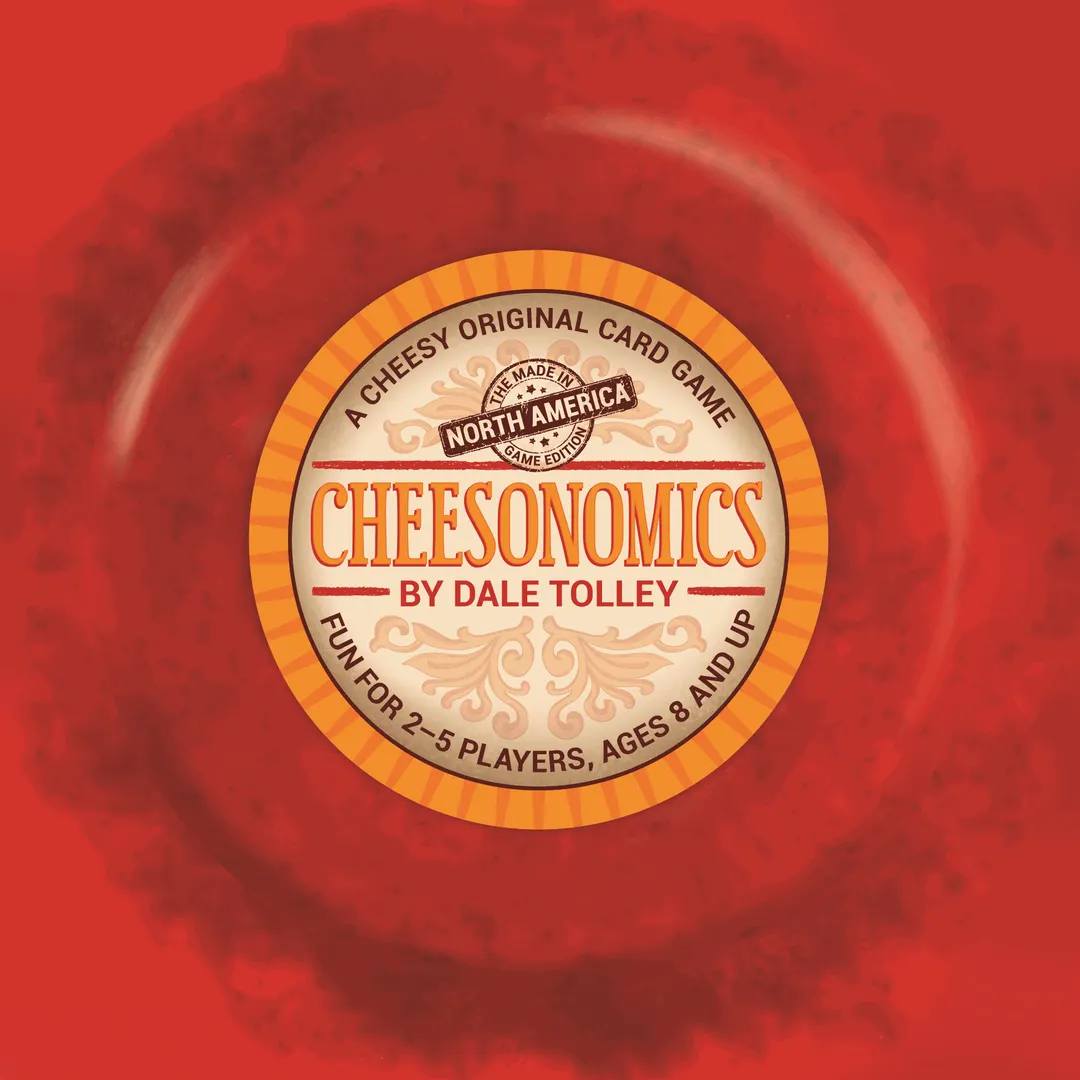
Cheesonomics is a cheesy original card game for 2-5 players ages 8 and up that takes about 20-30 minutes to play. It is a strategic set collecting, memory-based, hand management card game based on controlling and manipulating the supply and demand of various types of cheese from cheese markets throughout North America or Europe. The European edition of Cheesonomics features cheese from France, Germany, Italy, The Netherlands and Scandinavia. The North American edition of Cheesonomics features cheese from Wisconsin, California, New York, Oregon and Canada. The overall goal of Cheesonomics is to manage your cheese supply, churn the right colors or animal types from your opponents' hands, produce the market's most demanded colors of cheese to milk the most profit, and earn the most curd cash by selling different colors of cheese at high market prices. Cheesonomics can be played at three different skill levels - mild, sharp and extra sharp - allowing gamers to adjust the game according to their own playing palate. Each game starts with three market wheels made up of 5 market wedges, and each player receives five cheese wedges and a cheese knife marked with either cheddar, edam, feta, gouda or parmesan. On each turn, the active player begins by retrieving his cheese knife from the serving tray - if it was placed there on a previous turn - and then chooses one of three different culinary actions: Churn Cheese, Produce Cheese or Sell Cheese. Churning cheese allows a player to collect cheese wedges from opponents. When churning, the active player asks for one color or animal type. The colors are red, orange, yellow, green or blue, and animals are cow, sheep, goat, yak, and reindeer. If an opponent has that type of cheese card, he must give the active player one card of that type. If he does not have that card type, the opponent must show his hand and give the active player one wedge of the active player's choice. The active player then protects his product by placing his cheese knife over that color or animal type on the provided serving tray. No other player can churn for that type of cheese until the knife is removed on that player's next turn. Instead of Churning, a player could Produce cheese. To do this, the active player simply plays all cheese wedges of one color or animal type from his hand face up onto the table into a cheese wheel. These wedges will be available for sale in future turns. The player then draws cheese wedges until he has five total wedges in his hand. Instead of Churning or Producing cheese, the active player could Sell Cheese. To sell, a player chooses up to three wedges of one color or animal type from previously-formed cheese and gains curd cash depending on the market, which is the sum of face-up, matching color market wedges. After selling cheese, the active player now "Mooves" the market, choosing one market wedge representing the color of the cheese sold in the transaction and flipping that wedge to the opposite side. The game ends when the cheese wedge draw pile is exhausted during a player's turn. The cheesemonger who has the most curd cash is the cheesy champion! Cheesonomics has even more to offer players who wish to try out the Sharp and Extra Sharp flavors of the game. In the Sharp game, players can now further manipulate the market. Whenever a Sell Cheese action is taken, that player now also chooses a wedge in the market to completely replace with one from his personal supply of market wedges. There are also certain cheese wedges with market symbols that may be activated during a Sell Cheese action that can allow a player to discard one of their market wedges and gain another or give a market wedge to one of the other players and take one of theirs. The Extra Sharp game is for the truly adventurous Cheeseheads! As an expansion to Cheesonomics, players can add in the Extra Sharp cheese wedge cards that introduce growth hormone, organic and smelly cheese wedges. Each of these new cheese wedge types have special rules that affect a Sell Cheese action, allowing players the choice to boost their production with growth hormones, earn more curds at game end with quality organic cheeses, or use pungent aromas to prevent players from flipping or removing market wedges.
Laut Katalog unterstützt Cheesonomics 2–5 Personen. Diese Spanne entspricht der vom Verlag angegebenen Spielerzahl, das Spiel lässt sich also für jede Gruppengröße innerhalb dieser Spanne aufbauen. Aufbau, einzelne Regeln und Wertungsdetails können je nach Personenzahl trotzdem abweichen; prüfe daher die genaue Konfiguration in der Anleitung deiner Ausgabe.
Die angegebene Spieldauer für Cheesonomics beträgt 20 Minuten. Das ist die Schätzung des Verlags für eine vollständige Partie. Die tatsächliche Dauer hängt von der Gruppe, der Personenzahl und der Regelkenntnis ab: Erste Partien dauern meist länger, erfahrene Gruppen sind oft schneller fertig. Aufbau und Regelerklärung sind in dieser Schätzung nicht enthalten.
Im Katalog wird Cheesonomics ab 8 Jahren empfohlen. Das ist die Empfehlung des Verlags und berücksichtigt Leseanforderungen, Regelkomplexität und Kleinteile, nicht nur das Thema. Jüngere Kinder können oft mit Hilfe eines Erwachsenen mitspielen; beachte die Altersangabe deiner Ausgabe und die Brettspielerfahrung deiner Gruppe.
Cheesonomics hat bei BoardGameGeek eine Komplexitätswertung von 1,7 von 5 und gilt damit als leichtes Spiel. Die Wertung zeigt, wie viel Regelwissen, Planung und Entscheidungen eine typische Partie verlangt. Schwerere Spiele brauchen bei der ersten Erklärung mehr Zeit, daher hilft vor dem Spieleabend eine Vorbereitungsanleitung.
Cheesonomics gehört zu diesen Kategorien: Card Game, Economic und Memory. Die wichtigsten Mechaniken sind Hand Management, Take That und Set Collection. Kategorien beschreiben Thema und Setting eines Spiels, Mechaniken dagegen, was die Spielenden in ihrem Zug tatsächlich tun. Jede Mechanik führt zu einer Katalogseite mit ähnlichen Spielen, falls du etwas Vergleichbares suchst.
Als Autoren von Cheesonomics sind angegeben: Dale Tolley. Diese Angaben stammen aus den veröffentlichten Spieldaten und nennen die für das Spieldesign verantwortlichen Personen, nicht die Illustratoren oder Verlage. Die Autorenseiten auf MeepleRules sammeln weitere Titel derselben Autoren – praktisch, wenn dir ein Spiel gefällt und du ähnliche Spiele suchst.
Im Katalog ist Cheesonomics als Grundspiel aufgeführt. Es lässt sich eigenständig mit dem Material aus der Schachtel spielen und benötigt keinen weiteren Titel. Erweiterungen, sofern es welche gibt, ergänzen neues Material oder neue Regeln und sind im Katalog separat mit einem Verweis auf dieses Grundspiel aufgeführt.