
- BGG-Rang
- BGG #499
- BGG-Bewertung
- 7,9
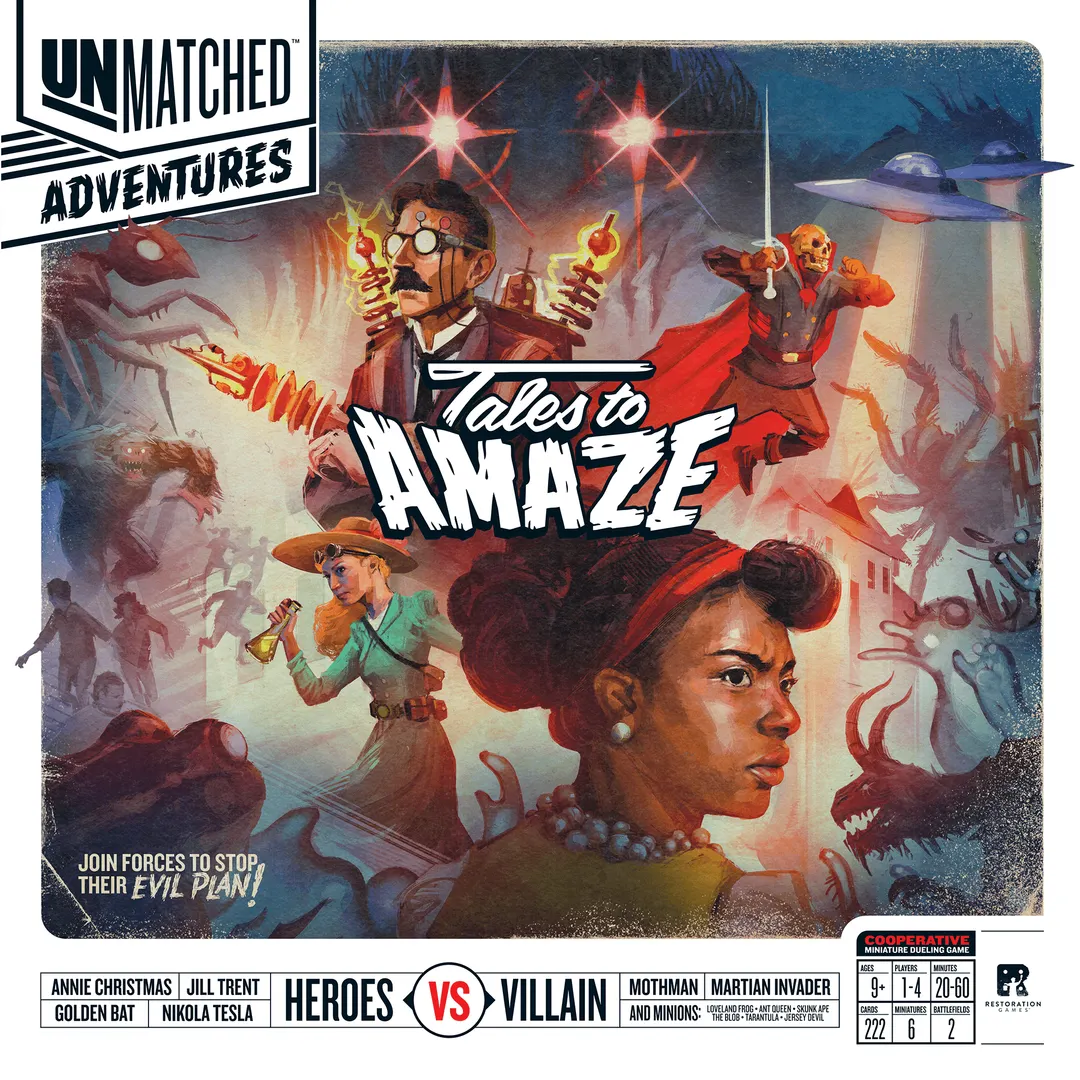
Unmatched Adventures: Tales to Amaze
- 1–4 Spieler
- 20–60 Min.
- Komplexität 2,3/5
- 2023
2012
Regelhilfe für Day of the Dead
Verständliche Erklärungen zu Spielzügen, Karteneffekten und strittigen Situationen mit Verweisen auf offizielle Quellen und gespeichertem Fragenverlauf.
Für 2 Personen
Was möchtest du wissen?
Antworten stammen aus dem offiziellen Regelheft, mit Seitenangabe zum Nachprüfen.
Day of the Dead ist ein Brettspiel aus dem Jahr 2012 für 2 Personen, mit 30 Minuten pro Partie und ab 13 Jahren. Entwickelt wurde es von Evan Raisner; die wichtigsten Mechaniken sind Variable Player Powers, Hand Management und Campaign / Battle Card Driven.
Auf Englisch
Day of the Dead is a highly strategic card game that turns you and a friend into necromancers! Summon the best team of undead fighters and in six turns you’ll be named Super Grand Master, a highly coveted and extremely descriptive title. At the start of the game, each necromancer is given a hand containing nine cards. They represent an eccentric collection of skeletons, zombies, vampires, ghouls, and other spooks. Each turn, you select one of these weird characters and send it to the field. Once your opponent has done the same, the fun begins! All the fighters pair off and fight to the death. Normally, this sort of thing would be dangerous, but undead are durable and really get into the spirit of the thing. Winners score points while losers are flipped face down. Undead are resilient, so losing fighters will reassemble themselves in time for next turn’s battle. But if you don’t think your losing fighter will do better next turn, you can pull him out of line and turn him into a spirit. Spirits are the ultimate fans, boosting the power of all of your fighters. Some spirits even let you replace weaker fighters! Strategy in Day of the Dead centers around positioning; when played in the right place, any fighter can be a champion. On the other hand, even your favorite fighter can be a total failure if you are too stubborn to pull him out of a losing matchup. Stay flexible and you will bury your competition. Turn Order Summoning — When you bring new cards to the field. A New Slot Opens — Each turn a new slot opens up on the field for both players. On the first turn, each player takes a card from their hand and places it as a fallen fighter in this new slot. On each turn after that, they will take their current spirit card and place it there. Play a New Card — Fighters start their undeath as spirits, face down and slightly below the field. Spirits are also rotated 90 degrees to show that they are special. When considering what card to play, remember that you can only have 2 cards of each back in play. On turn 6, the final turn, you are allowed to break this rule and choose whatever card back you want. The Field Becomes Active — Flip all cards on the field face up (except for your spirit, it’s not on the field though it’s watching with considerable interest). If any player chose an Unearth card to be their spirit, they resolve this effect now. Then you’re ready to fight! Fighting — When your fighters get to work. Fights resolve one by one, starting with the newest slot and going to the oldest. Fights are 1 on 1 affairs and follow rigid rules. Be aware of what spirits each player has, as they will affect the outcome of each fight. Use Effects — Starting with the player who has the Priority counter, both fighters use their effects. Fighters must use their effects if able.If a player has a Double card as their spirit, they use their fighter’s effect, then immediately use it again. Add Up the Power — Add on the printed power of each fighter to any bonuses they may have accumulated via effects or spirits (Remember, if a player has a Power Up card as their spirit, they will get +2 power this fight). Compare Power — The higher-powered fighter is declared winner (in the event of a tie, both fighters are considered winners) and stays active. The lower-powered fighter is declared the loser and flips face down, becoming fallen. The Loser May Become a Spirit — If your fighter lost its fight this turn and you want to try something new, you can pull it from line and turn it into a spirit. Move on to the Next Fight Rewards — When you gain victory points. Score Victory Points — Each player scores victory points equal to the printed power values on their active fighters. Fallen cards score no points. Use the score board to keep track of it all. Pass Priority — The player who currently has the priority counter passes it to the other player. Next turn, that player will be able to use their effects first. This turn is now over! Winning At the end of 6 turns, a winner is declared. Whoever has the most victory points is that amazing person/
Laut Katalog unterstützt Day of the Dead 2 Personen. Das ist die vom Verlag angegebene Spielerzahl, das Spiel ist also genau für diese Anzahl von Mitspielenden ausgelegt. Varianten für andere Gruppengrößen sind, sofern vorhanden, in der Anleitung deiner Ausgabe beschrieben; prüfe sie, bevor du eine andere Konfiguration aufbaust.
Die angegebene Spieldauer für Day of the Dead beträgt 30 Minuten. Das ist die Schätzung des Verlags für eine vollständige Partie. Die tatsächliche Dauer hängt von der Gruppe, der Personenzahl und der Regelkenntnis ab: Erste Partien dauern meist länger, erfahrene Gruppen sind oft schneller fertig. Aufbau und Regelerklärung sind in dieser Schätzung nicht enthalten.
Im Katalog wird Day of the Dead ab 13 Jahren empfohlen. Das ist die Empfehlung des Verlags und berücksichtigt Leseanforderungen, Regelkomplexität und Kleinteile, nicht nur das Thema. Jüngere Kinder können oft mit Hilfe eines Erwachsenen mitspielen; beachte die Altersangabe deiner Ausgabe und die Brettspielerfahrung deiner Gruppe.
Day of the Dead hat bei BoardGameGeek eine Komplexitätswertung von 2,0 von 5 und gilt damit als eher leichtes Spiel. Die Wertung zeigt, wie viel Regelwissen, Planung und Entscheidungen eine typische Partie verlangt. Schwerere Spiele brauchen bei der ersten Erklärung mehr Zeit, daher hilft vor dem Spieleabend eine Vorbereitungsanleitung.
Day of the Dead gehört zu diesen Kategorien: Card Game und Fighting. Die wichtigsten Mechaniken sind Variable Player Powers, Hand Management und Campaign / Battle Card Driven. Kategorien beschreiben Thema und Setting eines Spiels, Mechaniken dagegen, was die Spielenden in ihrem Zug tatsächlich tun. Jede Mechanik führt zu einer Katalogseite mit ähnlichen Spielen, falls du etwas Vergleichbares suchst.
Als Autoren von Day of the Dead sind angegeben: Evan Raisner. Diese Angaben stammen aus den veröffentlichten Spieldaten und nennen die für das Spieldesign verantwortlichen Personen, nicht die Illustratoren oder Verlage. Die Autorenseiten auf MeepleRules sammeln weitere Titel derselben Autoren – praktisch, wenn dir ein Spiel gefällt und du ähnliche Spiele suchst.
Im Katalog ist Day of the Dead als Grundspiel aufgeführt. Es lässt sich eigenständig mit dem Material aus der Schachtel spielen und benötigt keinen weiteren Titel. Erweiterungen, sofern es welche gibt, ergänzen neues Material oder neue Regeln und sind im Katalog separat mit einem Verweis auf dieses Grundspiel aufgeführt.