
- BGG-Bewertung
- 7,1
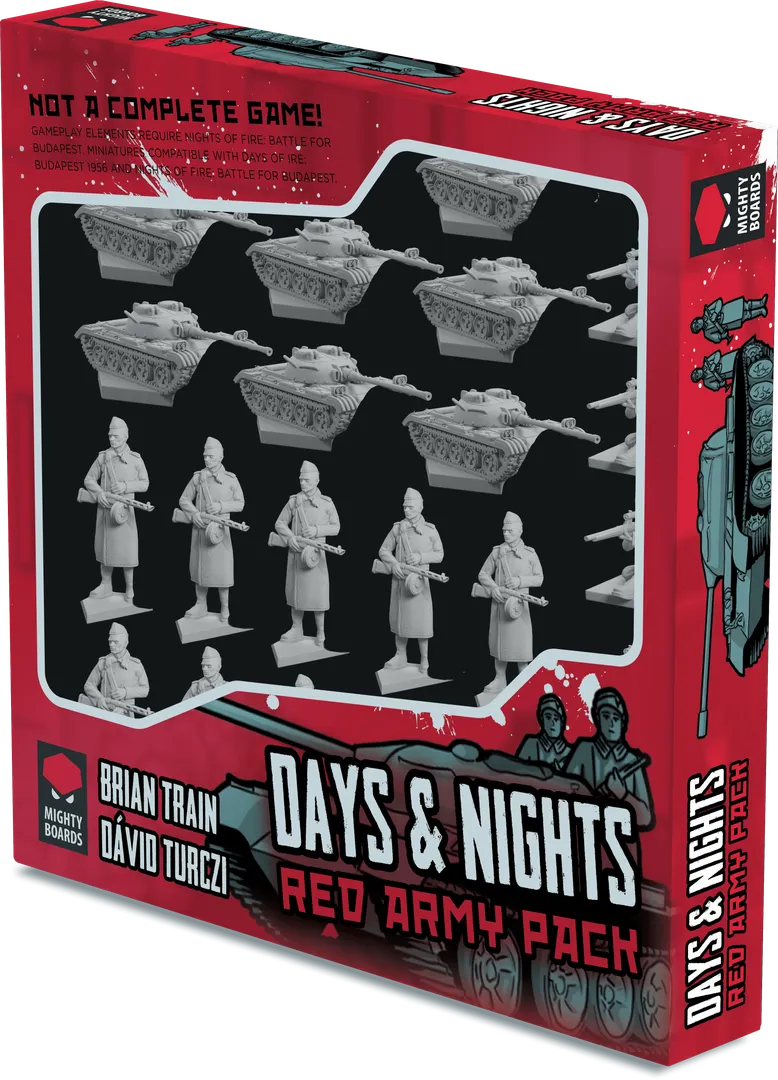
Days & Nights: Red Army Pack
- 1–3 Spieler
- 60–120 Min.
- Komplexität 2,0/5
- 2018
2016
Regelhilfe für Days of Ire: Budapest 1956
Verständliche Erklärungen zu Spielzügen, Karteneffekten und strittigen Situationen mit Verweisen auf offizielle Quellen und gespeichertem Fragenverlauf.
Für 1 Person
Was möchtest du wissen?
Antworten stammen aus dem offiziellen Regelheft, mit Seitenangabe zum Nachprüfen.
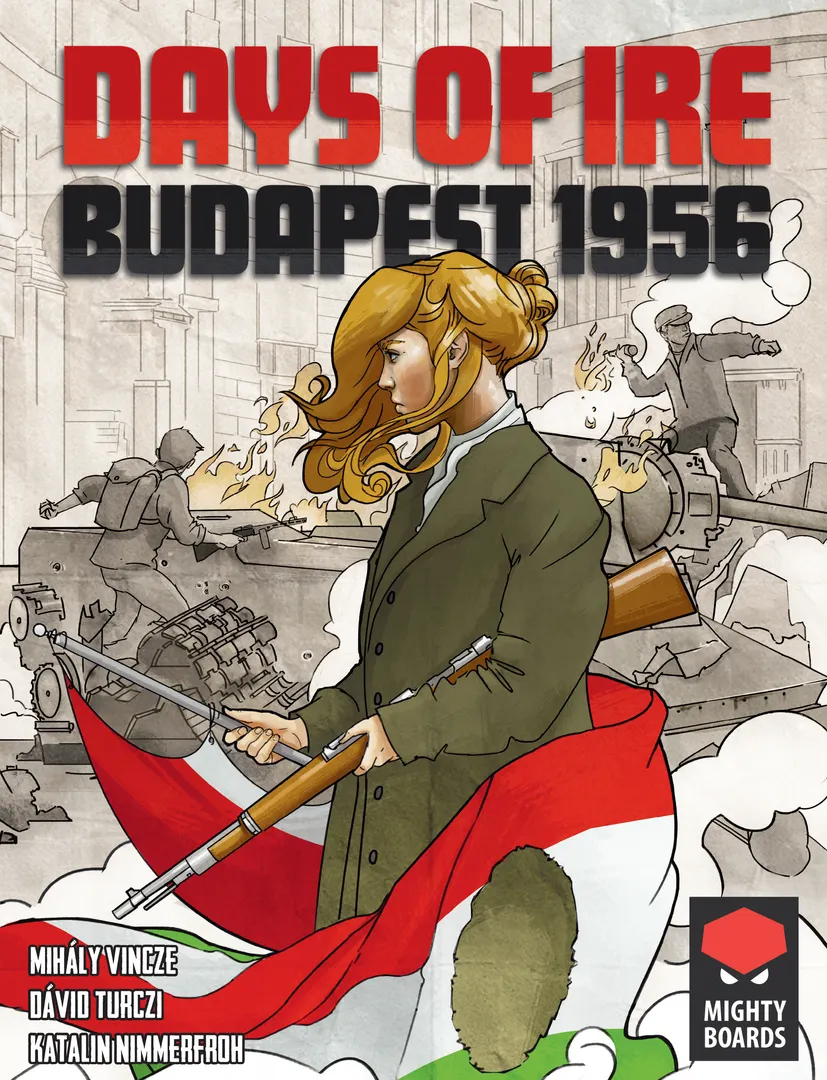
Days of Ire: Budapest 1956 ist ein Brettspiel aus dem Jahr 2016 für 1–4 Personen, mit 60–90 Minuten pro Partie und ab 10 Jahren. Entwickelt wurde es von Dávid Turczi, Mihály Vincze und Katalin Nimmerfroh; die wichtigsten Mechaniken sind Hand Management, Dice Rolling und Cooperative Game.
Auf Englisch
It's 1956, and waves of protest in Poland are once again showing cracks of the Eastern European communist bloc. Emboldened by these signs, students and intellectuals in Budapest, the Hungarian capital, organize a protest of previously unseen magnitudes. As the communist leadership sweeps in to kill the movement in its tracks a violent response is provoked, thus sparking the Revolution of the 23rd of October. One player takes charge of the Soviet forces trying to shape the headlines to his liking and uses the militia and snipers of the State Protection Authority to stop the revolutionaries at all cost. The other player(s) (from 1-3 opponents) co-operatively play as the ringleaders of the revolutionary forces collecting resources (represented as icons on their cards) and recruiting other fighters to ensure the revolution's events end up in favor of their side, while fighting off tanks and soldiers in this exciting, historically inspired card driven game. Days of Ire: Budapest 1956 is played over seven days — the last week of October 1956. The Soviet commander plays headline cards at the beginning of every turn, gathering Command Points and triggering effects that sometimes help, sometimes hinder the revolutionary effort. This card-play, reminiscent of well-known card-driven wargames (CDG) such as Twilight Struggle or Labyrinth: War on Terror, is what drives the tempo and the strategic thrust of the game. The other player(s) form the revolutionary side. They collect cards and fighters for two reasons: to resolve events for boosts to their side, and to fight off militia, snipers, and Soviet tanks in a drastic fight for survival. They have to manage their positions while spreading across Budapest, carefully dividing their actions as a team and always keeping an eye on their morale lest they run out of cards. This team-playing aspect — reminiscent of highly successful cooperative games such as Pandemic — guarantees ease of access to players who would otherwise be more intimidated by a traditional CDG. If any of the revolutionary ringleaders suffer too many wounds, or if they fail to resolve enough events by the end of the game, history changes and the revolution falls. But if they keep the streets of Budapest free from oppression, the revolution lives on, to fight another day. Historical Note: In real life, the revolution succeeded, and Hungary was free for less than a week. On the 4th of November, the Soviet forces quickly recaptured the country, but that is a subject for a different game...
Laut Katalog unterstützt Days of Ire: Budapest 1956 1–4 Personen. Diese Spanne entspricht der vom Verlag angegebenen Spielerzahl, das Spiel lässt sich also für jede Gruppengröße innerhalb dieser Spanne aufbauen. Aufbau, einzelne Regeln und Wertungsdetails können je nach Personenzahl trotzdem abweichen; prüfe daher die genaue Konfiguration in der Anleitung deiner Ausgabe.
Die angegebene Spieldauer für Days of Ire: Budapest 1956 beträgt 60–90 Minuten. Das ist die Schätzung des Verlags für eine vollständige Partie. Die tatsächliche Dauer hängt von der Gruppe, der Personenzahl und der Regelkenntnis ab: Erste Partien dauern meist länger, erfahrene Gruppen sind oft schneller fertig. Aufbau und Regelerklärung sind in dieser Schätzung nicht enthalten.
Im Katalog wird Days of Ire: Budapest 1956 ab 10 Jahren empfohlen. Das ist die Empfehlung des Verlags und berücksichtigt Leseanforderungen, Regelkomplexität und Kleinteile, nicht nur das Thema. Jüngere Kinder können oft mit Hilfe eines Erwachsenen mitspielen; beachte die Altersangabe deiner Ausgabe und die Brettspielerfahrung deiner Gruppe.
Days of Ire: Budapest 1956 hat bei BoardGameGeek eine Komplexitätswertung von 2,8 von 5 und gilt damit als eher leichtes Spiel. Die Wertung zeigt, wie viel Regelwissen, Planung und Entscheidungen eine typische Partie verlangt. Schwerere Spiele brauchen bei der ersten Erklärung mehr Zeit, daher hilft vor dem Spieleabend eine Vorbereitungsanleitung.
Days of Ire: Budapest 1956 gehört zu diesen Kategorien: Wargame, Political und Modern Warfare. Die wichtigsten Mechaniken sind Hand Management, Dice Rolling und Cooperative Game. Kategorien beschreiben Thema und Setting eines Spiels, Mechaniken dagegen, was die Spielenden in ihrem Zug tatsächlich tun. Jede Mechanik führt zu einer Katalogseite mit ähnlichen Spielen, falls du etwas Vergleichbares suchst.
Als Autoren von Days of Ire: Budapest 1956 sind angegeben: Dávid Turczi, Mihály Vincze und Katalin Nimmerfroh. Diese Angaben stammen aus den veröffentlichten Spieldaten und nennen die für das Spieldesign verantwortlichen Personen, nicht die Illustratoren oder Verlage. Die Autorenseiten auf MeepleRules sammeln weitere Titel derselben Autoren – praktisch, wenn dir ein Spiel gefällt und du ähnliche Spiele suchst.
Im Katalog ist Days of Ire: Budapest 1956 als Grundspiel aufgeführt. Es lässt sich eigenständig mit dem Material aus der Schachtel spielen und benötigt keinen weiteren Titel. Erweiterungen, sofern es welche gibt, ergänzen neues Material oder neue Regeln und sind im Katalog separat mit einem Verweis auf dieses Grundspiel aufgeführt.