
- BGG-Rang
- BGG #8.607
- BGG-Bewertung
- 7,3
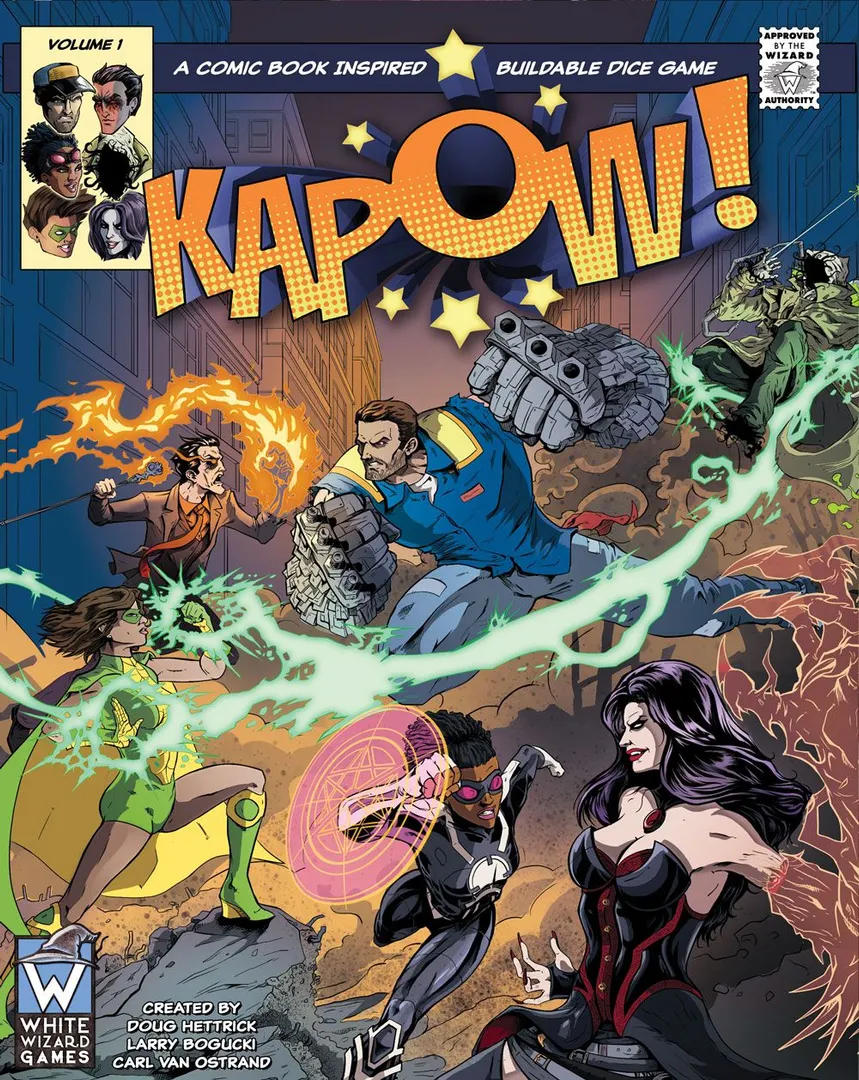
KAPOW! Volume 1
- 1–4 Spieler
- 20–60 Min.
- Komplexität 1,8/5
- 2023
2026
Regelhilfe für Draconis 8
Verständliche Erklärungen zu Spielzügen, Karteneffekten und strittigen Situationen mit Verweisen auf offizielle Quellen und gespeichertem Fragenverlauf.
Für 2 Personen
Was möchtest du wissen?
Antworten stammen aus dem offiziellen Regelheft, mit Seitenangabe zum Nachprüfen.
Draconis 8 ist ein Brettspiel aus dem Jahr 2026 für 2–4 Personen und mit 15–45 Minuten pro Partie. Entwickelt wurde es von Douglas Hettrick und Carl Van Ostrand; die wichtigsten Mechaniken sind Take That, Tile Placement und Square Grid.



Auf Englisch
Draconis 8, where the thrill of a trading card game meets the balance and strategy of a tile-laying board game. Each pack includes a terrain card and a complete, balanced eight-card deck for one player — featuring one powerful dragon and seven champions ready for battle. With millions of possible stat combinations, every card is individually generated to provide endless possibilities. No two cards are alike, yet all are designed to be fair and balanced. The Starter Set has 4 different decks. Each turn, both players draw a card, giving them a two card hand. Then both players choose one of their two cards to play, and reveal them simultaneously. The player who played the card with the higher initiative (the number in the circle in the upper left) claims a yellow bead (worth 1 victory point). They play their card onto the table next to (orthogonally or diagonally adjacent to) any card in play. Then the player with the lower initiative card plays it onto the table. If at any time, a card's challenge strength number (in the shield) is next to a smaller combat number on an opposing (or terrain) card, then the owner places a bead of their color on that combat number to show they will get a victory point at the end of the game. Note that some abilities may cause cards in play to shift. If a card moves, remove all beads from fights it was involved in and recalculate, placing beads based on its new position. Over the 7 turns of the game, cards will form a 4x4 grid. Once there are 4 cards in a row or column, the edges of the grid on that side are locked and cards can't be played beyond those edges. At the end of the 7th turn, players add up their score summing their beads in play plus the yellow initiative beads they won. The player with the higher score wins! —description from the publisher
Laut Katalog unterstützt Draconis 8 2–4 Personen. Diese Spanne entspricht der vom Verlag angegebenen Spielerzahl, das Spiel lässt sich also für jede Gruppengröße innerhalb dieser Spanne aufbauen. Aufbau, einzelne Regeln und Wertungsdetails können je nach Personenzahl trotzdem abweichen; prüfe daher die genaue Konfiguration in der Anleitung deiner Ausgabe.
Die angegebene Spieldauer für Draconis 8 beträgt 15–45 Minuten. Das ist die Schätzung des Verlags für eine vollständige Partie. Die tatsächliche Dauer hängt von der Gruppe, der Personenzahl und der Regelkenntnis ab: Erste Partien dauern meist länger, erfahrene Gruppen sind oft schneller fertig. Aufbau und Regelerklärung sind in dieser Schätzung nicht enthalten.
Draconis 8 gehört zu diesen Kategorien: Card Game, Fantasy und Collectible Components. Die wichtigsten Mechaniken sind Take That, Tile Placement und Square Grid. Kategorien beschreiben Thema und Setting eines Spiels, Mechaniken dagegen, was die Spielenden in ihrem Zug tatsächlich tun. Jede Mechanik führt zu einer Katalogseite mit ähnlichen Spielen, falls du etwas Vergleichbares suchst.
Als Autoren von Draconis 8 sind angegeben: Douglas Hettrick und Carl Van Ostrand. Diese Angaben stammen aus den veröffentlichten Spieldaten und nennen die für das Spieldesign verantwortlichen Personen, nicht die Illustratoren oder Verlage. Die Autorenseiten auf MeepleRules sammeln weitere Titel derselben Autoren – praktisch, wenn dir ein Spiel gefällt und du ähnliche Spiele suchst.
Im Katalog ist Draconis 8 als Grundspiel aufgeführt. Es lässt sich eigenständig mit dem Material aus der Schachtel spielen und benötigt keinen weiteren Titel. Erweiterungen, sofern es welche gibt, ergänzen neues Material oder neue Regeln und sind im Katalog separat mit einem Verweis auf dieses Grundspiel aufgeführt.