
- BGG-Bewertung
- 7,8
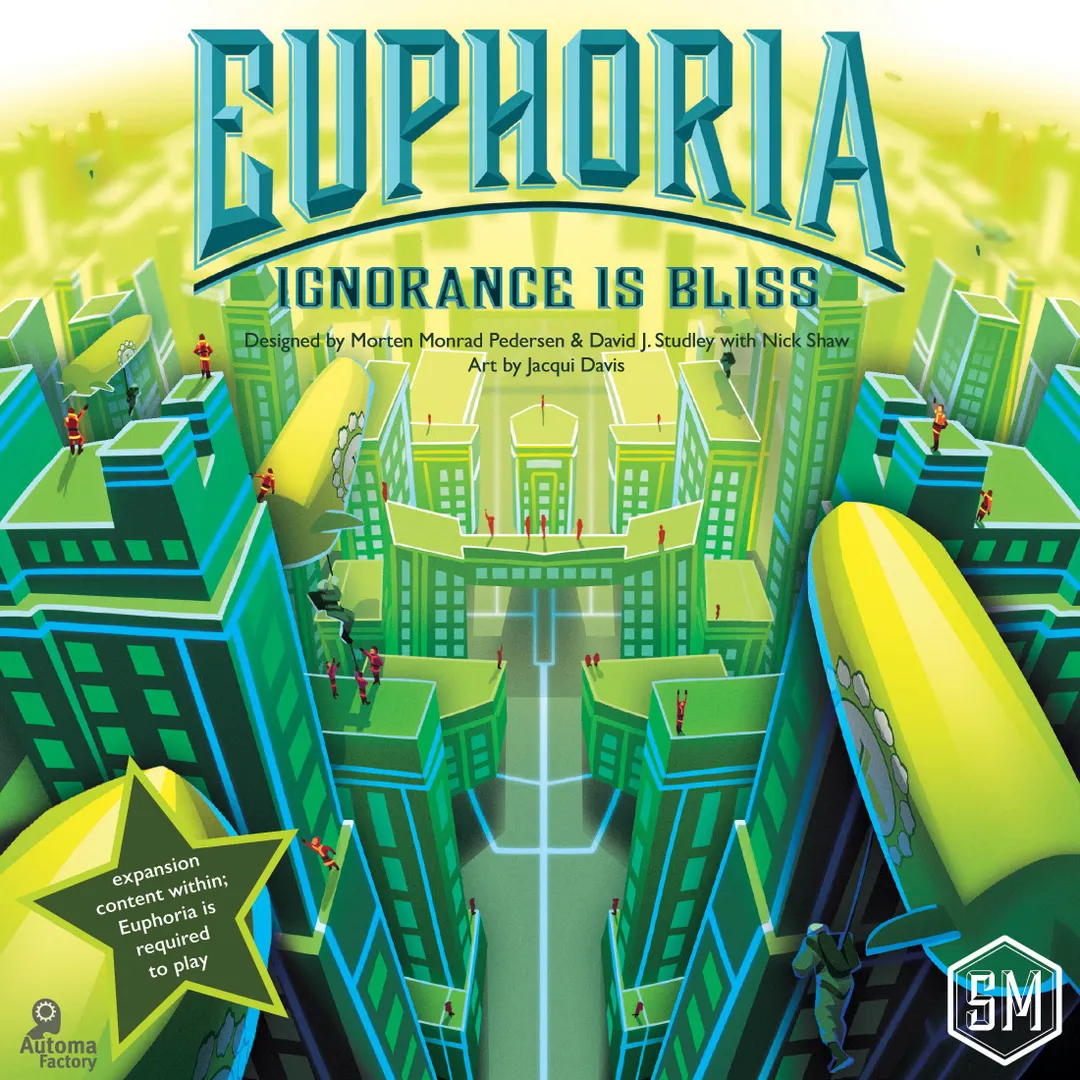
Euphoria: Ignorance Is Bliss
- 1–6 Spieler
- 40–90 Min.
- Komplexität 3,1/5
- 2019
2013
Regelhilfe für Euphoria: Build a Better Dystopia
Verständliche Erklärungen zu Spielzügen, Karteneffekten und strittigen Situationen mit Verweisen auf offizielle Quellen und gespeichertem Fragenverlauf.
Für 2 Personen
Was möchtest du wissen?
Antworten stammen aus dem offiziellen Regelheft, mit Seitenangabe zum Nachprüfen.
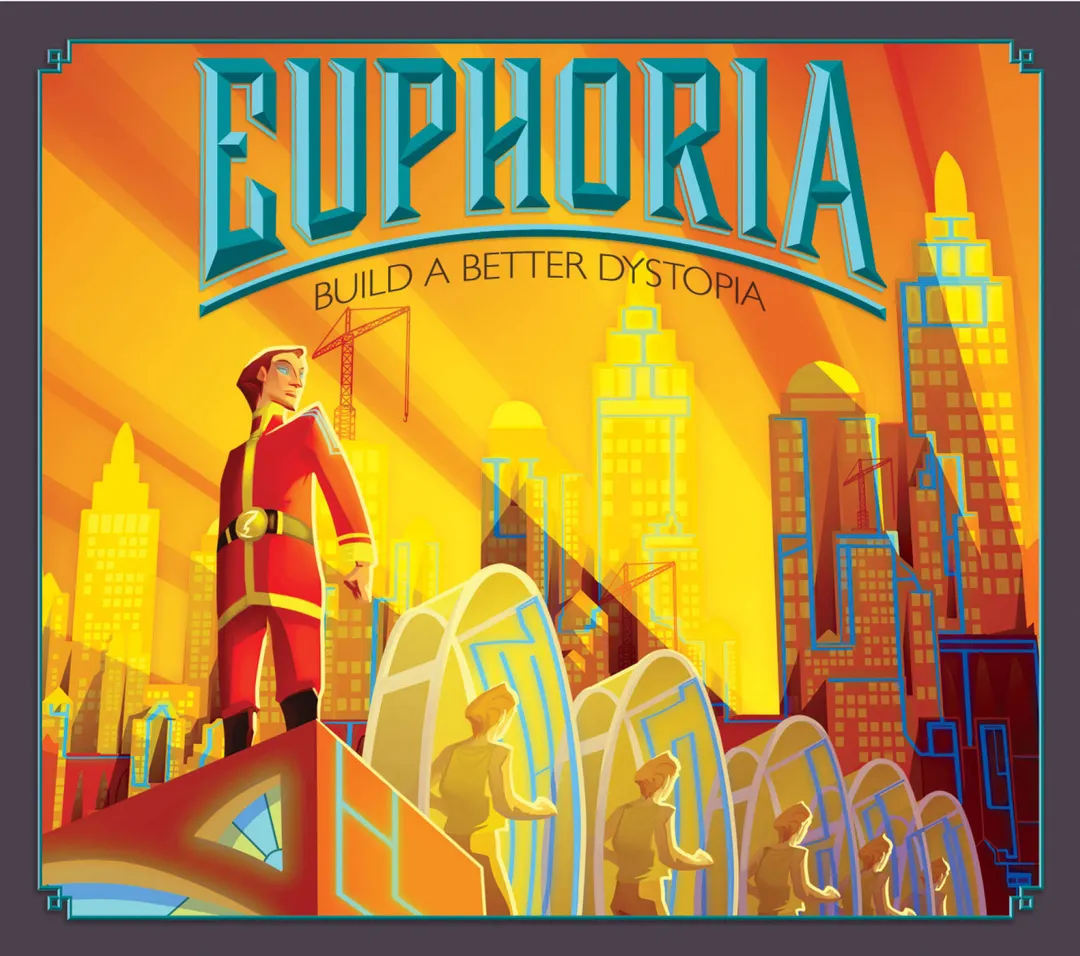
Euphoria: Build a Better Dystopia ist ein Brettspiel aus dem Jahr 2013 für 2–6 Personen, mit 60 Minuten pro Partie und ab 13 Jahren. Entwickelt wurde es von Jamey Stegmaier und Alan Stone; die wichtigsten Mechaniken sind Variable Player Powers, Hand Management und Race.

Auf Englisch
You find yourself in a dystopian cityscape with a few workers at your disposal to make your mark on the world. Like most people in dystopian fiction, your workers are oblivious to their situation. This world is all they've ever known, and you may use them at your whim. The world as we know it has ended, and in its place the city of Euphoria has risen. Believing that a new world order is needed to prevent another apocalypse, the Euphorian elite erect high walls around their golden city and promote intellectual equality above all else. Gone are personal freedoms; gone is knowledge of the past. All that matters is the future. The Euphorians aren’t alone. Outside the city are those who experienced the apocalypse firsthand—they have the memories and scars to prove it. These Wastelanders have cobbled together a society of historians and farmers among the forgotten scrap yards of the past. There is more to the world than the surface of the earth. Deep underground lies the hidden city of Subterra, occupied by miners, mechanics, and revolutionaries. By keeping their workers in the dark, they’ve patched together a network of pipes and sewers, of steam and gears, of hidden passages and secret stairways. In Euphoria: Build a Better Dystopia, you lead a team of workers (dice) and recruits (cards) to claim ownership of the dystopian world. You will generate commodities, dig tunnels to infiltrate opposing areas, construct markets, collect artifacts, strengthen allegiances, and fulfill secret agendas. Euphoria is a worker-placement game in which dice are your workers. The number on each die represents a worker's knowledge—that is, his level of awareness that he's in a dystopia. Worker knowledge enables various bonuses and impacts player interaction. If the collective knowledge of all of your available workers gets too high, one of them might desert you. You also have two elite recruit cards at your disposal; one has pledged allegiance to you, but the other needs some convincing. You can reveal and use the reticent recruit by reaching certain milestones in the game... or by letting other players unwittingly reach those milestones for you. Your path to victory is paved with the sweat of your workers, the strength of your allegiances, and the tunnels you dig to infiltrate other areas of the world, but the destination is a land grab in the form of area control. You accomplish this by constructing markets that impose harsh restrictions of personal freedoms upon other players, changing the face of the game and opening new paths to victory. You can also focus on gathering artifacts from the old world, objects of leisure that are extremely rare in this utilitarian society. The dystopian elite covet these artifacts—especially matching pairs—and are willing to give you tracts of land in exchange for them. Four distinct societies, each of them waiting for you to rewrite history. What are you willing to sacrifice to build a better dystopia?
Laut Katalog unterstützt Euphoria: Build a Better Dystopia 2–6 Personen. Diese Spanne entspricht der vom Verlag angegebenen Spielerzahl, das Spiel lässt sich also für jede Gruppengröße innerhalb dieser Spanne aufbauen. Aufbau, einzelne Regeln und Wertungsdetails können je nach Personenzahl trotzdem abweichen; prüfe daher die genaue Konfiguration in der Anleitung deiner Ausgabe.
Die angegebene Spieldauer für Euphoria: Build a Better Dystopia beträgt 60 Minuten. Das ist die Schätzung des Verlags für eine vollständige Partie. Die tatsächliche Dauer hängt von der Gruppe, der Personenzahl und der Regelkenntnis ab: Erste Partien dauern meist länger, erfahrene Gruppen sind oft schneller fertig. Aufbau und Regelerklärung sind in dieser Schätzung nicht enthalten.
Im Katalog wird Euphoria: Build a Better Dystopia ab 13 Jahren empfohlen. Das ist die Empfehlung des Verlags und berücksichtigt Leseanforderungen, Regelkomplexität und Kleinteile, nicht nur das Thema. Jüngere Kinder können oft mit Hilfe eines Erwachsenen mitspielen; beachte die Altersangabe deiner Ausgabe und die Brettspielerfahrung deiner Gruppe.
Euphoria: Build a Better Dystopia hat bei BoardGameGeek eine Komplexitätswertung von 3,1 von 5 und gilt damit als mittelschweres Spiel. Die Wertung zeigt, wie viel Regelwissen, Planung und Entscheidungen eine typische Partie verlangt. Schwerere Spiele brauchen bei der ersten Erklärung mehr Zeit, daher hilft vor dem Spieleabend eine Vorbereitungsanleitung.
Euphoria: Build a Better Dystopia gehört zu diesen Kategorien: Science Fiction. Die wichtigsten Mechaniken sind Variable Player Powers, Hand Management und Race. Kategorien beschreiben Thema und Setting eines Spiels, Mechaniken dagegen, was die Spielenden in ihrem Zug tatsächlich tun. Jede Mechanik führt zu einer Katalogseite mit ähnlichen Spielen, falls du etwas Vergleichbares suchst.
Als Autoren von Euphoria: Build a Better Dystopia sind angegeben: Jamey Stegmaier und Alan Stone. Diese Angaben stammen aus den veröffentlichten Spieldaten und nennen die für das Spieldesign verantwortlichen Personen, nicht die Illustratoren oder Verlage. Die Autorenseiten auf MeepleRules sammeln weitere Titel derselben Autoren – praktisch, wenn dir ein Spiel gefällt und du ähnliche Spiele suchst.
Im Katalog ist Euphoria: Build a Better Dystopia als Grundspiel aufgeführt. Es lässt sich eigenständig mit dem Material aus der Schachtel spielen und benötigt keinen weiteren Titel. Erweiterungen, sofern es welche gibt, ergänzen neues Material oder neue Regeln und sind im Katalog separat mit einem Verweis auf dieses Grundspiel aufgeführt.