
- BGG-Rang
- BGG #28.578
- BGG-Bewertung
- 5,3
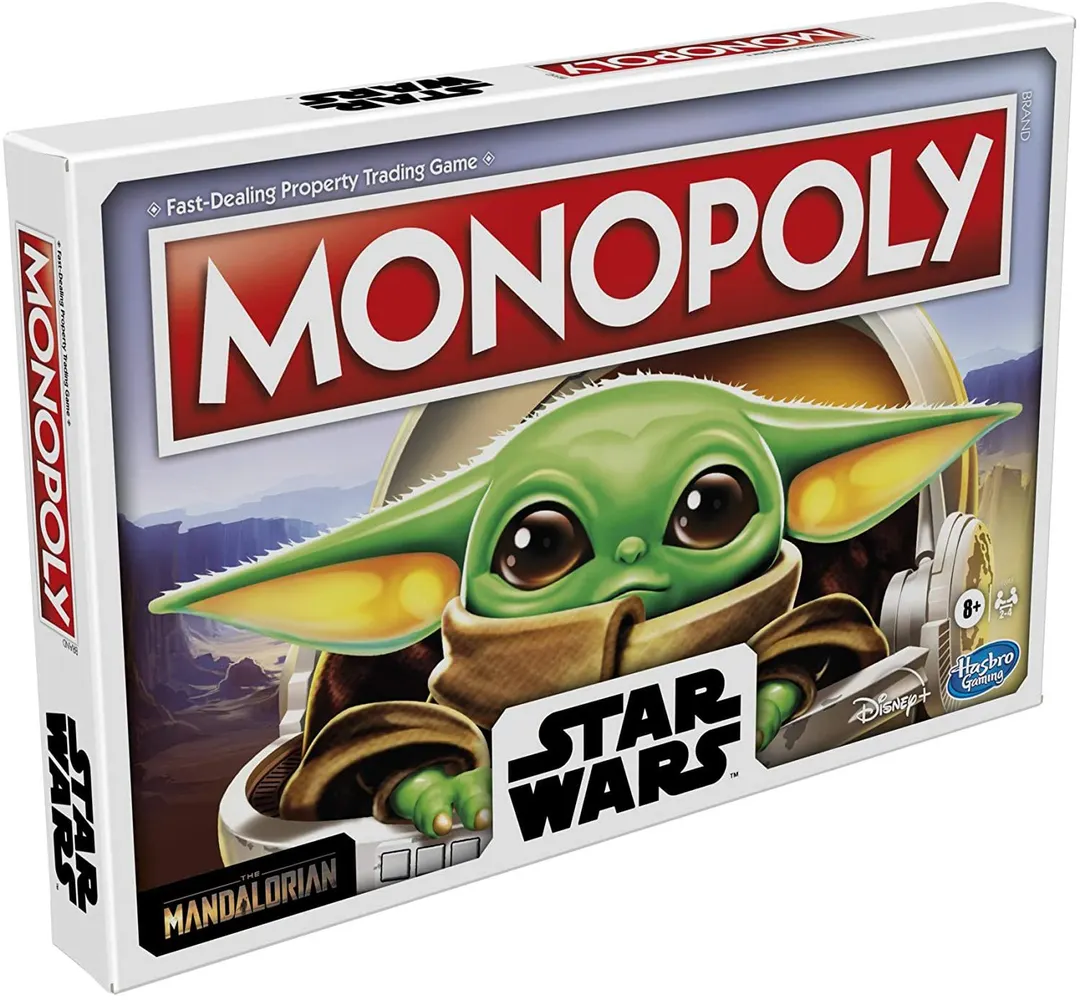
Monopoly: Star Wars – The Child Edition
- 2–4 Spieler
- 2020
1983
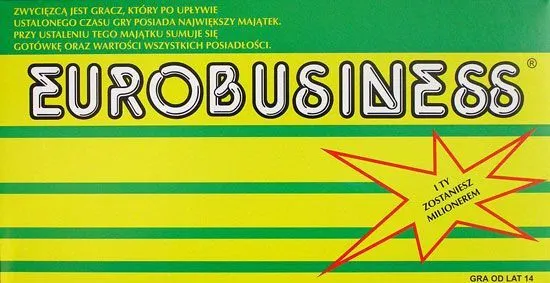
Regelhilfe für Eurobusiness
Verständliche Erklärungen zu Spielzügen, Karteneffekten und strittigen Situationen mit Verweisen auf offizielle Quellen und gespeichertem Fragenverlauf.
Was möchtest du wissen?
Antworten stammen aus dem offiziellen Regelheft, mit Seitenangabe zum Nachprüfen.
Eurobusiness ist ein Brettspiel aus dem Jahr 1983 für 2–5 Personen, mit 90 Minuten pro Partie und ab 14 Jahren. Die wichtigsten Mechaniken sind Set Collection, Trading und Auction / Bidding.

Auf Englisch
Theme This game is a Polish version of Monopoly, created and published in Poland in 1983 (during enforced communist period) by Labo Market Sp. z o.o.. Players become investors who buy lands and develop buildings. The cash flow in the game consists of taxes (for players staying on others' possessions) and events from "Chance" cards (fines, taxes, misfortunes). In a difficult situation, players can pledge their properties – otherwise, the player bankrupts and loses the game. Goal The goal of the game is to be the last player remaining with any money – after everyone else's bankruptcy or after established time os over. Gameplay Game mechanics is almost exactly the same like in Monopoly. Each turn, the player rolls two dice, moves around the board and buys properties located in various European countries (from communist period), grouped by their region. 1) If a player lands on an unexploited property, he can buy it or allow the bank to auction it to other players. 2) If he lands on someone's property, he must pay its owner a rent (proportional to the value of the land and its buildings). 3) If the property belongs to the player and he has all the lands in the country, he can build houses or hotels that increase rent for visitors. There are also other places on the board that you can't buy, but they require the player to draw a "Chance" card, pay taxes, collect income, and even go to jail. Each player also has regular income everytime they pass the starting field. Properties are located in countries listed below (from cheapest to most expensive): South: Greece (2 properties) – yellow color, Italy (3) – red color. West: Spain (3) – blue color and Great Britain (3) – orange color. North: Benelux (Holland, Belgium and Luxembourg, summary 3 properties) – green color and Sweden (3) – purple color East: RFN /West Germany/ (3) – brown color and Austria (2) – black color. The game continues until everyone but one player leave the game (bankrupt) or until an established time is over. I the latter case all players sum up they fortune – cash, power plant, railway stations, water supply, properties (not taken to pledge) with the value of buildings, half value of properties taken to pledge. It is still avaible in shops for around 8$.
Laut Katalog unterstützt Eurobusiness 2–5 Personen. Diese Spanne entspricht der vom Verlag angegebenen Spielerzahl, das Spiel lässt sich also für jede Gruppengröße innerhalb dieser Spanne aufbauen. Aufbau, einzelne Regeln und Wertungsdetails können je nach Personenzahl trotzdem abweichen; prüfe daher die genaue Konfiguration in der Anleitung deiner Ausgabe.
Die angegebene Spieldauer für Eurobusiness beträgt 90 Minuten. Das ist die Schätzung des Verlags für eine vollständige Partie. Die tatsächliche Dauer hängt von der Gruppe, der Personenzahl und der Regelkenntnis ab: Erste Partien dauern meist länger, erfahrene Gruppen sind oft schneller fertig. Aufbau und Regelerklärung sind in dieser Schätzung nicht enthalten.
Im Katalog wird Eurobusiness ab 14 Jahren empfohlen. Das ist die Empfehlung des Verlags und berücksichtigt Leseanforderungen, Regelkomplexität und Kleinteile, nicht nur das Thema. Jüngere Kinder können oft mit Hilfe eines Erwachsenen mitspielen; beachte die Altersangabe deiner Ausgabe und die Brettspielerfahrung deiner Gruppe.
Eurobusiness hat bei BoardGameGeek eine Komplexitätswertung von 1,4 von 5 und gilt damit als leichtes Spiel. Die Wertung zeigt, wie viel Regelwissen, Planung und Entscheidungen eine typische Partie verlangt. Schwerere Spiele brauchen bei der ersten Erklärung mehr Zeit, daher hilft vor dem Spieleabend eine Vorbereitungsanleitung.
Eurobusiness gehört zu diesen Kategorien: Economic und Negotiation. Die wichtigsten Mechaniken sind Set Collection, Trading und Auction / Bidding. Kategorien beschreiben Thema und Setting eines Spiels, Mechaniken dagegen, was die Spielenden in ihrem Zug tatsächlich tun. Jede Mechanik führt zu einer Katalogseite mit ähnlichen Spielen, falls du etwas Vergleichbares suchst.
Im Katalog ist Eurobusiness als Grundspiel aufgeführt. Es lässt sich eigenständig mit dem Material aus der Schachtel spielen und benötigt keinen weiteren Titel. Erweiterungen, sofern es welche gibt, ergänzen neues Material oder neue Regeln und sind im Katalog separat mit einem Verweis auf dieses Grundspiel aufgeführt.