
- BGG-Bewertung
- 7,5
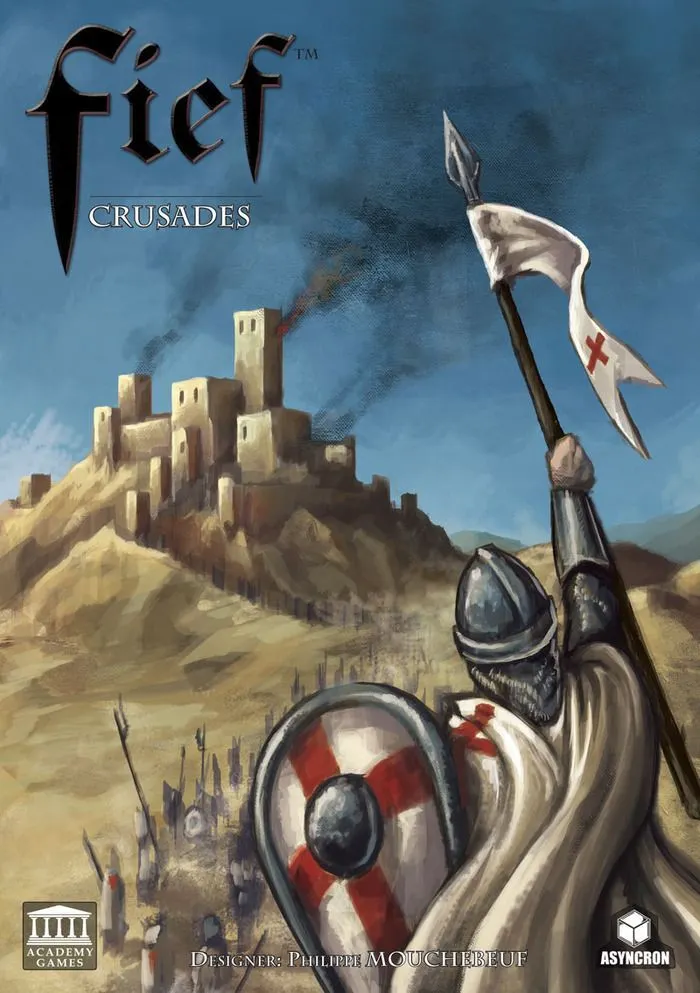
Fief: France 1429 – Crusades
- 3–6 Spieler
- 120 Min.
- Komplexität 3,7/5
- 2015
2023
Regelhilfe für Fief: France
Verständliche Erklärungen zu Spielzügen, Karteneffekten und strittigen Situationen mit Verweisen auf offizielle Quellen und gespeichertem Fragenverlauf.
Für 3 Personen
Was möchtest du wissen?
Antworten stammen aus dem offiziellen Regelheft, mit Seitenangabe zum Nachprüfen.
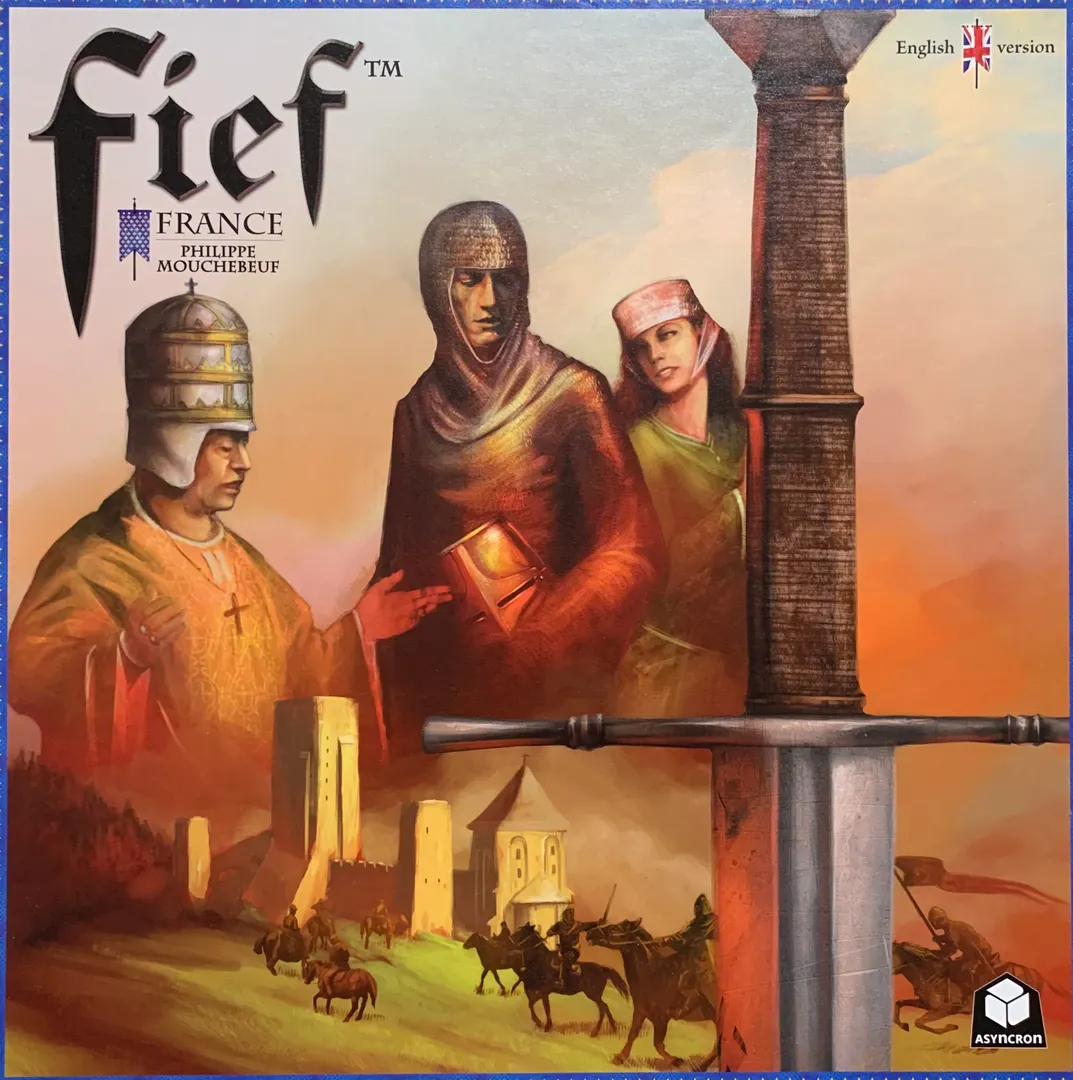
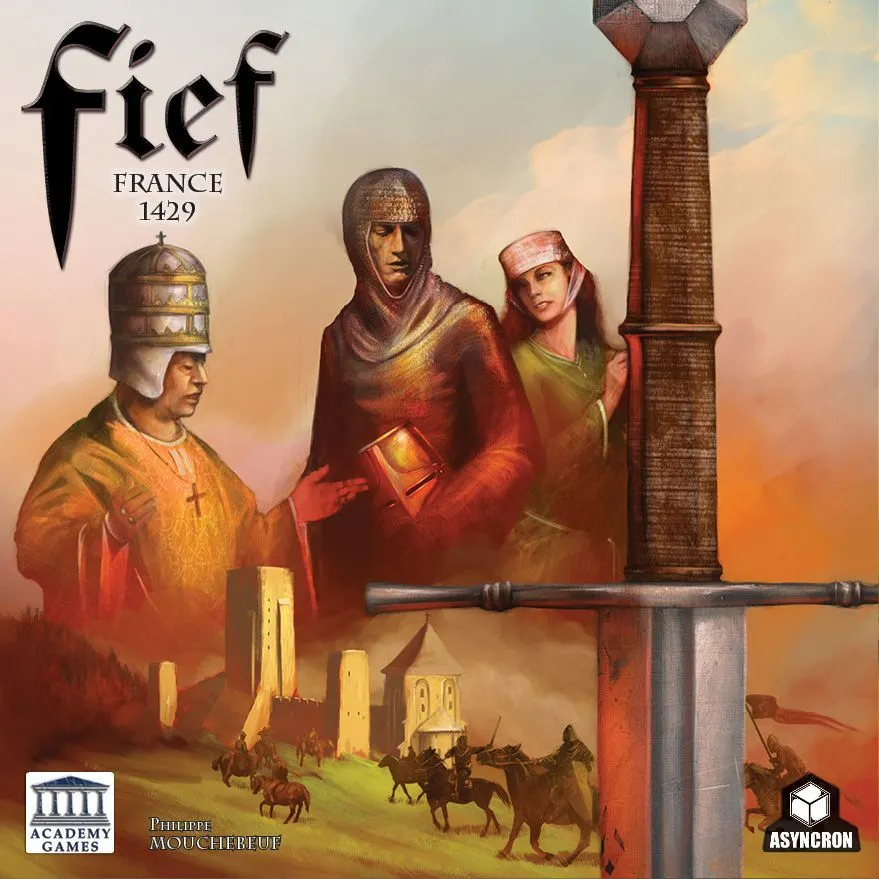
Fief: France ist ein Brettspiel aus dem Jahr 2023 für 3–6 Personen, mit 120–180 Minuten pro Partie und ab 14 Jahren. Entwickelt wurde es von Philippe Mouchebeuf; die wichtigsten Mechaniken sind Hand Management, Race und Player Elimination.




Auf Englisch
FIEF: France is a game of dynastic ambition in which players assume the roles of nobles in the 15th century kingdom of France. Each player strives to become the most powerful ruling force in the kingdom by gaining control of Fiefs and Bishoprics. In turn, they acquire Royal and Ecclesiastical (church) titles which give their families influence to elect the next Pope and King. Players strengthen their positions by negotiating marriage alliances between their families, setting the stage for love, treachery, and deception! FIEF is a classic game and this edition includes a new board (Fief: France 1429 – France Gameboard)! The game board represents the Kingdom of France in the Middle Ages. Villages have square outlines that are connected by roads that allow Lord and Troop movement. The villages are grouped into eight colored background areas that represent individual Fiefs, which are domains given to Lords to preside over. Fiefs have different colored backgrounds. Each village also belongs to one of five church Bishoprics; each Bishopric is outlined with a heavy border line and is numbered between 1-5 along the edge of the board inside a Bishop's Mitre. Bishoprics include several different Fiefs' villages. Each player controls up to four family members, comprised of male and female nobles. These family members will rise in power by gaining Royal and Ecclesiastic Titles. In FIEF France edition, a player may attempt to gain control of all the villages in a Fief to gain the Royal Title of Baron, Earl, or Duke. For each Fief a player controls, they gain 1 VP. These Titled Lords may now take part in the election for the next King. They may even be a candidate to become King, thus bringing 1 VP and more power to the family! Other members of your family may follow the calling of the Church to gain the Ecclesiastical Titles of Bishop and then Cardinal. These titles allow you to Tithe Bishoprics, taking the Church's (i.e. "your") fair share of income from other Fief Lords! The highest goal your clerical family member can attain is to be elected Pope, bringing 1 VP and special privileges to your family! You win the game as soon as you have 3 VPs. This is easier said than done and you may need to form alliances with other players through diplomacy and marriage to attain your goal. When one of your family members marries a noble of another family, the two of you become allied. You now win the game together with 4 VPs and cannot win alone, unless your marriage is annulled by the Pope or your spouse is "mysteriously" murdered or dies by some other foul means! In addition to being wary of your fellow players, you draw event cards that can quickly change your destiny. Bounty Event cards are beneficial to the Player and include "Good Harvest", "Good Weather", and "Added Taxes" cards. But some cards are Disaster Cards that can randomly affect all players in specific Bishoprics. These include "The Plague", "Heavy Rain", "Famine", and "Peasant Uprising"! Income can be increased by players imposing church tithes on their opponent's villages or taxing their own Fiefs. Players may purchase new Fief titles, improve their village incomes with mills, and fortify their cities. Players will also need to protect their land and castles. Men-at-Arms and Knights can be purchased, as well as Archers and Bombards. If you feel that other players are not running their Fiefs as well as you can, you may try to invade their territories! But you must risk one of your family members to lead the troops into possible battle, where they might be killed or taken prisoner. If two opposing armies are in the same village square, a Battle may be initiated. The players assess the size and strength of their armies, which determine the number of Battle Dice each may roll. Each "f" rolled is a hit. Men-at-Arms are defeated with one hit, while Knights require three hits to be removed from the battle. -description from publisher
Laut Katalog unterstützt Fief: France 3–6 Personen. Diese Spanne entspricht der vom Verlag angegebenen Spielerzahl, das Spiel lässt sich also für jede Gruppengröße innerhalb dieser Spanne aufbauen. Aufbau, einzelne Regeln und Wertungsdetails können je nach Personenzahl trotzdem abweichen; prüfe daher die genaue Konfiguration in der Anleitung deiner Ausgabe.
Die angegebene Spieldauer für Fief: France beträgt 120–180 Minuten. Das ist die Schätzung des Verlags für eine vollständige Partie. Die tatsächliche Dauer hängt von der Gruppe, der Personenzahl und der Regelkenntnis ab: Erste Partien dauern meist länger, erfahrene Gruppen sind oft schneller fertig. Aufbau und Regelerklärung sind in dieser Schätzung nicht enthalten.
Im Katalog wird Fief: France ab 14 Jahren empfohlen. Das ist die Empfehlung des Verlags und berücksichtigt Leseanforderungen, Regelkomplexität und Kleinteile, nicht nur das Thema. Jüngere Kinder können oft mit Hilfe eines Erwachsenen mitspielen; beachte die Altersangabe deiner Ausgabe und die Brettspielerfahrung deiner Gruppe.
Fief: France hat bei BoardGameGeek eine Komplexitätswertung von 3,9 von 5 und gilt damit als schweres Spiel. Die Wertung zeigt, wie viel Regelwissen, Planung und Entscheidungen eine typische Partie verlangt. Schwerere Spiele brauchen bei der ersten Erklärung mehr Zeit, daher hilft vor dem Spieleabend eine Vorbereitungsanleitung.
Fief: France gehört zu diesen Kategorien: Economic, Territory Building und Medieval. Die wichtigsten Mechaniken sind Hand Management, Race und Player Elimination. Kategorien beschreiben Thema und Setting eines Spiels, Mechaniken dagegen, was die Spielenden in ihrem Zug tatsächlich tun. Jede Mechanik führt zu einer Katalogseite mit ähnlichen Spielen, falls du etwas Vergleichbares suchst.
Als Autoren von Fief: France sind angegeben: Philippe Mouchebeuf. Diese Angaben stammen aus den veröffentlichten Spieldaten und nennen die für das Spieldesign verantwortlichen Personen, nicht die Illustratoren oder Verlage. Die Autorenseiten auf MeepleRules sammeln weitere Titel derselben Autoren – praktisch, wenn dir ein Spiel gefällt und du ähnliche Spiele suchst.
Im Katalog ist Fief: France als Grundspiel aufgeführt. Es lässt sich eigenständig mit dem Material aus der Schachtel spielen und benötigt keinen weiteren Titel. Erweiterungen, sofern es welche gibt, ergänzen neues Material oder neue Regeln und sind im Katalog separat mit einem Verweis auf dieses Grundspiel aufgeführt.