
- BGG-Rang
- BGG #802
- BGG-Bewertung
- 7,7
Moonrakers
- 1–5 Spieler
- 60–120 Min.
- Komplexität 2,5/5
- 2020
2012
Regelhilfe für Fleet Admiral
Verständliche Erklärungen zu Spielzügen, Karteneffekten und strittigen Situationen mit Verweisen auf offizielle Quellen und gespeichertem Fragenverlauf.
Was möchtest du wissen?
Antworten stammen aus dem offiziellen Regelheft, mit Seitenangabe zum Nachprüfen.
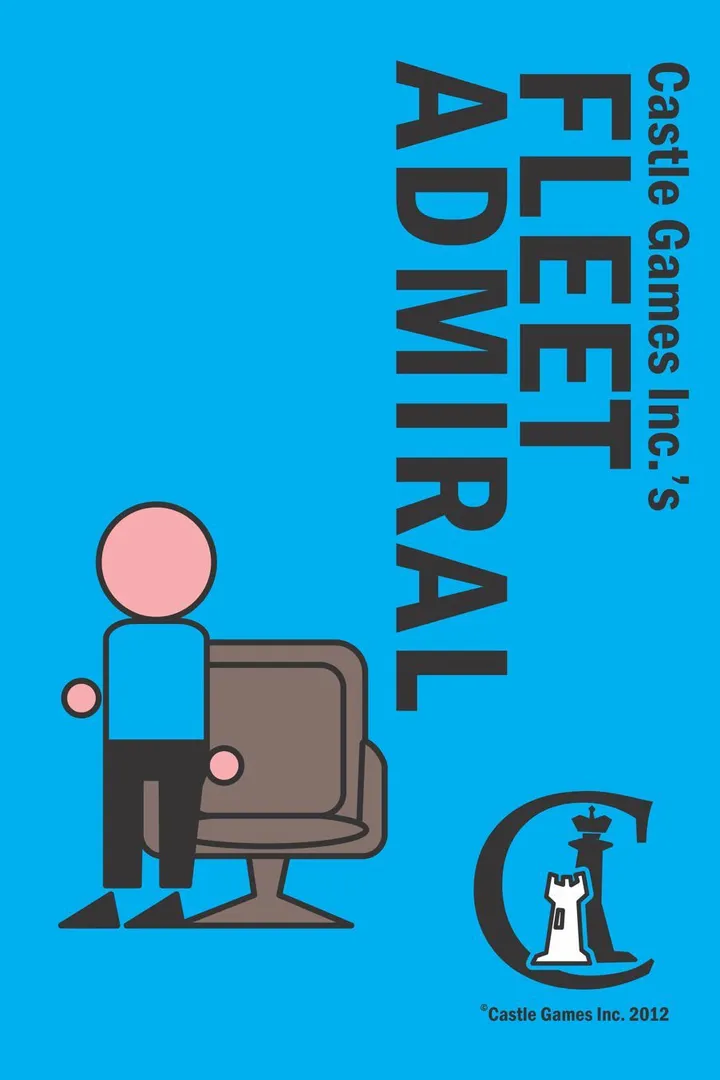
Fleet Admiral ist ein Brettspiel aus dem Jahr 2012 für 1–4 Personen, mit 30 Minuten pro Partie und ab 12 Jahren. Entwickelt wurde es von Jean-Paul Lapointe; die wichtigsten Mechaniken sind Push Your Luck und Dice Rolling.








Auf Englisch
From the back of the box. Fleet Admiral is a card game about becoming a fleet admiral. Take your intrepid crew on missions, earn prestige, upgrade your ship. Solve a galactic crisis. And do it all faster than your opponents, because they want to be in charge too. End of box You are in command of a space vessel from one of the major powers of the Portable Galactic Empire (Human, Brerasan, Hragsh or Jasl-Riin). You want to become the fleet admiral. You begin the game with a frigate from your race with a power/up grade cost of 1. One level 1 crew member (orange shirt AKA (also known as) Operations, or a green shirt AKA Marine, or a blue shirt AKA Command) think Star Trek shirts with the colors changed. You also draw one level 1 Component card. there are four types (weapons, power, sensors and defence). Each of these card types has three specialty sub groups in their category. When you add these cards to your ship you put them under your player board (ship), similar to Glory to Rome. Game play: There are two decks of cards (component and crew). On your turn you go on a "mission". An 8 sided die is rolled. Four symbols on the die match the crew deck, 4 match the component deck, 1 thumbs up and 1 explosion. If you roll a symbol with one of the two deck symbols you draw one card from that deck. On the upper portion of the card there will be one or two symbols. If you don't have Crew or Components that match the symbol or symbols the mission is failed. If you can match the first card you must roll again and draw another card. Now you must be able to match up evenly with what is on the cards to what is on your ship. Lets say the first card required a missile. This is a subset of the weapon card. So if you have a weapon card on your ship it must also be specific to the missile to pass phase one of this mission. The second card drawn required an orange shirt. Lets say you only have a green shirt assigned to the security section of your ship. No worries. As captain you count as one crewman of any shirt color. You have passed the second part of the mission. You could push your luck and roll the die again for a third part of the mission, but if you fail the requirement of the third card the entire mission fails. So you stop at two. You may now attach these cards to your ship if you wish. The first card was a crewman. You assign his orange shirt self to your medical station. The second card was Defenses, sub-set shields. You put it on your ship. These cards now help you win future missions. If you roll the thumbs up symbol you pick a card from either deck and auto pass that stage no matter what. If it is the explosion the whole mission is failed, no matter what. There are a few more rules in this area but that's the bulk. As missions progress you can use cards earned from winning missions to upgrade your ship. Bigger ship equals more crew that can be attached and more powerful weapons. When you upgrade to a battleship a crisis starts to perk. This is abstract. At the beginning of a players turn (battleship or higher in possession) a crisis chit is placed in a pool on the table. Once that pool grows to double the amount of players a crisis has begun. If the pool grows beyond four times the players at the table everyone loses the game. You knock the chits down on your turn by taking cards you have won during the mission and instead of adding them to your ship you discard them. Each won card discarded removes a chit. There is some coop stuff possible on missions and if you beat the crisis you add up the point totals on your ship cards to determine the winner or "fleet admiral". A light game that could be used as a filler or just with beer and pretzels. A little tongue in cheek ship captain card play fun that takes about half an hour.
Laut Katalog unterstützt Fleet Admiral 1–4 Personen. Diese Spanne entspricht der vom Verlag angegebenen Spielerzahl, das Spiel lässt sich also für jede Gruppengröße innerhalb dieser Spanne aufbauen. Aufbau, einzelne Regeln und Wertungsdetails können je nach Personenzahl trotzdem abweichen; prüfe daher die genaue Konfiguration in der Anleitung deiner Ausgabe.
Die angegebene Spieldauer für Fleet Admiral beträgt 30 Minuten. Das ist die Schätzung des Verlags für eine vollständige Partie. Die tatsächliche Dauer hängt von der Gruppe, der Personenzahl und der Regelkenntnis ab: Erste Partien dauern meist länger, erfahrene Gruppen sind oft schneller fertig. Aufbau und Regelerklärung sind in dieser Schätzung nicht enthalten.
Im Katalog wird Fleet Admiral ab 12 Jahren empfohlen. Das ist die Empfehlung des Verlags und berücksichtigt Leseanforderungen, Regelkomplexität und Kleinteile, nicht nur das Thema. Jüngere Kinder können oft mit Hilfe eines Erwachsenen mitspielen; beachte die Altersangabe deiner Ausgabe und die Brettspielerfahrung deiner Gruppe.
Fleet Admiral hat bei BoardGameGeek eine Komplexitätswertung von 1,5 von 5 und gilt damit als leichtes Spiel. Die Wertung zeigt, wie viel Regelwissen, Planung und Entscheidungen eine typische Partie verlangt. Schwerere Spiele brauchen bei der ersten Erklärung mehr Zeit, daher hilft vor dem Spieleabend eine Vorbereitungsanleitung.
Fleet Admiral gehört zu diesen Kategorien: Card Game und Science Fiction. Die wichtigsten Mechaniken sind Push Your Luck und Dice Rolling. Kategorien beschreiben Thema und Setting eines Spiels, Mechaniken dagegen, was die Spielenden in ihrem Zug tatsächlich tun. Jede Mechanik führt zu einer Katalogseite mit ähnlichen Spielen, falls du etwas Vergleichbares suchst.
Als Autoren von Fleet Admiral sind angegeben: Jean-Paul Lapointe. Diese Angaben stammen aus den veröffentlichten Spieldaten und nennen die für das Spieldesign verantwortlichen Personen, nicht die Illustratoren oder Verlage. Die Autorenseiten auf MeepleRules sammeln weitere Titel derselben Autoren – praktisch, wenn dir ein Spiel gefällt und du ähnliche Spiele suchst.
Im Katalog ist Fleet Admiral als Grundspiel aufgeführt. Es lässt sich eigenständig mit dem Material aus der Schachtel spielen und benötigt keinen weiteren Titel. Erweiterungen, sofern es welche gibt, ergänzen neues Material oder neue Regeln und sind im Katalog separat mit einem Verweis auf dieses Grundspiel aufgeführt.
