

- BGG-Bewertung
- 6,7
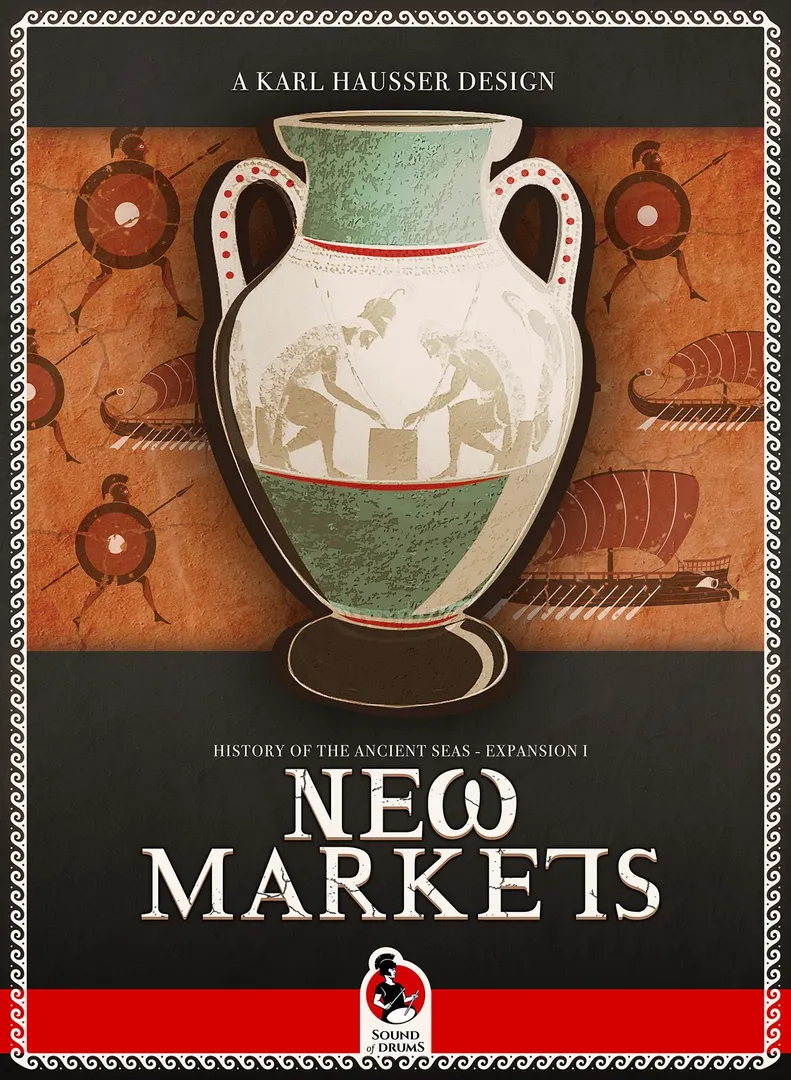
History of the Ancient Seas: Expansion III – New Armies
- 2–5 Spieler
- 180–360 Min.
- 2024

2024
Regelhilfe für History of the Ancient Seas I: HELLAS
Verständliche Erklärungen zu Spielzügen, Karteneffekten und strittigen Situationen mit Verweisen auf offizielle Quellen und gespeichertem Fragenverlauf.
Was möchtest du wissen?
Antworten stammen aus dem offiziellen Regelheft, mit Seitenangabe zum Nachprüfen.
History of the Ancient Seas I: HELLAS ist ein Brettspiel aus dem Jahr 2024 für 1–2 Personen, mit 120–360 Minuten pro Partie und ab 14 Jahren. Entwickelt wurde es von Karl Hausser; die wichtigsten Mechaniken sind Hexagon Grid und Action Points.








Auf Englisch
The Mediterranean Sea in ancient times. Images of magnificent coasts to be explored and legendary civilizations that rose to power come to mind. The game series History of the Ancient Seas is the ultimate journey through these exciting times. Build new fleets in your city to explore unknown lands, conquer islands and build a great empire. In HELLAS, the first instalment in the History of the Ancient Seas game series, you will lead one of the great City States - Athens or Sparta. Your goal is to become the leading empire in known world. To achieve this, you will need to build armies and fleets to increase your military might, expand trade routes, conquer islands and provinces, develop your military skills, economic efficiency and culture, while always keeping an eye on the wealth, happiness and stability of your people. The game is played in highly interactive micro-impulses. The heart of the game system is the action cycle: The players choose one of the eight possible actions. Actions chosen by a player can’t be chosen subsequently by the next player. The number of possible actions is limited each turn. War or peace: That is your decision! You can expand your empire by leading your people to war! But war is costly and the outcome is uncertain. You can lead your empire to the golden age of civilization by keeping the peace and bringing stability and wealth to your people without following the path of war. Offer terms to aggressive enemies to distract or delay them, but always be prepared to defend your empire. You will move your 3D wooden playing pieces (representing fleets and legions) across the beautifully illustrated map from the center of the Hellenistic world to the shores of Persia in the east and the sandy beaches of Sicily in the west to expand your trade network and increase your trading status. —description from the publisher
Laut Katalog unterstützt History of the Ancient Seas I: HELLAS 1–2 Personen. Diese Spanne entspricht der vom Verlag angegebenen Spielerzahl, das Spiel lässt sich also für jede Gruppengröße innerhalb dieser Spanne aufbauen. Aufbau, einzelne Regeln und Wertungsdetails können je nach Personenzahl trotzdem abweichen; prüfe daher die genaue Konfiguration in der Anleitung deiner Ausgabe.
Die angegebene Spieldauer für History of the Ancient Seas I: HELLAS beträgt 120–360 Minuten. Das ist die Schätzung des Verlags für eine vollständige Partie. Die tatsächliche Dauer hängt von der Gruppe, der Personenzahl und der Regelkenntnis ab: Erste Partien dauern meist länger, erfahrene Gruppen sind oft schneller fertig. Aufbau und Regelerklärung sind in dieser Schätzung nicht enthalten.
Im Katalog wird History of the Ancient Seas I: HELLAS ab 14 Jahren empfohlen. Das ist die Empfehlung des Verlags und berücksichtigt Leseanforderungen, Regelkomplexität und Kleinteile, nicht nur das Thema. Jüngere Kinder können oft mit Hilfe eines Erwachsenen mitspielen; beachte die Altersangabe deiner Ausgabe und die Brettspielerfahrung deiner Gruppe.
History of the Ancient Seas I: HELLAS hat bei BoardGameGeek eine Komplexitätswertung von 2,1 von 5 und gilt damit als eher leichtes Spiel. Die Wertung zeigt, wie viel Regelwissen, Planung und Entscheidungen eine typische Partie verlangt. Schwerere Spiele brauchen bei der ersten Erklärung mehr Zeit, daher hilft vor dem Spieleabend eine Vorbereitungsanleitung.
History of the Ancient Seas I: HELLAS gehört zu diesen Kategorien: Economic, Wargame und Nautical. Die wichtigsten Mechaniken sind Hexagon Grid und Action Points. Kategorien beschreiben Thema und Setting eines Spiels, Mechaniken dagegen, was die Spielenden in ihrem Zug tatsächlich tun. Jede Mechanik führt zu einer Katalogseite mit ähnlichen Spielen, falls du etwas Vergleichbares suchst.
Als Autoren von History of the Ancient Seas I: HELLAS sind angegeben: Karl Hausser. Diese Angaben stammen aus den veröffentlichten Spieldaten und nennen die für das Spieldesign verantwortlichen Personen, nicht die Illustratoren oder Verlage. Die Autorenseiten auf MeepleRules sammeln weitere Titel derselben Autoren – praktisch, wenn dir ein Spiel gefällt und du ähnliche Spiele suchst.
Im Katalog ist History of the Ancient Seas I: HELLAS als Grundspiel aufgeführt. Es lässt sich eigenständig mit dem Material aus der Schachtel spielen und benötigt keinen weiteren Titel. Erweiterungen, sofern es welche gibt, ergänzen neues Material oder neue Regeln und sind im Katalog separat mit einem Verweis auf dieses Grundspiel aufgeführt.