

- BGG-Rang
- BGG #697
- BGG-Bewertung
- 7,1
The Fox in the Forest
- 2 Spieler
- 30 Min.
- Komplexität 1,6/5
- 2017
2016
Regelhilfe für Hocus
Verständliche Erklärungen zu Spielzügen, Karteneffekten und strittigen Situationen mit Verweisen auf offizielle Quellen und gespeichertem Fragenverlauf.
Für 2 Personen
Was möchtest du wissen?
Antworten stammen aus dem offiziellen Regelheft, mit Seitenangabe zum Nachprüfen.
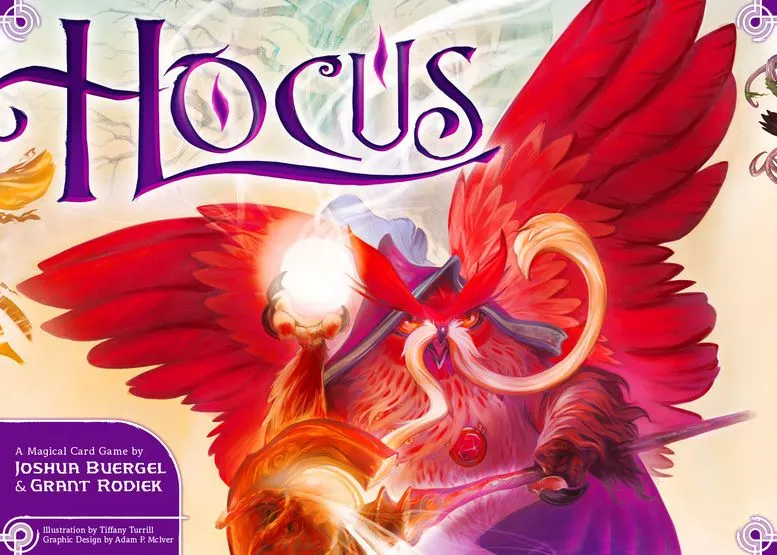
Hocus ist ein Brettspiel aus dem Jahr 2016 für 2–5 Personen, mit 30 Minuten pro Partie und ab 10 Jahren. Entwickelt wurde es von Joshua Buergel und Grant Rodiek; die wichtigsten Mechaniken sind Variable Player Powers, Hand Management und Pattern Building.








Auf Englisch
For those with the eldritch gift, temptation lurks around every corner, even in leisure. Just consider the possibilities available to the practitioner of magic. Imagine poker with spells! No person could resist such temptation, and even a casual review of history will prove that none could. The famous last play of Ephippus of Athens? It was about Circe’s never ending thirst for cheating at cards. Morgan le Fay and Merlin regularly crossed wits over a deck. Roger Bollingbroke’s most heinous crime was the transparently bogus run of five straight flushes in a row. And so it has gone. The application of magic to card games is as natural as mixing mandrake and worm’s husk. For the first time, however, the rules for a game specifically created for wizards have been pieced together from fragments found in tombs, dusty used bookstores, and in the classified ads of one small newspaper. Though magic has largely been forgotten in the centuries since this game was invented, modern game design has given us a way to imitate the arcana outlined in the reconstructed rules. The result is a “no-magic-required” whimsical romp for 2-5 players. Hocus places the players in the flamboyant boots of wizards, using their powerful advantages to create opportunities, manipulate the game, and alter the flow of cards. Wizards hate being pinned down and live by the mantra “You shall not fold!” Each turn, players choose one Spell to use. As you are new to Hocus, we shall first discuss the three Basic Spells. Use the first basic Spell to play cards to the Community. Play thoughtfully, as everyone shares the cards in the Community! The second Spell is for building the Pot. In addition to Suit and Strength, every card has a point value. Cards played to the Pot contribute their points to the winner of each Showdown. Play cards to build a Pocket with the third Spell. (Never ask to see a wizard’s pocket!) Each player takes one of their Pockets and combines it with the Community to form a hand during Showdowns. The best hand claims all points in the Pot. There is, of course, a twist. Trust a wizard to provide a twist! There are multiple Communities, each with a Pot, and players can compete in multiple Showdowns if they have the Pockets. Hocus is not merely a matter of building good hands, but making a winning hand where your opponents least expect and profiting with a hefty Pot. Timing and careful, targeted play will win the day. And time is limited. You may have conjured a Straight Flush, but it’s worthless with no points in the Pot! Now, look at the other spells in the game. There are eight different spell books, each with their own unique approaches to the game, providing every wizard who plays with their own special abilities. The spell books raise the game to another level, with even more tools for bending luck to your advantage. Travel way back to a dark, dank inn, shuffle the cards, and play the favorite game of the legendary Merlin and Morgan le Fay. Hocus is a little like poker, but a lot more magic!
Laut Katalog unterstützt Hocus 2–5 Personen. Diese Spanne entspricht der vom Verlag angegebenen Spielerzahl, das Spiel lässt sich also für jede Gruppengröße innerhalb dieser Spanne aufbauen. Aufbau, einzelne Regeln und Wertungsdetails können je nach Personenzahl trotzdem abweichen; prüfe daher die genaue Konfiguration in der Anleitung deiner Ausgabe.
Die angegebene Spieldauer für Hocus beträgt 30 Minuten. Das ist die Schätzung des Verlags für eine vollständige Partie. Die tatsächliche Dauer hängt von der Gruppe, der Personenzahl und der Regelkenntnis ab: Erste Partien dauern meist länger, erfahrene Gruppen sind oft schneller fertig. Aufbau und Regelerklärung sind in dieser Schätzung nicht enthalten.
Im Katalog wird Hocus ab 10 Jahren empfohlen. Das ist die Empfehlung des Verlags und berücksichtigt Leseanforderungen, Regelkomplexität und Kleinteile, nicht nur das Thema. Jüngere Kinder können oft mit Hilfe eines Erwachsenen mitspielen; beachte die Altersangabe deiner Ausgabe und die Brettspielerfahrung deiner Gruppe.
Hocus hat bei BoardGameGeek eine Komplexitätswertung von 2,3 von 5 und gilt damit als eher leichtes Spiel. Die Wertung zeigt, wie viel Regelwissen, Planung und Entscheidungen eine typische Partie verlangt. Schwerere Spiele brauchen bei der ersten Erklärung mehr Zeit, daher hilft vor dem Spieleabend eine Vorbereitungsanleitung.
Hocus gehört zu diesen Kategorien: Card Game und Print & Play. Die wichtigsten Mechaniken sind Variable Player Powers, Hand Management und Pattern Building. Kategorien beschreiben Thema und Setting eines Spiels, Mechaniken dagegen, was die Spielenden in ihrem Zug tatsächlich tun. Jede Mechanik führt zu einer Katalogseite mit ähnlichen Spielen, falls du etwas Vergleichbares suchst.
Als Autoren von Hocus sind angegeben: Joshua Buergel und Grant Rodiek. Diese Angaben stammen aus den veröffentlichten Spieldaten und nennen die für das Spieldesign verantwortlichen Personen, nicht die Illustratoren oder Verlage. Die Autorenseiten auf MeepleRules sammeln weitere Titel derselben Autoren – praktisch, wenn dir ein Spiel gefällt und du ähnliche Spiele suchst.
Im Katalog ist Hocus als Grundspiel aufgeführt. Es lässt sich eigenständig mit dem Material aus der Schachtel spielen und benötigt keinen weiteren Titel. Erweiterungen, sofern es welche gibt, ergänzen neues Material oder neue Regeln und sind im Katalog separat mit einem Verweis auf dieses Grundspiel aufgeführt.