

- BGG-Rang
- BGG #175
- BGG-Bewertung
- 8,2
Vantage
- 1–6 Spieler
- 120–180 Min.
- Komplexität 2,3/5
- 2025
2017
Regelhilfe für In Tenebris Lux
Verständliche Erklärungen zu Spielzügen, Karteneffekten und strittigen Situationen mit Verweisen auf offizielle Quellen und gespeichertem Fragenverlauf.
Was möchtest du wissen?
Antworten stammen aus dem offiziellen Regelheft, mit Seitenangabe zum Nachprüfen.
In Tenebris Lux ist ein Brettspiel aus dem Jahr 2017 für 1–4 Personen und ab 13 Jahren. Entwickelt wurde es von Owen Aurelio; die wichtigsten Mechaniken sind Dice Rolling, Solo / Solitaire Game und Narrative Choice / Paragraph.





Auf Englisch
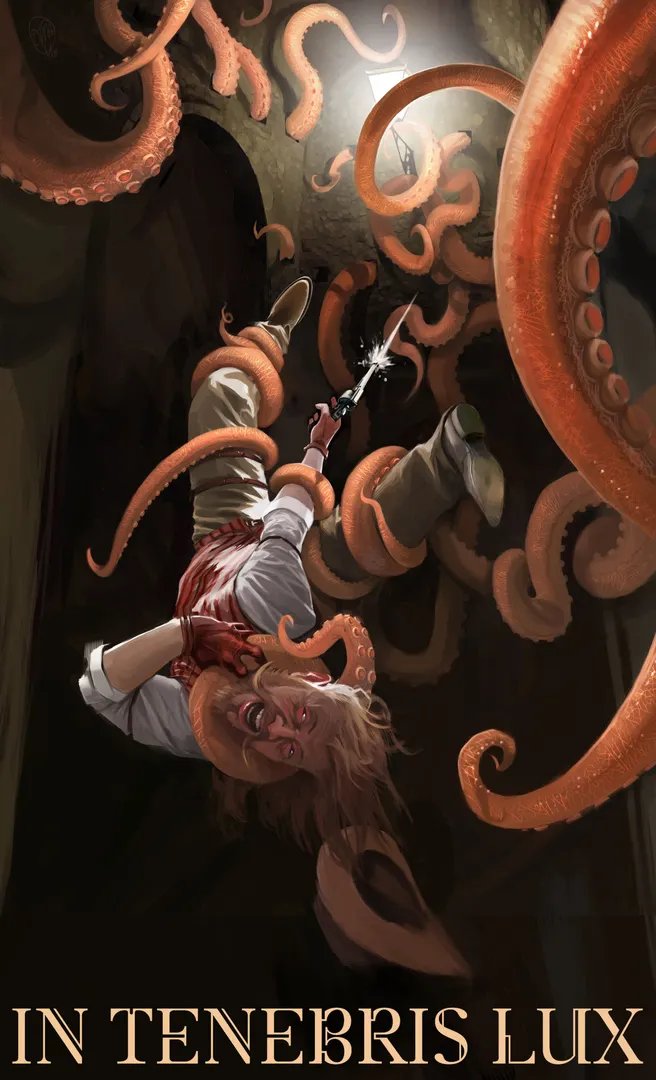
ENTER A WORLD OF VICTORIAN HORROR! In 19th-century Rome, ancient crypts have been discovered beneath the Capuchin tombs. Take on the role of a dauntless explorer and plunder these catacombs of their secrets and spoils. Build your catacomb as you go, seeking finds and surviving horrors. End your story before the evils of the catacomb devour you all! IN TENEBRIS LUX is a game for 1-4 players ages 13 and up, and can be played in about 45 minutes to an hour. Players rush to explore and resolve personal quests, called narratives, before their opponents can resolve their own, or the dark catacombs close in on them, ending the game. The game is played in turns, each broken into 3 Steps, with several Phases. STEP 1: BREATHE The first Step adds Rooms to the Catacombs, by drawing them from a random pile. This builds up the game board out of playing card sized map pieces, or Rooms. This step also has a phase allowing Explorers to change their gear, referred to as Equipment or Finds… this is critical as these important items strengthen an Explorer so that they may deal with the dangers to come. Following phases allow an Explorer to adjust their card hand and play any non-room cards, if so desired. STEP 2: SEEK The second step allows Explorers to actually explore and navigate through the Catacombs, or growing game board. This dangerous course allows Explorers to search for new Finds and gear. More phases allow for adding extra Rooms, or cards, onto the board, moving around from card to card, and interacting with Room Cards in order to complete Naratives, or the game’s objectives. This is the Phase where Explorers are most at risk of stumbling upon Horrors, as they are actively exploring the Catacombs. STEP 3: SURVIVE In Step 3 Horrors, the game’s many monsters in the dark, may attack your Explorer! Canny and brave Explorers may also strike out and attack each other in hopes of thwarting each other’s progress in pursuit of personal Narratives. This phase resolves each combat one by one, and adjusts health and loot bodies. Basic combat is simple. As the attacker, role one of the game’s 14 included dice, and add it to your chosen Trait (Grit, Wit or Daring). The Defender rolls one die and adds it to their same Trait, as they defend along the same lines as the incoming attack. Whichever result is highest wins. The game’s “Combat Reference Card” will take players through any extra steps, notably the way in which rooms impact the outcomes with rolls in combat. Each Horror and Explorer features an affinity with different Room types, this gives an edge or disadvantage in combat. Be careful of the Room you land on, it will have dire consequences! After each Step is resolved a player finishes their turn and, moving clockwise, the next player goes, and so on. The game is ended when one player completes their randomly drawn Narrative objective, all Explorers are killed, or the Doom Counter (the Game’s timer) has run its course, sending the catacombs crashing in on the hapless Explorers. In Tenebris Lux comes with 13 Jumbo Explorer cards, 4 jumbo Combat and Turn Cycle reference cards, a full color rule book, 24 Horror cards, 18 Equipment cards, 21 Find cards, 12 Narrative cards, 32 Room cards, 3 Great Room Jumbo cards, one Jumbo Doom Counter card, 14 Dice, 13 Double Sided Explorer counters with 4 stands, and a counter for each Horror as well as many counters to help record progress for Narratives.
Laut Katalog unterstützt In Tenebris Lux 1–4 Personen. Diese Spanne entspricht der vom Verlag angegebenen Spielerzahl, das Spiel lässt sich also für jede Gruppengröße innerhalb dieser Spanne aufbauen. Aufbau, einzelne Regeln und Wertungsdetails können je nach Personenzahl trotzdem abweichen; prüfe daher die genaue Konfiguration in der Anleitung deiner Ausgabe.
Im Katalog wird In Tenebris Lux ab 13 Jahren empfohlen. Das ist die Empfehlung des Verlags und berücksichtigt Leseanforderungen, Regelkomplexität und Kleinteile, nicht nur das Thema. Jüngere Kinder können oft mit Hilfe eines Erwachsenen mitspielen; beachte die Altersangabe deiner Ausgabe und die Brettspielerfahrung deiner Gruppe.
In Tenebris Lux hat bei BoardGameGeek eine Komplexitätswertung von 2,0 von 5 und gilt damit als eher leichtes Spiel. Die Wertung zeigt, wie viel Regelwissen, Planung und Entscheidungen eine typische Partie verlangt. Schwerere Spiele brauchen bei der ersten Erklärung mehr Zeit, daher hilft vor dem Spieleabend eine Vorbereitungsanleitung.
In Tenebris Lux gehört zu diesen Kategorien: Adventure, Science Fiction und Post-Napoleonic. Die wichtigsten Mechaniken sind Dice Rolling, Solo / Solitaire Game und Narrative Choice / Paragraph. Kategorien beschreiben Thema und Setting eines Spiels, Mechaniken dagegen, was die Spielenden in ihrem Zug tatsächlich tun. Jede Mechanik führt zu einer Katalogseite mit ähnlichen Spielen, falls du etwas Vergleichbares suchst.
Als Autoren von In Tenebris Lux sind angegeben: Owen Aurelio. Diese Angaben stammen aus den veröffentlichten Spieldaten und nennen die für das Spieldesign verantwortlichen Personen, nicht die Illustratoren oder Verlage. Die Autorenseiten auf MeepleRules sammeln weitere Titel derselben Autoren – praktisch, wenn dir ein Spiel gefällt und du ähnliche Spiele suchst.
Im Katalog ist In Tenebris Lux als Grundspiel aufgeführt. Es lässt sich eigenständig mit dem Material aus der Schachtel spielen und benötigt keinen weiteren Titel. Erweiterungen, sofern es welche gibt, ergänzen neues Material oder neue Regeln und sind im Katalog separat mit einem Verweis auf dieses Grundspiel aufgeführt.