
- BGG-Rang
- BGG #7.242
- BGG-Bewertung
- 6,4
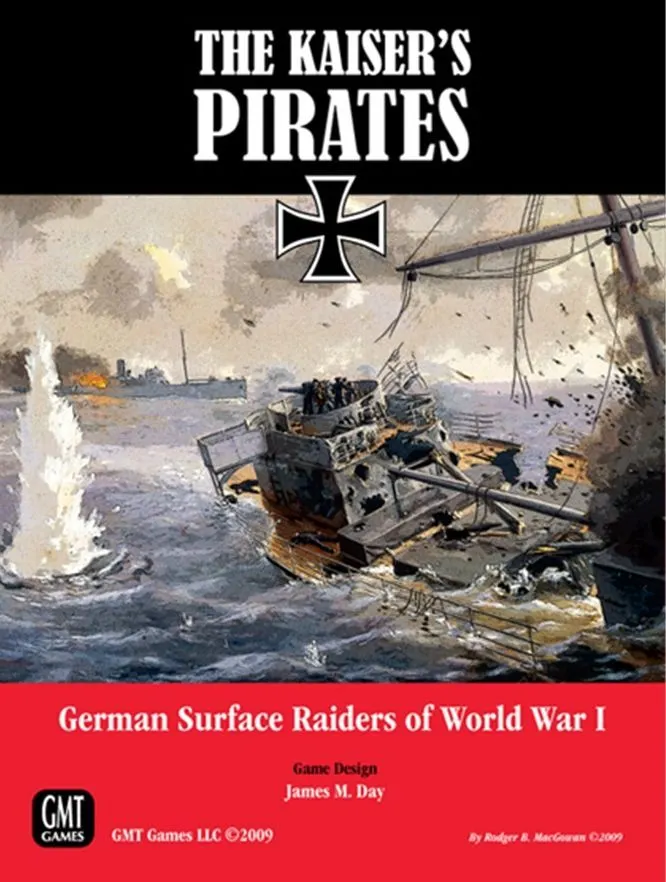
The Kaiser's Pirates
- 1–4 Spieler
- 90 Min.
- Komplexität 2,3/5
- 2007
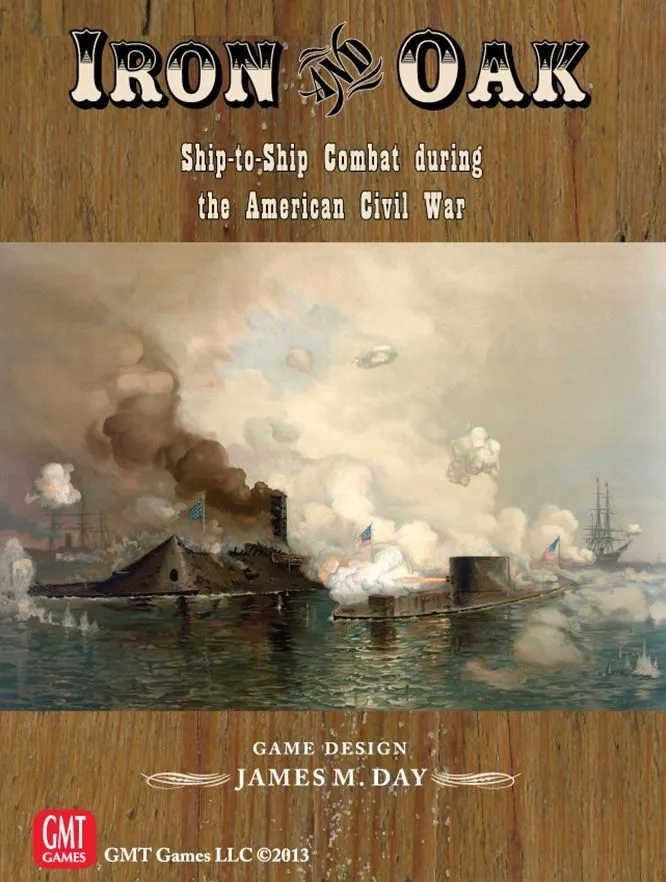
2013
Regelhilfe für Iron and Oak
Verständliche Erklärungen zu Spielzügen, Karteneffekten und strittigen Situationen mit Verweisen auf offizielle Quellen und gespeichertem Fragenverlauf.
Für 1 Person
Was möchtest du wissen?
Antworten stammen aus dem offiziellen Regelheft, mit Seitenangabe zum Nachprüfen.
Iron and Oak ist ein Brettspiel aus dem Jahr 2013 für 1–2 Personen, mit 90 Minuten pro Partie und ab 12 Jahren. Entwickelt wurde es von James M. Day; die wichtigsten Mechaniken sind Area Movement und Dice Rolling.

Auf Englisch
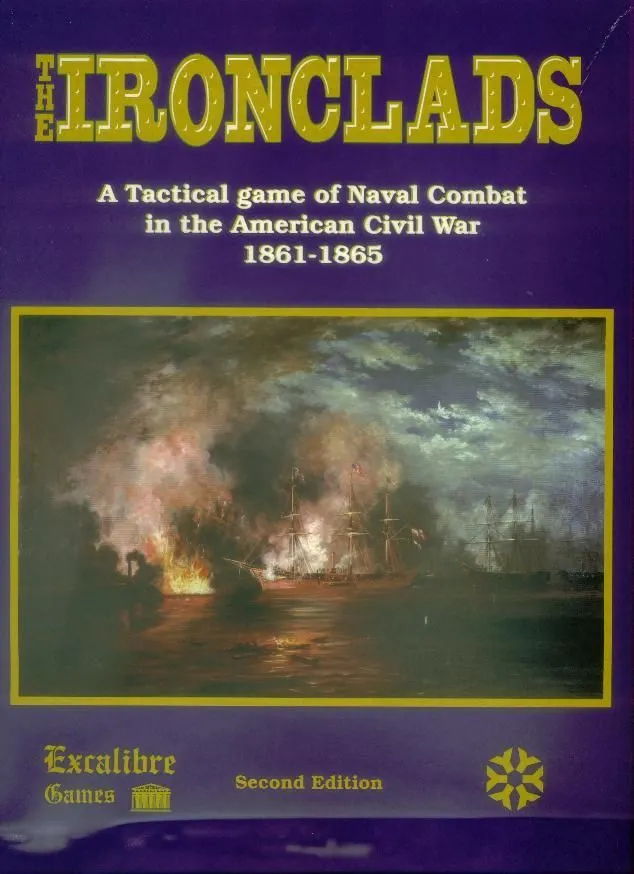
Iron and Oak is game of ship-to-ship combat set during the American Civil War. As a tactical representation of naval warfare, each of the ships is accurately modeled for offensive capability including gunnery, ramming and spar torpedoes; for defensive capability including damage and five distinct armored or wooden hit locations; and for maneuverability, crew size and draft. You command 70 famous ships of the era, including the Union: Onondaga, Tecumseh, Winnebago, Monitor, Osage, Minnesota, Brooklyn, Hartford, Essex, Carondolet, Kearsarge, Ossipee, Queen of the West, Iroquois, Spuyten Duyvil; and the Confederate: Tennessee, Virginia, Atlanta, Palmetto State, Arkansas, Albemarle, Alabama, Florida, General Beauregard, Sumter; and many more. Many of the 14 scenarios, in this easy-to-learn game, are playable in an hour or less. Included are 13 historical and 1 hypothetical engagements featuring Hampton Roads, Mobile Bay, Trent’s Reach, Wassaw Sound, the duel between Alabama and the Kearsarge, and the saga of the Arkansas, which may be played as three individual scenarios or as a linked mini-campaign. In addition, forts bristling with guns make their appearance to challenge the will of the ship captains. If that was not enough to heat things up, scenario based optional rules add a few interesting ‘what if’ situations to expand on play. If you are interested in commanding your own fleet, Iron and Oak includes a standalone campaign module where player selected forces fight it out in the many rivers, bays, inlets and costal areas. The campaign game recreates the brown water actions, typical of the period, in a series of randomly generated battles. As play progresses, the players do not know the exact length of the campaign or the specific mix of the battles. Players must not only manage the unfolding battles, but must also strategically allocate resources and repair and refits their ships. The 16 card Navy Yard deck is used to plot a course through and influence the challenges of the campaigns. Two or more players battle it out on an 22” x 34” map that features an area movement grid. This simple approach controls ship movement as well as all combat action. Gone are the long periods of inaction, typical of ACW tactical naval games, as these early steam-era ships struggled to maneuver into battle. This innovative game system places the emphasis on quick action and tactical decision making. The 50 Action Cards are used to assist and enhance play, not drive it. Each time you battle it out, whether in a scenario or campaign game, the action unfolds in a very different manner. Do you wish to employ hot shot or incendiary shells? Is now the best time to rapid fire or is it wise to maneuver and ram? Should you allocate part of the crew as a repair party? Is that enemy ship going to maneuver into your torpedo (mine) field? These and many other possibilities exist through the play of the action cards. Or, you may decide to not play any action cards at all and just maneuver and shoot. You control how and when the action will unfold. At its core Iron and Oak is a naval simulation. It accurately models the close-range slugging matches typical of the period. You have the opportunity to play out the various battles to their conclusion. Will history repeat itself, or will a new account be written? Will the Monitor’s 11” Dahlgren smoothbores blast through Virginia’s armor plating or will their battle again end in a stalemate? Will the powerful Tennessee win out against Admiral David Farragut’s Union fleet or again fall to his superior numbers? Will the Atlanta defeat the two Union monitors in kind or again slip aground and strike her colors. This time, you get to determine the outcome. You are not bound by history’s stories.
Laut Katalog unterstützt Iron and Oak 1–2 Personen. Diese Spanne entspricht der vom Verlag angegebenen Spielerzahl, das Spiel lässt sich also für jede Gruppengröße innerhalb dieser Spanne aufbauen. Aufbau, einzelne Regeln und Wertungsdetails können je nach Personenzahl trotzdem abweichen; prüfe daher die genaue Konfiguration in der Anleitung deiner Ausgabe.
Die angegebene Spieldauer für Iron and Oak beträgt 90 Minuten. Das ist die Schätzung des Verlags für eine vollständige Partie. Die tatsächliche Dauer hängt von der Gruppe, der Personenzahl und der Regelkenntnis ab: Erste Partien dauern meist länger, erfahrene Gruppen sind oft schneller fertig. Aufbau und Regelerklärung sind in dieser Schätzung nicht enthalten.
Im Katalog wird Iron and Oak ab 12 Jahren empfohlen. Das ist die Empfehlung des Verlags und berücksichtigt Leseanforderungen, Regelkomplexität und Kleinteile, nicht nur das Thema. Jüngere Kinder können oft mit Hilfe eines Erwachsenen mitspielen; beachte die Altersangabe deiner Ausgabe und die Brettspielerfahrung deiner Gruppe.
Iron and Oak hat bei BoardGameGeek eine Komplexitätswertung von 2,6 von 5 und gilt damit als eher leichtes Spiel. Die Wertung zeigt, wie viel Regelwissen, Planung und Entscheidungen eine typische Partie verlangt. Schwerere Spiele brauchen bei der ersten Erklärung mehr Zeit, daher hilft vor dem Spieleabend eine Vorbereitungsanleitung.
Iron and Oak gehört zu diesen Kategorien: Wargame, Nautical und Civil War. Die wichtigsten Mechaniken sind Area Movement und Dice Rolling. Kategorien beschreiben Thema und Setting eines Spiels, Mechaniken dagegen, was die Spielenden in ihrem Zug tatsächlich tun. Jede Mechanik führt zu einer Katalogseite mit ähnlichen Spielen, falls du etwas Vergleichbares suchst.
Als Autoren von Iron and Oak sind angegeben: James M. Day. Diese Angaben stammen aus den veröffentlichten Spieldaten und nennen die für das Spieldesign verantwortlichen Personen, nicht die Illustratoren oder Verlage. Die Autorenseiten auf MeepleRules sammeln weitere Titel derselben Autoren – praktisch, wenn dir ein Spiel gefällt und du ähnliche Spiele suchst.
Im Katalog ist Iron and Oak als Grundspiel aufgeführt. Es lässt sich eigenständig mit dem Material aus der Schachtel spielen und benötigt keinen weiteren Titel. Erweiterungen, sofern es welche gibt, ergänzen neues Material oder neue Regeln und sind im Katalog separat mit einem Verweis auf dieses Grundspiel aufgeführt.