
- BGG-Rang
- BGG #8.058
- BGG-Bewertung
- 6,9
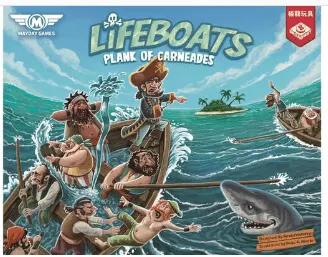
Lifeboats: Plank of Carneades
- 3–7 Spieler
- 45 Min.
- Komplexität 1,6/5
- 2024
2010
Regelhilfe für Loch Ness
Verständliche Erklärungen zu Spielzügen, Karteneffekten und strittigen Situationen mit Verweisen auf offizielle Quellen und gespeichertem Fragenverlauf.
Für 2 Personen
Was möchtest du wissen?
Antworten stammen aus dem offiziellen Regelheft, mit Seitenangabe zum Nachprüfen.
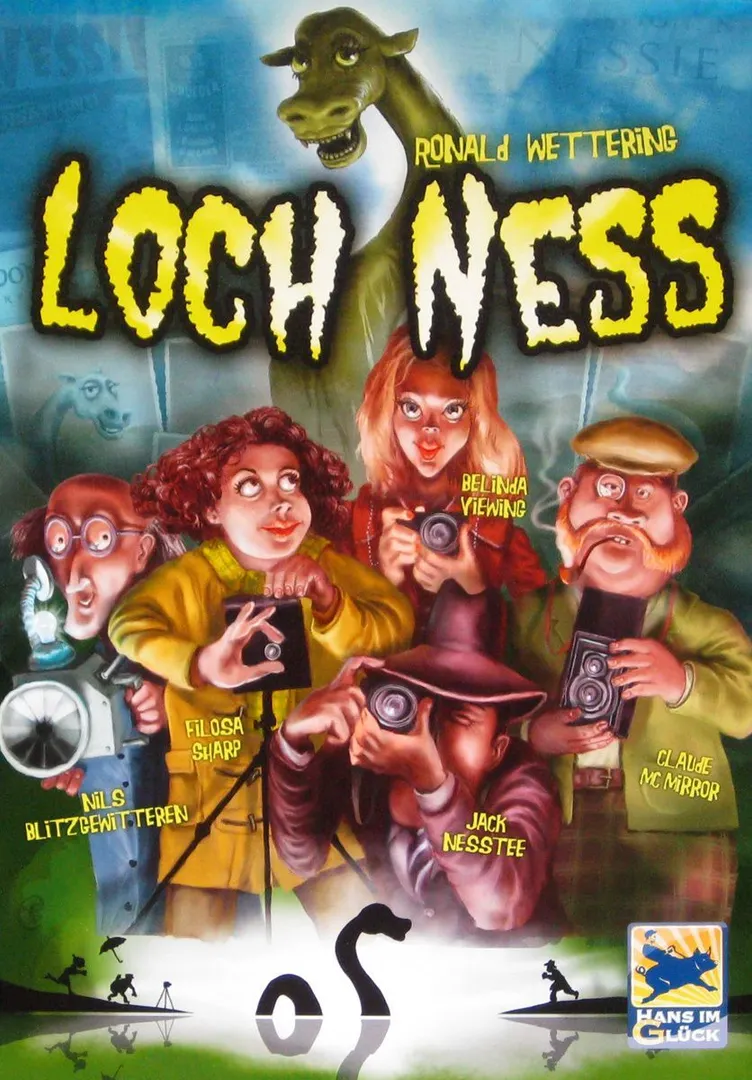
Loch Ness ist ein Brettspiel aus dem Jahr 2010 für 2–5 Personen, mit 30–45 Minuten pro Partie und ab 8 Jahren. Entwickelt wurde es von Ronald Wettering.


Auf Englisch
From the rules: "For decades, reporters from around the world have been on the hunt for the Loch Ness monster. But lately reports of sightings of Nessie have been increasing. "Such reports naturally have drawn such reporters as the attractive Belinda Viewing from New York, the half-Belgian Claude McMirror, the clever Filosa Sharp, as well as her Londoner competitor Jack Nesstee, and even Nils the Blitzen from Denmark to the Loch. Equipped with the most modern equipment and techniques, these daring reporters have traveled to Scotland, in order to capture the elusive Nessie on film for their newspapers. "But the 5 will experience some surprises . . ." In Loch Ness, players compete to get pictures of Nessie. In turn order, players place or move their photographers on the board as they try to anticipate the movement of the Loch Ness monster. The movement of the monster is determined randomly by drawing move cards from the first three players, each card having a number from 1 to 5. The cards are not revealed until after the photographers have been placed. When they are revealed, the monster moves the total number of spaces and players score points based on the value of their photographers placed in the area where Nessie emerged. In addition, the players whose photographers were directly in front of Nessie select photo cards that will award points at the end of the game, especially if sets are created. Beginning in the second round, players will select an action space each round that gives them a unique power to use for for the round. Placement also gets more challenging from the second round onward as a player is required to move a photographer, perhaps opening up spots for opponents. Each round, some of the players do have a limited knowledge of how Nessie will move each round. When a player draws a movement card before positioning his photographers, he is allowed to look at it, giving him one-third of the movement for that round. However, movement varies tremendously and only three players draw movement cards each round. The game ends after the round in which a mini Nessie figure reaches space 65 on the score track. This figure moves the same number of spaces as the main Nessie figure in the game board each round. The player with the most points, scored during the game and from the photo cards at the end, wins the game. The rules include two optional variants that can be added individually or together with the base game. Not to be confused with the 2010 Walter Obert game with the same theme, Loch Ness.
Laut Katalog unterstützt Loch Ness 2–5 Personen. Diese Spanne entspricht der vom Verlag angegebenen Spielerzahl, das Spiel lässt sich also für jede Gruppengröße innerhalb dieser Spanne aufbauen. Aufbau, einzelne Regeln und Wertungsdetails können je nach Personenzahl trotzdem abweichen; prüfe daher die genaue Konfiguration in der Anleitung deiner Ausgabe.
Die angegebene Spieldauer für Loch Ness beträgt 30–45 Minuten. Das ist die Schätzung des Verlags für eine vollständige Partie. Die tatsächliche Dauer hängt von der Gruppe, der Personenzahl und der Regelkenntnis ab: Erste Partien dauern meist länger, erfahrene Gruppen sind oft schneller fertig. Aufbau und Regelerklärung sind in dieser Schätzung nicht enthalten.
Im Katalog wird Loch Ness ab 8 Jahren empfohlen. Das ist die Empfehlung des Verlags und berücksichtigt Leseanforderungen, Regelkomplexität und Kleinteile, nicht nur das Thema. Jüngere Kinder können oft mit Hilfe eines Erwachsenen mitspielen; beachte die Altersangabe deiner Ausgabe und die Brettspielerfahrung deiner Gruppe.
Loch Ness hat bei BoardGameGeek eine Komplexitätswertung von 1,5 von 5 und gilt damit als leichtes Spiel. Die Wertung zeigt, wie viel Regelwissen, Planung und Entscheidungen eine typische Partie verlangt. Schwerere Spiele brauchen bei der ersten Erklärung mehr Zeit, daher hilft vor dem Spieleabend eine Vorbereitungsanleitung.
Loch Ness gehört zu diesen Kategorien: Deduction und Bluffing. Kategorien beschreiben Thema, Setting und Stil eines Spiels, nicht seine Regeln. Filtere den Katalog nach derselben Kategorie, um ähnliche Spiele zu finden, wenn dir Loch Ness gefallen hat und du etwas Vergleichbares für den nächsten Spieleabend suchst.
Als Autoren von Loch Ness sind angegeben: Ronald Wettering. Diese Angaben stammen aus den veröffentlichten Spieldaten und nennen die für das Spieldesign verantwortlichen Personen, nicht die Illustratoren oder Verlage. Die Autorenseiten auf MeepleRules sammeln weitere Titel derselben Autoren – praktisch, wenn dir ein Spiel gefällt und du ähnliche Spiele suchst.
Im Katalog ist Loch Ness als Grundspiel aufgeführt. Es lässt sich eigenständig mit dem Material aus der Schachtel spielen und benötigt keinen weiteren Titel. Erweiterungen, sofern es welche gibt, ergänzen neues Material oder neue Regeln und sind im Katalog separat mit einem Verweis auf dieses Grundspiel aufgeführt.