- BGG-Bewertung
- 7,3
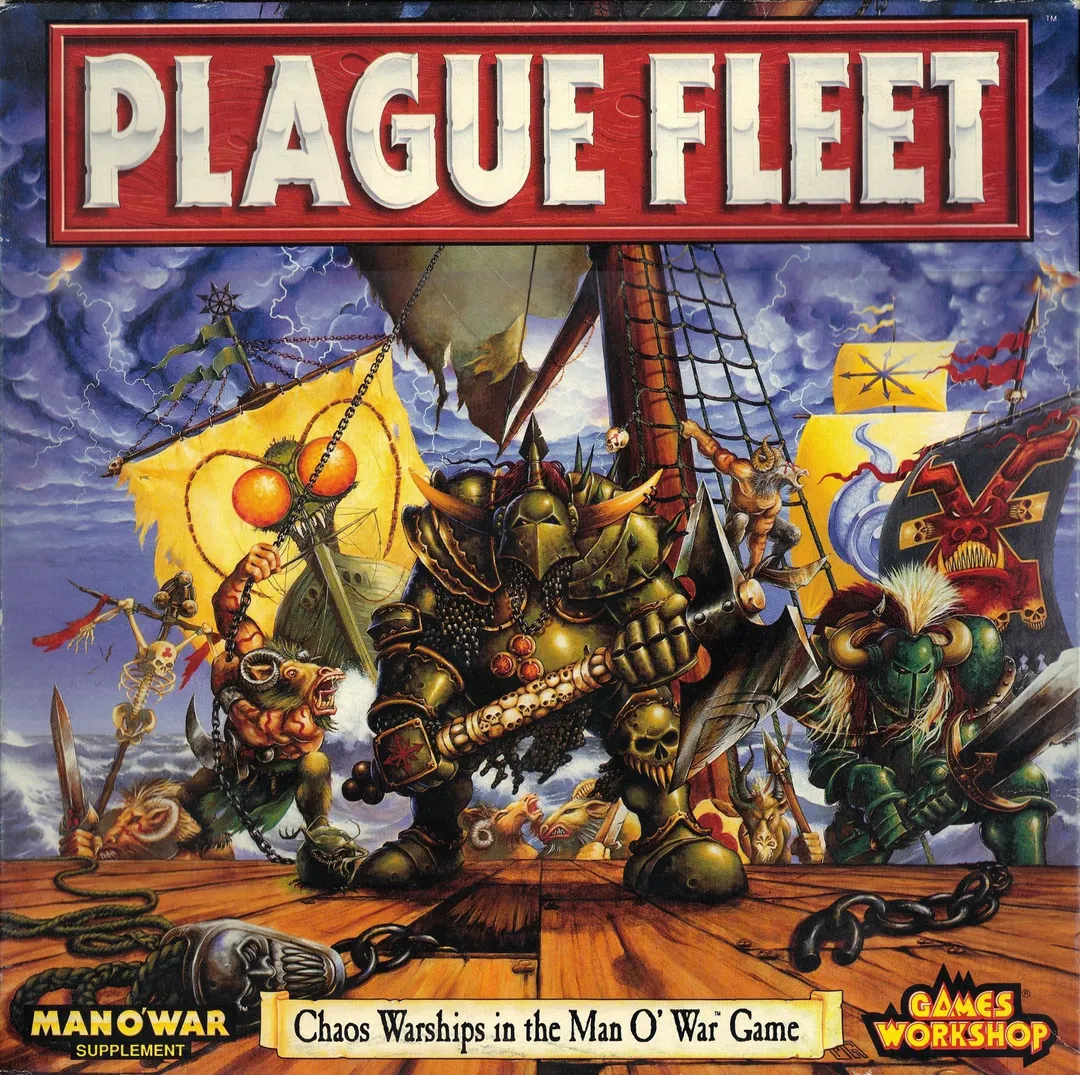
Man O' War: Plague Fleet
- 2 Spieler
- 180 Min.
- Komplexität 3,0/5
- 1993
1993
Regelhilfe für Man O' War
Verständliche Erklärungen zu Spielzügen, Karteneffekten und strittigen Situationen mit Verweisen auf offizielle Quellen und gespeichertem Fragenverlauf.
Für 2 Personen
Was möchtest du wissen?
Antworten stammen aus dem offiziellen Regelheft, mit Seitenangabe zum Nachprüfen.
Man O' War ist ein Brettspiel aus dem Jahr 1993 für 2–4 Personen, mit 180 Minuten pro Partie und ab 12 Jahren. Entwickelt wurde es von Andy Jones, Nigel Stillman und Bill King; die wichtigsten Mechaniken sind Variable Player Powers, Dice Rolling und Variable Phase Order.
Auf Englisch
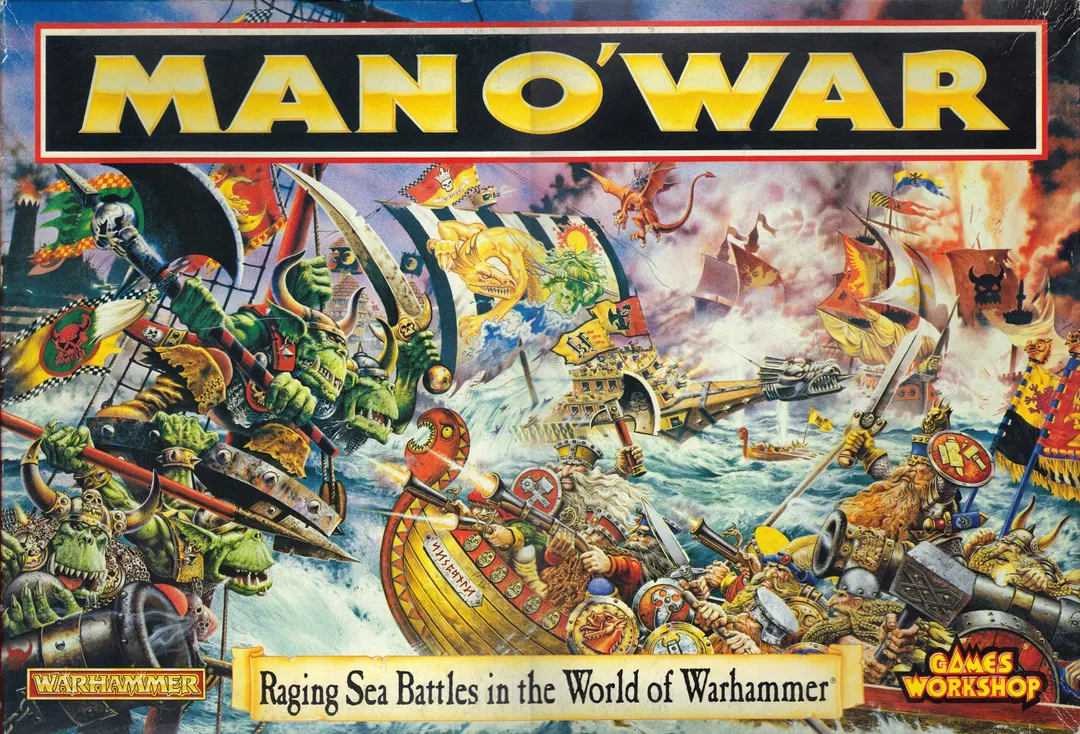
Man O' War is the game of Raging Sea Battles in the Warhammer World. As an admiral of an ocean-going war fleet you must command your ships - which can be either squadrons of Ships of the Line or heavily armored Men O' War and Independents, in the battle for supremacy of the high seas. Players choose fleets from the multitude of races of the Warhammer world. Every ship is represented by a template showing individual areas, each with a description of the items (masts, cannons etc.) in those areas - as well as the damage that they can take before being destroyed. Each location has a value that must be rolled to hit that area when attacked, along with another value that can be rolled by the defending player to possibly prevent any damage that might occur. Ships are classified one of three ways. They are either Ship of the Line (SOL) - which are designed to move as a group of three (each moving and fighting to completion before continuing on with the next ship in the squadron), a Man O' War (MOW)- which are single ships that are much larger, more powerful and crewed by larger numbers than a single SOL classed ship, or finally as an Independent (IND) - which are used individually like a Man O' War but are more in line in strength and abilities to that of a Ship of the Line. At the beginning of each turn, players determine Initiative by each rolling a die which determines who will go 1st in each phase - if the numbers are different, or how the wind direction changes if they both roll the same number. If the wind changes, the initiative roll and resolution is repeated until one player wins the die roll. Players then conduct the Magic Phase with each Admiral having his Wizard make one spell attempt if desired based on the Initiative order previously determined. If a spell is successful, the other player can try and dispel that spell just cast - but only if they have a corresponding type of magic to make the attempt. Next comes the Battle phase - which is also based on the previously determined initiative roll. Players alternate between phases of Movement/Combat, each choosing a single MOW, IND or SOL Squadron and then conducting movement (if desired) and/or making attacks, before passing the turn sequence back to their opponent. This process continues until all ships have been activated on both sides. Once that has occurred, the turn is over and a series of quick turn ending/record keeping events occurs before moving to the next turn. Game play continues for a predetermined time or until one side is destroyed, surrenders or flees the battlefield. The Main Boxed set contained 2 sets of 3 Wargalleys for the Empire and another 2 sets of 3 Wargalleys that were considered Pirates. THe main rules also included Fleet Lists and specific rules for each of the 6 Warhammer Races included in the game: The Imperial (Empire), Bretonnian, Dwarf, High Elf, Dark Elf and Orc. Each Race had had unique features, weapons and abilities that made every battle a new challenge for both players. Rules for a Campaign as well as additional pieces like playing pieces like Shoreforts were also included in the main ruleset. There were two separate expansions to the main game. The first was Plaguefleet which added rules and templates for the Chaos fleets of Khorne, Slaanesh, Tzeentch and Nurgle (collectively known as a Plaguefleet), the Skaven and finally the Chaos Dwarfs. This expansion effectively doubled the number of available fleets for the game. This expansion also included color templates for the original 6 races as well (Imperial, Bretonnian, Dwarf, High Elf, Dark Elf and Orc). The 2nd expansion Sea of Blood mainly introduced new rules for Airpower, Sea Monsters & Beasts and Allies as well as new ships for the Dwarfs and Imperial fleets. The inclusion of the Norse fleet wrapped up the content for this expansion. Finally, complete rules for an Undead fleet - as well as some expansion rules for a few of the other races, were included in several of the issues of Game Workshop's Citadel Journal magazine. A wide variety of miniatures were produced to represent the many ships detailed in the main game and expansion sets but no miniatures were ever officially made for the Undead fleet. Assembling and painting the miniatures gave the game a feeling of being "collectible" as well as being a hobby in itself. Many players have created customized ships and new ships (and even complete fleets) including rules, ships templates and completed miniatures. The largest collection of these creations is housed at Groups IO and there is a very active Facebook Page as well. Man O War is still considered by many GW fan's as one of Games Workshop's best games. The wide variety of different ships, rules for each race and relatively small investment to get up and running contributed greatly to Man O War's popularity. Even today, fans scramble to find copies of the games and with the rise in accessibility to 3D printing, getting a fleet (or two) for this out of print game has never been easier.
Laut Katalog unterstützt Man O' War 2–4 Personen. Diese Spanne entspricht der vom Verlag angegebenen Spielerzahl, das Spiel lässt sich also für jede Gruppengröße innerhalb dieser Spanne aufbauen. Aufbau, einzelne Regeln und Wertungsdetails können je nach Personenzahl trotzdem abweichen; prüfe daher die genaue Konfiguration in der Anleitung deiner Ausgabe.
Die angegebene Spieldauer für Man O' War beträgt 180 Minuten. Das ist die Schätzung des Verlags für eine vollständige Partie. Die tatsächliche Dauer hängt von der Gruppe, der Personenzahl und der Regelkenntnis ab: Erste Partien dauern meist länger, erfahrene Gruppen sind oft schneller fertig. Aufbau und Regelerklärung sind in dieser Schätzung nicht enthalten.
Im Katalog wird Man O' War ab 12 Jahren empfohlen. Das ist die Empfehlung des Verlags und berücksichtigt Leseanforderungen, Regelkomplexität und Kleinteile, nicht nur das Thema. Jüngere Kinder können oft mit Hilfe eines Erwachsenen mitspielen; beachte die Altersangabe deiner Ausgabe und die Brettspielerfahrung deiner Gruppe.
Man O' War hat bei BoardGameGeek eine Komplexitätswertung von 2,6 von 5 und gilt damit als eher leichtes Spiel. Die Wertung zeigt, wie viel Regelwissen, Planung und Entscheidungen eine typische Partie verlangt. Schwerere Spiele brauchen bei der ersten Erklärung mehr Zeit, daher hilft vor dem Spieleabend eine Vorbereitungsanleitung.
Man O' War gehört zu diesen Kategorien: Fantasy, Wargame und Miniatures. Die wichtigsten Mechaniken sind Variable Player Powers, Dice Rolling und Variable Phase Order. Kategorien beschreiben Thema und Setting eines Spiels, Mechaniken dagegen, was die Spielenden in ihrem Zug tatsächlich tun. Jede Mechanik führt zu einer Katalogseite mit ähnlichen Spielen, falls du etwas Vergleichbares suchst.
Als Autoren von Man O' War sind angegeben: Andy Jones, Nigel Stillman und Bill King. Diese Angaben stammen aus den veröffentlichten Spieldaten und nennen die für das Spieldesign verantwortlichen Personen, nicht die Illustratoren oder Verlage. Die Autorenseiten auf MeepleRules sammeln weitere Titel derselben Autoren – praktisch, wenn dir ein Spiel gefällt und du ähnliche Spiele suchst.
Im Katalog ist Man O' War als Grundspiel aufgeführt. Es lässt sich eigenständig mit dem Material aus der Schachtel spielen und benötigt keinen weiteren Titel. Erweiterungen, sofern es welche gibt, ergänzen neues Material oder neue Regeln und sind im Katalog separat mit einem Verweis auf dieses Grundspiel aufgeführt.