

- BGG-Rang
- BGG #4.517
- BGG-Bewertung
- 7,3
Azure
- 2 Spieler
- 20 Min.
- Komplexität 2,0/5
- 2026
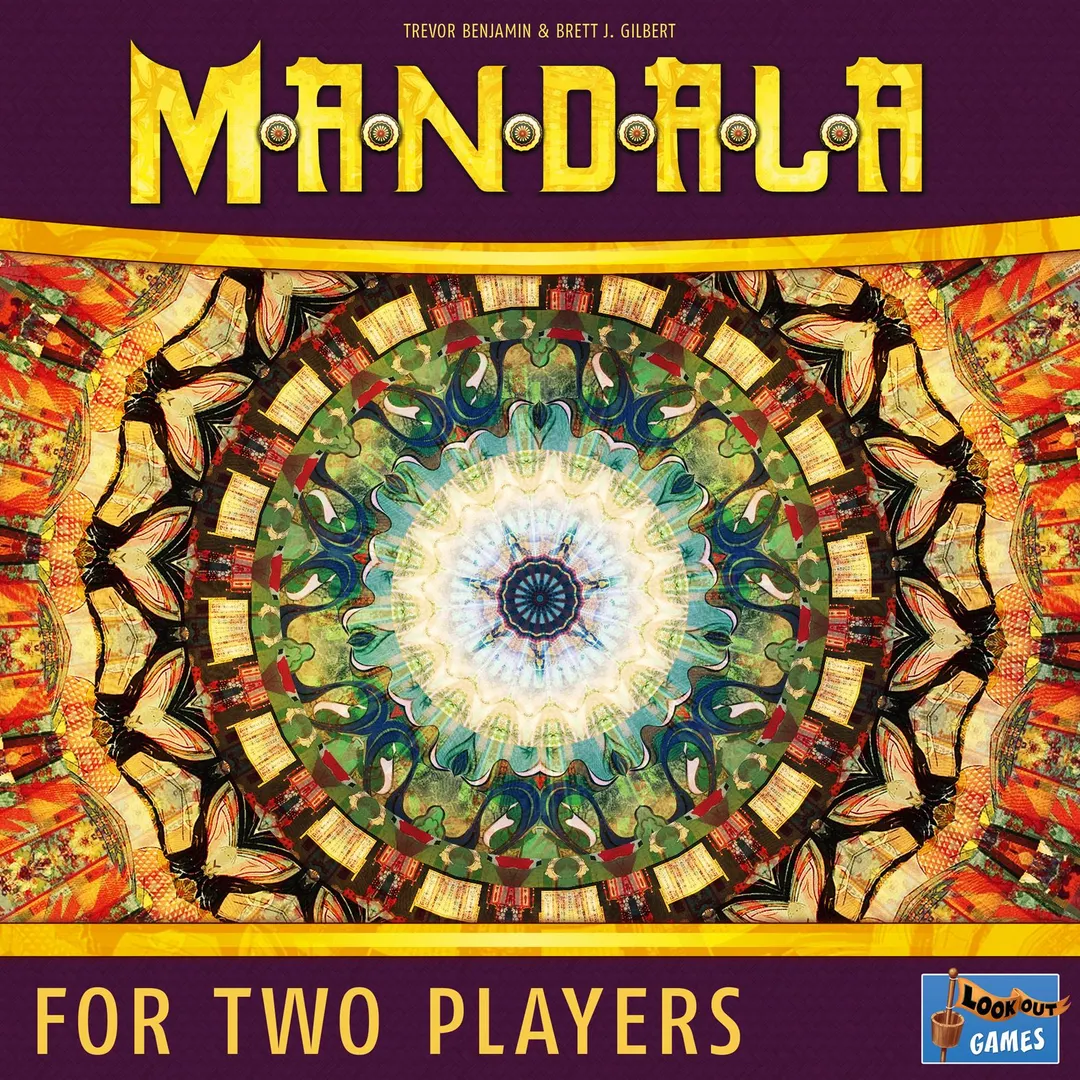
2019
Regelhilfe für Mandala
Verständliche Erklärungen zu Spielzügen, Karteneffekten und strittigen Situationen mit Verweisen auf offizielle Quellen und gespeichertem Fragenverlauf.
Für 2 Personen
Was möchtest du wissen?
Antworten stammen aus dem offiziellen Regelheft, mit Seitenangabe zum Nachprüfen.
Mandala ist ein Brettspiel aus dem Jahr 2019 für 2 Personen, mit 20 Minuten pro Partie und ab 10 Jahren. Entwickelt wurde es von Brett J. Gilbert und Trevor Benjamin; die wichtigsten Mechaniken sind Hand Management, Set Collection und Area Majority / Influence.







Auf Englisch
The Mandala: the symbol of an ancient and sacred ritual. Colored sand is laid to create a symbolic map of the world before the pattern is ceremonially destroyed and the sand cast into the river. In the two-player game Mandala, you are trying to score more than your opponent by collecting valuable cards — but you won't know which cards are valuable until well into the game! Over the course of the game, players play their colored cards into the two mandalas, building the central shared mountains and laying cards into their own fields. As soon as a mandala has all six colors, the players take turns choosing the colors in the mountain and adding those cards to their "river" and "cup". At the end of the game, the cards in your cup are worth points based on the position of their colors in that player's river. The player whose cup is worth more points wins. The linen playmat shows two circular mandalas, with each being divided by a horizontal space (the mountain) to create one "field" for each player. The playmat has seven spaces in front of each player to hold their river of single face-up cards and their cup: the stack of face-down cards which they score at the end of the game. To begin, each player receives a hand of six cards. Each player receives two random cards face down in their cup, then two random cards are dealt face up into the central mountain strip of each mandala. On your turn, you may play either a single card into one of the mountains, or one or more matching cards into one of your fields. All cards played into a mandala must follow the "Rule of Color": Once a color has been played into one of the three areas of a mandala, then later cards of the same color can be played only into that same area. Thus, once your opponent has played red cards into their field, then you can't play red cards in your field, and neither you nor your opponent can play red cards into the central mountain. If you played a card into a mountain, draw three new cards from the deck at the end of your turn; if you played cards into one of your fields, do not draw new cards. A mandala is completed once it contains all six colors of cards. When this happens, the players "destroy" the mandala, taking turns to choose a color present in the mountain and claim all cards of that color. Whoever played more cards in their field chooses first; if tied, the player who did not complete the mandala chooses first. The first time you claim cards of a specific color, lay one of these cards in the lowest-valued empty space in your river, then place the rest into your cup. The spaces in your river are valued 1-6 in order, so cards of the first color you claim will be worth 1 point each, cards of the second color you claim are worth 2 points each, and so on. Once a mandala has been destroyed and all the colors in the mountain claimed, cards played in the fields are discarded, two new cards are dealt face up into the mountain, and the game continues. The end of the game is triggered either when the deck is exhausted or when one player adds a sixth color to their river. Both players then tally the value of all the cards in their cup, based on the position of the colors in their river, and whoever has the higher score wins! Contents: 1 linen playmat 108 mandala cards (18 in each of 6 colours) 2 reference cards
Laut Katalog unterstützt Mandala 2 Personen. Das ist die vom Verlag angegebene Spielerzahl, das Spiel ist also genau für diese Anzahl von Mitspielenden ausgelegt. Varianten für andere Gruppengrößen sind, sofern vorhanden, in der Anleitung deiner Ausgabe beschrieben; prüfe sie, bevor du eine andere Konfiguration aufbaust.
Die angegebene Spieldauer für Mandala beträgt 20 Minuten. Das ist die Schätzung des Verlags für eine vollständige Partie. Die tatsächliche Dauer hängt von der Gruppe, der Personenzahl und der Regelkenntnis ab: Erste Partien dauern meist länger, erfahrene Gruppen sind oft schneller fertig. Aufbau und Regelerklärung sind in dieser Schätzung nicht enthalten.
Im Katalog wird Mandala ab 10 Jahren empfohlen. Das ist die Empfehlung des Verlags und berücksichtigt Leseanforderungen, Regelkomplexität und Kleinteile, nicht nur das Thema. Jüngere Kinder können oft mit Hilfe eines Erwachsenen mitspielen; beachte die Altersangabe deiner Ausgabe und die Brettspielerfahrung deiner Gruppe.
Mandala hat bei BoardGameGeek eine Komplexitätswertung von 1,8 von 5 und gilt damit als leichtes Spiel. Die Wertung zeigt, wie viel Regelwissen, Planung und Entscheidungen eine typische Partie verlangt. Schwerere Spiele brauchen bei der ersten Erklärung mehr Zeit, daher hilft vor dem Spieleabend eine Vorbereitungsanleitung.
Mandala gehört zu diesen Kategorien: Card Game und Abstract Strategy. Die wichtigsten Mechaniken sind Hand Management, Set Collection und Area Majority / Influence. Kategorien beschreiben Thema und Setting eines Spiels, Mechaniken dagegen, was die Spielenden in ihrem Zug tatsächlich tun. Jede Mechanik führt zu einer Katalogseite mit ähnlichen Spielen, falls du etwas Vergleichbares suchst.
Als Autoren von Mandala sind angegeben: Brett J. Gilbert und Trevor Benjamin. Diese Angaben stammen aus den veröffentlichten Spieldaten und nennen die für das Spieldesign verantwortlichen Personen, nicht die Illustratoren oder Verlage. Die Autorenseiten auf MeepleRules sammeln weitere Titel derselben Autoren – praktisch, wenn dir ein Spiel gefällt und du ähnliche Spiele suchst.
Im Katalog ist Mandala als Grundspiel aufgeführt. Es lässt sich eigenständig mit dem Material aus der Schachtel spielen und benötigt keinen weiteren Titel. Erweiterungen, sofern es welche gibt, ergänzen neues Material oder neue Regeln und sind im Katalog separat mit einem Verweis auf dieses Grundspiel aufgeführt.