

- BGG-Rang
- BGG #11.454
- BGG-Bewertung
- 6,8
2019: The ARCTIC
- 2–4 Spieler
- 120 Min.
- Komplexität 4,0/5
- 2011
2010
Regelhilfe für Master of Economy
Verständliche Erklärungen zu Spielzügen, Karteneffekten und strittigen Situationen mit Verweisen auf offizielle Quellen und gespeichertem Fragenverlauf.
Für 2 Personen
Was möchtest du wissen?
Antworten stammen aus dem offiziellen Regelheft, mit Seitenangabe zum Nachprüfen.
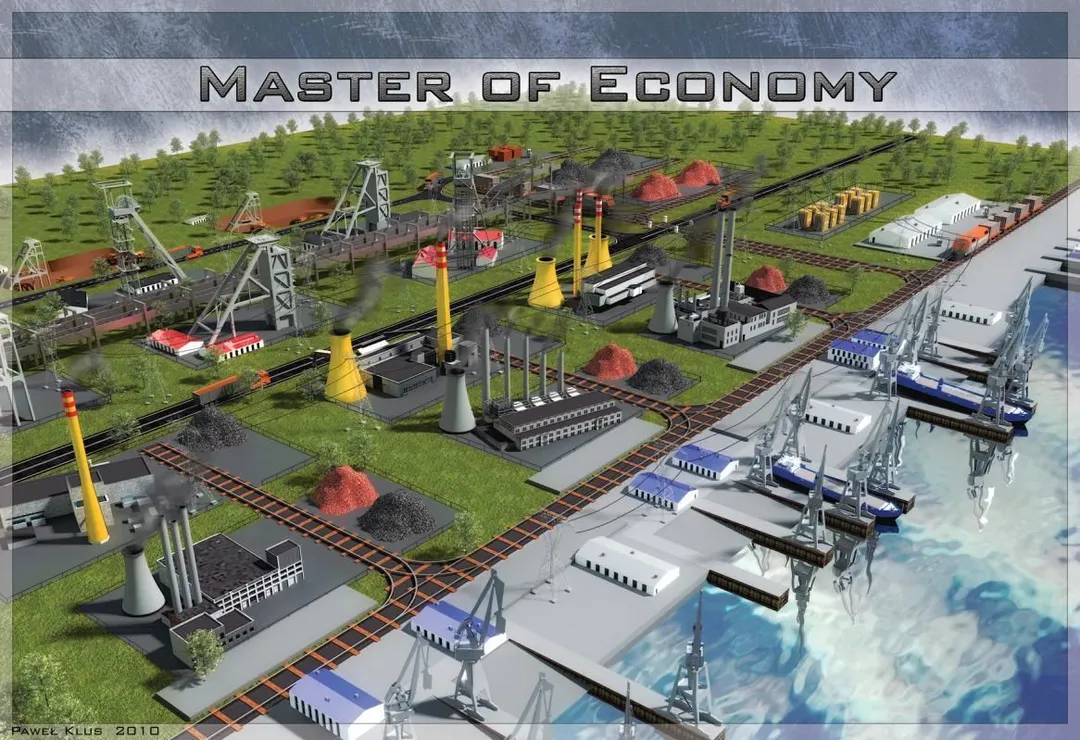
Master of Economy ist ein Brettspiel aus dem Jahr 2010 für 2–4 Personen, mit 120 Minuten pro Partie und ab 14 Jahren. Entwickelt wurde es von Andrzej Kurek; die wichtigsten Mechaniken sind Hand Management, Trading und Auction / Bidding.

Auf Englisch
Financial simulator. Players start the game by managing their corporations (1 of 4) and using them as a tool for increasing the value of private property (like countries in "Imperial"). By effective speculation on the stock market, a player may take control of more than one corporation. Proper corporation management is preferable but not the most essential. The rules attempt to simulate real conditions of business competition and relationships between shareholders. THERE IS NO LUCK FACTOR. Internal balance discourages to play in a relation of 2(3) players versus 1. Most of the rules are quite easy and intuitive. It is the most difficult to use the rules effectively by good planning and predicting opponents’ plans. Players manage their corporations by investing in new factories and trading produced goods to earn money (like in many other games). The point is what the players do with earned money. They can re-invest it to make their corporations earn more during next phase or try to make pressure on another player by buying shares of his/her corporation. The player who has the biggest number of shares can be elected by voting as a new leader of the corporation for the next stage. Even if you don`t have enough shares to take control over another player`s firm, the investment can be quite beneficiary because it can give you some profit (if that firm is managed well) or enforce your opponent to use the corporation money for defending, which makes his final result worse than could be achieved without your pressure. Of course, the more players (max 4), the more fun there is during voting phase when all the shareholders, who are going to manage the corporation in the next stage, vote. The game tries to extract maximum advantage of double circulation of money you can find in the "Imperial". Players have money and corporations have money. So, what is new then? Besides the players, also the corporations can be shareholders and they all (corporations and players) vote for new leaders. It means that if you want to keep control over a corporation you had started with, you can, for instance, first take control over some weaker corporation which has some shares of yours. The best defense is attack, isn`t it? ;) The only weapon in this war is money. There are some tools of defense, so taking control over experienced opponent`s corporation is rather difficult, though possible. When an experienced player plays versus a beginner, he/she shouldn`t have a problem with it. Moreover, keeping control of the corporation is useful, because it is a way of generating money for the leader, although speculating by buying and selling shares is a bit more efficient. It is the best to go both ways at the same time, choosing and changing your engagement alternately. Well, it is also possible to play without any corporation and increase the value of private property only by playing as a stock market profiteer, but this way is recommended only for very experienced players. There is a fixed variant of playing 2 vs. 2.
Laut Katalog unterstützt Master of Economy 2–4 Personen. Diese Spanne entspricht der vom Verlag angegebenen Spielerzahl, das Spiel lässt sich also für jede Gruppengröße innerhalb dieser Spanne aufbauen. Aufbau, einzelne Regeln und Wertungsdetails können je nach Personenzahl trotzdem abweichen; prüfe daher die genaue Konfiguration in der Anleitung deiner Ausgabe.
Die angegebene Spieldauer für Master of Economy beträgt 120 Minuten. Das ist die Schätzung des Verlags für eine vollständige Partie. Die tatsächliche Dauer hängt von der Gruppe, der Personenzahl und der Regelkenntnis ab: Erste Partien dauern meist länger, erfahrene Gruppen sind oft schneller fertig. Aufbau und Regelerklärung sind in dieser Schätzung nicht enthalten.
Im Katalog wird Master of Economy ab 14 Jahren empfohlen. Das ist die Empfehlung des Verlags und berücksichtigt Leseanforderungen, Regelkomplexität und Kleinteile, nicht nur das Thema. Jüngere Kinder können oft mit Hilfe eines Erwachsenen mitspielen; beachte die Altersangabe deiner Ausgabe und die Brettspielerfahrung deiner Gruppe.
Master of Economy hat bei BoardGameGeek eine Komplexitätswertung von 4,1 von 5 und gilt damit als schweres Spiel. Die Wertung zeigt, wie viel Regelwissen, Planung und Entscheidungen eine typische Partie verlangt. Schwerere Spiele brauchen bei der ersten Erklärung mehr Zeit, daher hilft vor dem Spieleabend eine Vorbereitungsanleitung.
Master of Economy gehört zu diesen Kategorien: Economic, Negotiation und Educational. Die wichtigsten Mechaniken sind Hand Management, Trading und Auction / Bidding. Kategorien beschreiben Thema und Setting eines Spiels, Mechaniken dagegen, was die Spielenden in ihrem Zug tatsächlich tun. Jede Mechanik führt zu einer Katalogseite mit ähnlichen Spielen, falls du etwas Vergleichbares suchst.
Als Autoren von Master of Economy sind angegeben: Andrzej Kurek. Diese Angaben stammen aus den veröffentlichten Spieldaten und nennen die für das Spieldesign verantwortlichen Personen, nicht die Illustratoren oder Verlage. Die Autorenseiten auf MeepleRules sammeln weitere Titel derselben Autoren – praktisch, wenn dir ein Spiel gefällt und du ähnliche Spiele suchst.
Im Katalog ist Master of Economy als Grundspiel aufgeführt. Es lässt sich eigenständig mit dem Material aus der Schachtel spielen und benötigt keinen weiteren Titel. Erweiterungen, sofern es welche gibt, ergänzen neues Material oder neue Regeln und sind im Katalog separat mit einem Verweis auf dieses Grundspiel aufgeführt.