
- BGG-Bewertung
- 6,4
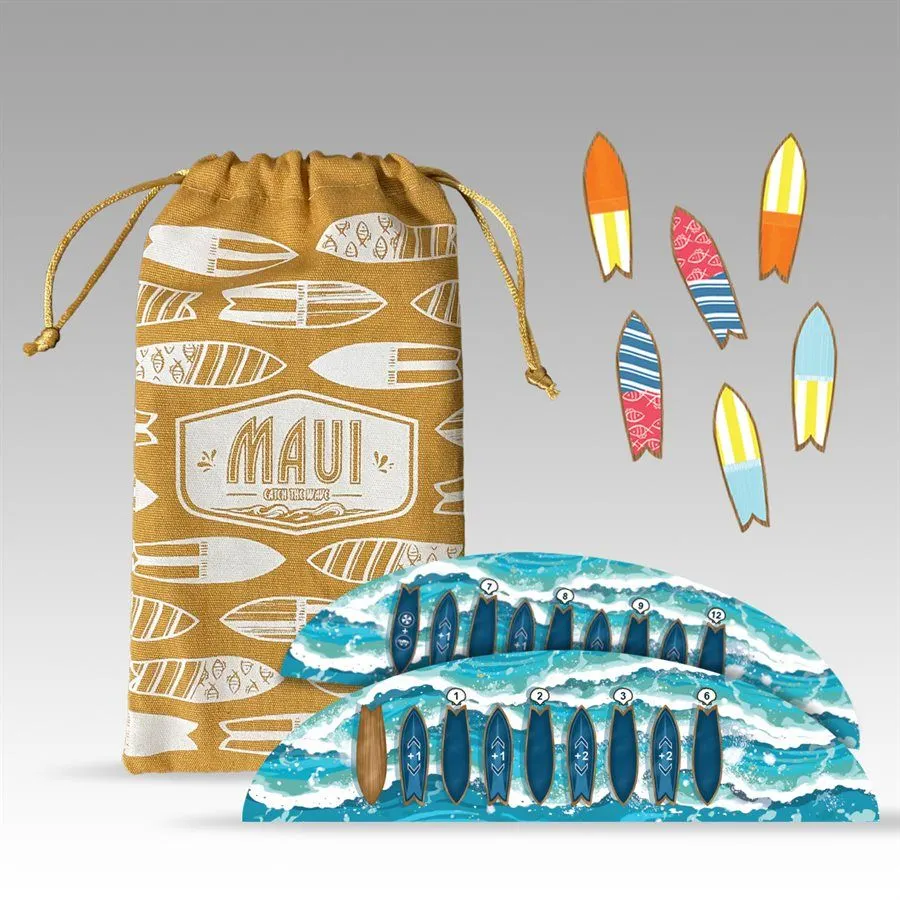
Maui: Catch the Wave Mini Expansion
- 2–5 Spieler
- 20–40 Min.
- 2022
2022
Regelhilfe für Maui
Verständliche Erklärungen zu Spielzügen, Karteneffekten und strittigen Situationen mit Verweisen auf offizielle Quellen und gespeichertem Fragenverlauf.
Für 2 Personen
Was möchtest du wissen?
Antworten stammen aus dem offiziellen Regelheft, mit Seitenangabe zum Nachprüfen.
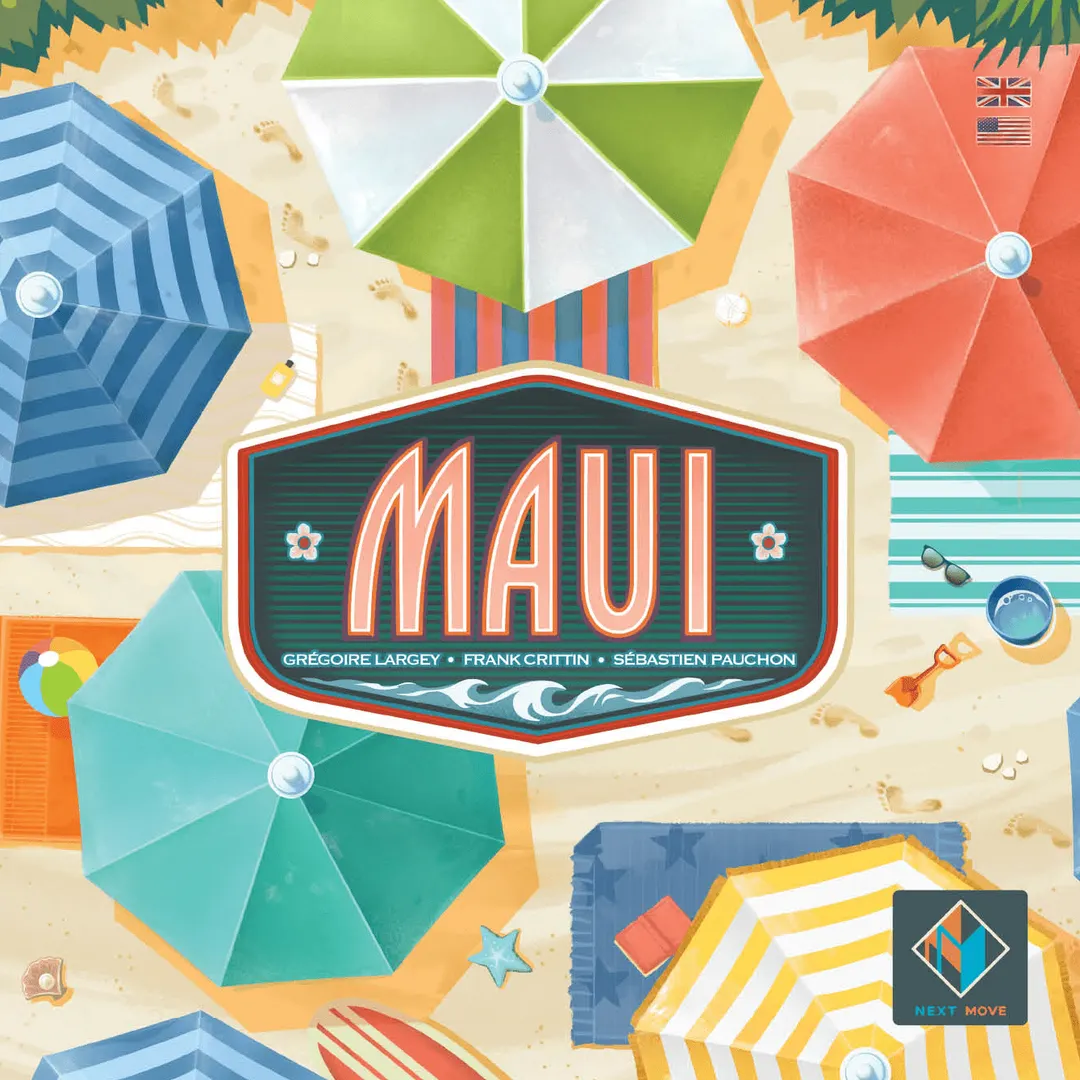
Maui ist ein Brettspiel aus dem Jahr 2022 für 2–4 Personen, mit 30 Minuten pro Partie und ab 8 Jahren. Entwickelt wurde es von Sébastien Pauchon, Frank Crittin und Grégoire Largey; die wichtigsten Mechaniken sind Pattern Building.




Auf Englisch
Locals and tourists in Maui are heading to the beach for a chance to find a nice spot to lay their towels and enjoy the amazing view of the Hawaiian ocean. In Maui, you want to find and place beachgoers on your sand so that they create pleasing patterns, while also placing their towels close to the ocean or under the shade of trees or umbrellas to earn the most points. However, getting too close to either of these areas is risky and might ruin their plans! In the game, you have your own beach board with room for 13 towels, the board has seven rows in which towels can be placed, and during set-up, you randomly place eight umbrellas in designated locations on your board. Each player places one random towel in the left most column of their board; each towel has three different patterns on it. Place six random tiles in the two rows of the market and one sand dollar in each row. On a turn, either take all the sand dollars from either row of the market or take a towel from the market; towels cost 0, 1, or 2 sand dollars, with those dollars being placed in the market row. When you place a towel, you must match at least one pattern with the towel that's rightmost on your beach board and you want to match as many patterns as possible. For each match you make, you advance that pattern's scoring marker 1-3 spaces on the score board; the closer to the ocean or the shade the more points you score, but if you place part of a towel outside the play area, you're penalized. If you cover an umbrella, you receive its bonus, whether that's advancing a pattern's scoring marker or receiving one of two types of pearls. When someone places a towel in the final column of their beach board, you complete the round, then see who's scored the most points from patterns, pearls, and leftover sand dollars, which are each worth a point. Instead of playing with umbrellas, you can flip your beach board to find a septet of sand crabs. Whenever you cover a crab with a towel, the crab crawls onto that portion of the towel, costing you both that pattern and a few points.
Laut Katalog unterstützt Maui 2–4 Personen. Diese Spanne entspricht der vom Verlag angegebenen Spielerzahl, das Spiel lässt sich also für jede Gruppengröße innerhalb dieser Spanne aufbauen. Aufbau, einzelne Regeln und Wertungsdetails können je nach Personenzahl trotzdem abweichen; prüfe daher die genaue Konfiguration in der Anleitung deiner Ausgabe.
Die angegebene Spieldauer für Maui beträgt 30 Minuten. Das ist die Schätzung des Verlags für eine vollständige Partie. Die tatsächliche Dauer hängt von der Gruppe, der Personenzahl und der Regelkenntnis ab: Erste Partien dauern meist länger, erfahrene Gruppen sind oft schneller fertig. Aufbau und Regelerklärung sind in dieser Schätzung nicht enthalten.
Im Katalog wird Maui ab 8 Jahren empfohlen. Das ist die Empfehlung des Verlags und berücksichtigt Leseanforderungen, Regelkomplexität und Kleinteile, nicht nur das Thema. Jüngere Kinder können oft mit Hilfe eines Erwachsenen mitspielen; beachte die Altersangabe deiner Ausgabe und die Brettspielerfahrung deiner Gruppe.
Maui hat bei BoardGameGeek eine Komplexitätswertung von 1,6 von 5 und gilt damit als leichtes Spiel. Die Wertung zeigt, wie viel Regelwissen, Planung und Entscheidungen eine typische Partie verlangt. Schwerere Spiele brauchen bei der ersten Erklärung mehr Zeit, daher hilft vor dem Spieleabend eine Vorbereitungsanleitung.
Maui gehört zu diesen Kategorien: Abstract Strategy. Die wichtigsten Mechaniken sind Pattern Building. Kategorien beschreiben Thema und Setting eines Spiels, Mechaniken dagegen, was die Spielenden in ihrem Zug tatsächlich tun. Jede Mechanik führt zu einer Katalogseite mit ähnlichen Spielen, falls du etwas Vergleichbares suchst.
Als Autoren von Maui sind angegeben: Sébastien Pauchon, Frank Crittin und Grégoire Largey. Diese Angaben stammen aus den veröffentlichten Spieldaten und nennen die für das Spieldesign verantwortlichen Personen, nicht die Illustratoren oder Verlage. Die Autorenseiten auf MeepleRules sammeln weitere Titel derselben Autoren – praktisch, wenn dir ein Spiel gefällt und du ähnliche Spiele suchst.
Im Katalog ist Maui als Grundspiel aufgeführt. Es lässt sich eigenständig mit dem Material aus der Schachtel spielen und benötigt keinen weiteren Titel. Erweiterungen, sofern es welche gibt, ergänzen neues Material oder neue Regeln und sind im Katalog separat mit einem Verweis auf dieses Grundspiel aufgeführt.