
- BGG-Bewertung
- 7,3
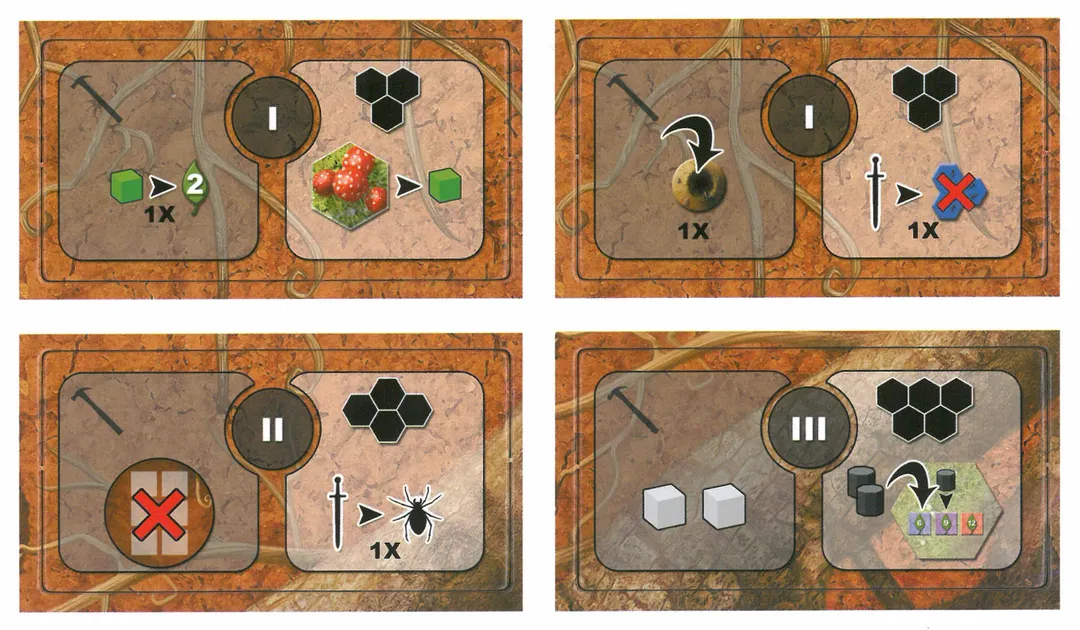
Myrmes: Colony Tiles
- 2–4 Spieler
- 90 Min.
- Komplexität 3,6/5
- 2013
2012
Regelhilfe für Myrmes
Verständliche Erklärungen zu Spielzügen, Karteneffekten und strittigen Situationen mit Verweisen auf offizielle Quellen und gespeichertem Fragenverlauf.
Für 2 Personen
Was möchtest du wissen?
Antworten stammen aus dem offiziellen Regelheft, mit Seitenangabe zum Nachprüfen.
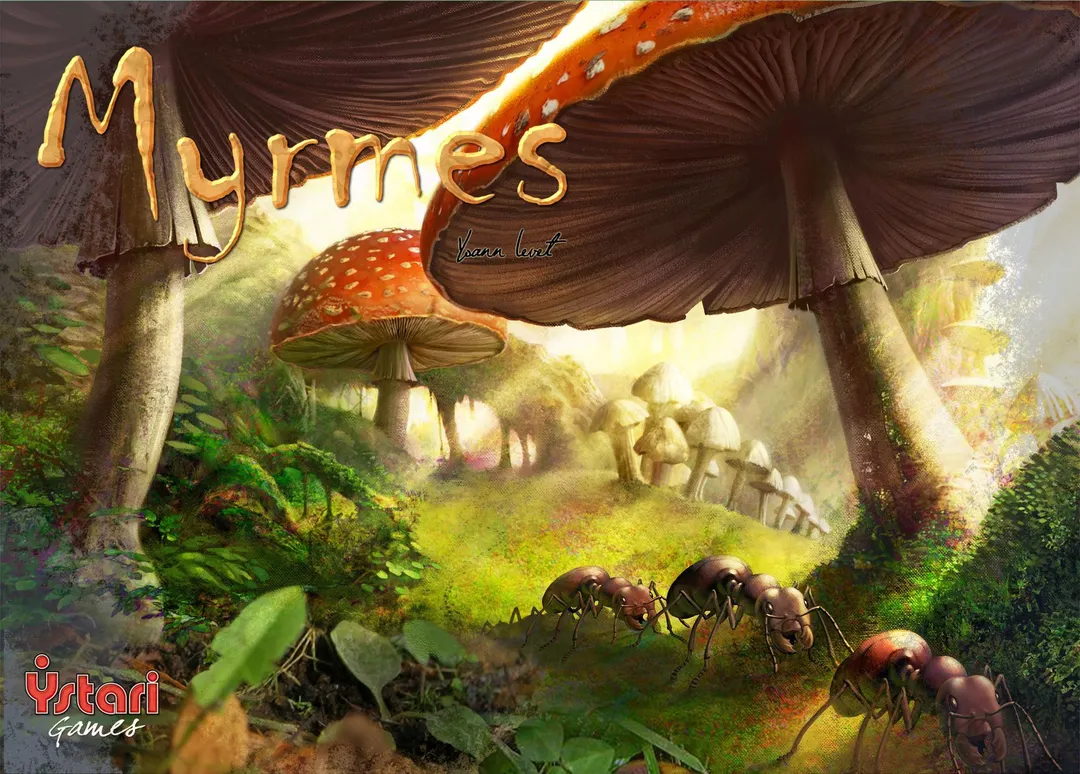
Myrmes ist ein Brettspiel aus dem Jahr 2012 für 2–4 Personen, mit 60–120 Minuten pro Partie und ab 13 Jahren. Entwickelt wurde es von Yoann Levet; die wichtigsten Mechaniken sind Grid Movement, Network and Route Building und Hexagon Grid.



Auf Englisch
In Myrmes, originally shown under the name ANTerpryse, players control ant colonies and use their ants to explore the land (leaving pheromones in their wake); harvest "crops" like stone, earth and aphids; fight with other ants; complete requests from the Queen; birth new ants; and otherwise dominate their tiny patch of dirt, all in a quest to score points and prove that they belong at the top of the heap, er, anthill. After three seasons of scrabbling and foraging, each ant colony faces a harsh winter that will test its colonial strength. In game terms, each player has an individual game board to track what's going on inside his colony – that is, whether the nurses are tending to larvae or doing other things, where the larvae are in their growth process, what resources the colony has, which actions are available to workers when they leave the colony, and so on. The shared game board shows the landscape outside the exit tunnel that all colonies share; after exiting this tunnel, workers ants can move over the terrain to place pheromones (which gives them access to resource cubes), clean up empty pheromones (to make space), hunt prey (by discarding soldiers) or place special tiles (but only if they've developed the ant colony). The game lasts three years, and at the start of each year three season dice are rolled to determine the event for each season: extra larvae or soldiers, more VPs for actions, and so on. Within each season, players can spend larvae to adjust the event for themselves on their personal player board. (Put the kids to work!) After adjusting the event, player allocate nurses to birth larvae, worker or soldier ants or to use them for other actions. The worker ants then do their thing, working within the colony itself (although only one colony level is open initially) or traveling to the outside world to hunt prey (ladybugs, termites, spiders), lay down pheromones (which later lets them claim resources on these spaces), place special tiles (like an aphid farm or sub-colony), or clear out pheromones left by ants from any colony. After harvesting, nurses who didn't tend to births then take additional actions, such as opening a new tunnel that only your colony can use, clearing a new level within your colony, or meeting one of the six objectives (capture a certain number of prey, build special tiles, and so on) laid out at the start of the game. After three seasons, players must pay food to get their colony through winter, losing points if they can't. Whoever has the most points after three years wins. All hail our new ant overlords!
Laut Katalog unterstützt Myrmes 2–4 Personen. Diese Spanne entspricht der vom Verlag angegebenen Spielerzahl, das Spiel lässt sich also für jede Gruppengröße innerhalb dieser Spanne aufbauen. Aufbau, einzelne Regeln und Wertungsdetails können je nach Personenzahl trotzdem abweichen; prüfe daher die genaue Konfiguration in der Anleitung deiner Ausgabe.
Die angegebene Spieldauer für Myrmes beträgt 60–120 Minuten. Das ist die Schätzung des Verlags für eine vollständige Partie. Die tatsächliche Dauer hängt von der Gruppe, der Personenzahl und der Regelkenntnis ab: Erste Partien dauern meist länger, erfahrene Gruppen sind oft schneller fertig. Aufbau und Regelerklärung sind in dieser Schätzung nicht enthalten.
Im Katalog wird Myrmes ab 13 Jahren empfohlen. Das ist die Empfehlung des Verlags und berücksichtigt Leseanforderungen, Regelkomplexität und Kleinteile, nicht nur das Thema. Jüngere Kinder können oft mit Hilfe eines Erwachsenen mitspielen; beachte die Altersangabe deiner Ausgabe und die Brettspielerfahrung deiner Gruppe.
Myrmes hat bei BoardGameGeek eine Komplexitätswertung von 3,5 von 5 und gilt damit als mittelschweres Spiel. Die Wertung zeigt, wie viel Regelwissen, Planung und Entscheidungen eine typische Partie verlangt. Schwerere Spiele brauchen bei der ersten Erklärung mehr Zeit, daher hilft vor dem Spieleabend eine Vorbereitungsanleitung.
Myrmes gehört zu diesen Kategorien: Animals, Farming und Environmental. Die wichtigsten Mechaniken sind Grid Movement, Network and Route Building und Hexagon Grid. Kategorien beschreiben Thema und Setting eines Spiels, Mechaniken dagegen, was die Spielenden in ihrem Zug tatsächlich tun. Jede Mechanik führt zu einer Katalogseite mit ähnlichen Spielen, falls du etwas Vergleichbares suchst.
Als Autoren von Myrmes sind angegeben: Yoann Levet. Diese Angaben stammen aus den veröffentlichten Spieldaten und nennen die für das Spieldesign verantwortlichen Personen, nicht die Illustratoren oder Verlage. Die Autorenseiten auf MeepleRules sammeln weitere Titel derselben Autoren – praktisch, wenn dir ein Spiel gefällt und du ähnliche Spiele suchst.
Im Katalog ist Myrmes als Grundspiel aufgeführt. Es lässt sich eigenständig mit dem Material aus der Schachtel spielen und benötigt keinen weiteren Titel. Erweiterungen, sofern es welche gibt, ergänzen neues Material oder neue Regeln und sind im Katalog separat mit einem Verweis auf dieses Grundspiel aufgeführt.