- BGG-Rang
- BGG #2.318
- BGG-Bewertung
- 8,0
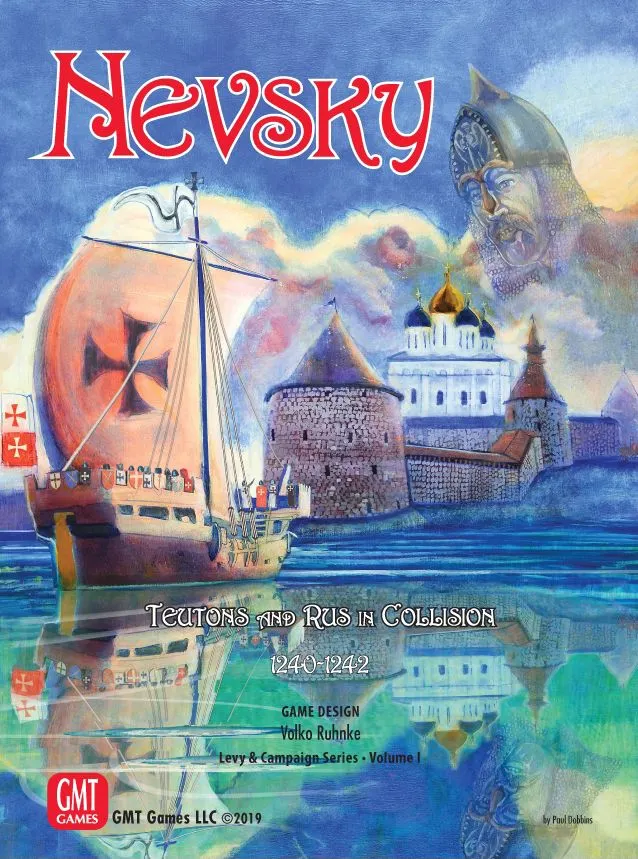
Nevsky: Teutons and Rus in Collision 1240-1242
2019
Regelhilfe für Nevsky: Teutons and Rus in Collision 1240-1242
Verständliche Erklärungen zu Spielzügen, Karteneffekten und strittigen Situationen mit Verweisen auf offizielle Quellen und gespeichertem Fragenverlauf.
- 1–2 Spieler
- 60–360 Min.
- 14+
- Komplexität 4,0/5

Für 1 Person
Regelassistent für Nevsky: Teutons and Rus in Collision 1240-1242
Was möchtest du wissen?
Antworten stammen aus dem offiziellen Regelheft, mit Seitenangabe zum Nachprüfen.
Nevsky: Teutons and Rus in Collision 1240-1242 ist ein Brettspiel aus dem Jahr 2019 für 1–2 Personen, mit 60–360 Minuten pro Partie und ab 14 Jahren. Entwickelt wurde es von Volko Ruhnke; die wichtigsten Mechaniken sind Dice Rolling, Point to Point Movement und Variable Set-up.
Über das Spiel
Auf Englisch
Nevsky: Teutons and Rus in Collision 1240-1242 is a board wargame about the storied clash between Latin Teutonic and Orthodox Russian powers along the Baltic frontier of the mid-13th-Century. It is the first volume in GMT Games’ "Levy & Campaign Series" portraying military operations in a variety of pre-industrial conflicts. In Nevsky players raise and equip their armies, then provision and maneuver them to ravage or conquer enemy territory or defeat enemy forces in battle. Feudal politics obligate an array of lords and vassals to serve on campaign—but only for limited periods. Players must keep an eye on the calendar and reward lords to keep their armies in the field. Nevsky is solitaire friendly or can add a rules option with screens that hide what the two players’ lords levy. A second option adds detail regarding vassal forces’ terms of service. In Nevsky, two players take the roles of “Russians” and “Teutons”, respectively. The Russians represent the wealthy city-state of Novgorod and its allies. The Teutons comprise German and Danish landholders—including the Teutonic Order—expanding a Baltic dominion. The sides every 40 days will levy various lords and vassals and their forces, transport, and capabilities, backed by higher political authorities—a papal legate for the Teutons and Novgorod’s city council (veche) for the Russians. Each lord is rated for fealty, lordship, service, and command and lays out his forces and assets on a mat. Wooden pieces represent units of knights, mounted sergeants, light and Asiatic cavalry, men-at-arms, and unarmored serfs and militia. Assets include counters for transport such as carts, boats, and sleds; provender to feed the army; and coin to pay for longer service or booty captured by ravaging or conquering enemy regions. The players then plan and command a campaign for that 40 days with the lords who have mustered. To represent the limits of communications on medieval operations, stacks of command cards commit players to activating lords in a sequence that may or may not meet the needs of the developing situation. Cylinder pieces on the map show the lords’ maneuvers, while markers on a feudal calendar show how much longer the lords will serve, influenced by success or failure in their campaigns. When lords clash in field battle or storming a castle, players array their lords’ mats left, right, center, and reserve and attempt to rout the enemy. Various event and capability cards reveal cultural and technological particulars that influence levy, campaign, and combat.
Mechanismen
Autoren
Verlage
- GMT Games
Fragen und Antworten
Laut Katalog unterstützt Nevsky: Teutons and Rus in Collision 1240-1242 1–2 Personen. Diese Spanne entspricht der vom Verlag angegebenen Spielerzahl, das Spiel lässt sich also für jede Gruppengröße innerhalb dieser Spanne aufbauen. Aufbau, einzelne Regeln und Wertungsdetails können je nach Personenzahl trotzdem abweichen; prüfe daher die genaue Konfiguration in der Anleitung deiner Ausgabe.
Die angegebene Spieldauer für Nevsky: Teutons and Rus in Collision 1240-1242 beträgt 60–360 Minuten. Das ist die Schätzung des Verlags für eine vollständige Partie. Die tatsächliche Dauer hängt von der Gruppe, der Personenzahl und der Regelkenntnis ab: Erste Partien dauern meist länger, erfahrene Gruppen sind oft schneller fertig. Aufbau und Regelerklärung sind in dieser Schätzung nicht enthalten.
Im Katalog wird Nevsky: Teutons and Rus in Collision 1240-1242 ab 14 Jahren empfohlen. Das ist die Empfehlung des Verlags und berücksichtigt Leseanforderungen, Regelkomplexität und Kleinteile, nicht nur das Thema. Jüngere Kinder können oft mit Hilfe eines Erwachsenen mitspielen; beachte die Altersangabe deiner Ausgabe und die Brettspielerfahrung deiner Gruppe.
Nevsky: Teutons and Rus in Collision 1240-1242 hat bei BoardGameGeek eine Komplexitätswertung von 4,0 von 5 und gilt damit als schweres Spiel. Die Wertung zeigt, wie viel Regelwissen, Planung und Entscheidungen eine typische Partie verlangt. Schwerere Spiele brauchen bei der ersten Erklärung mehr Zeit, daher hilft vor dem Spieleabend eine Vorbereitungsanleitung.
Nevsky: Teutons and Rus in Collision 1240-1242 gehört zu diesen Kategorien: Wargame und Medieval. Die wichtigsten Mechaniken sind Dice Rolling, Point to Point Movement und Variable Set-up. Kategorien beschreiben Thema und Setting eines Spiels, Mechaniken dagegen, was die Spielenden in ihrem Zug tatsächlich tun. Jede Mechanik führt zu einer Katalogseite mit ähnlichen Spielen, falls du etwas Vergleichbares suchst.
Als Autoren von Nevsky: Teutons and Rus in Collision 1240-1242 sind angegeben: Volko Ruhnke. Diese Angaben stammen aus den veröffentlichten Spieldaten und nennen die für das Spieldesign verantwortlichen Personen, nicht die Illustratoren oder Verlage. Die Autorenseiten auf MeepleRules sammeln weitere Titel derselben Autoren – praktisch, wenn dir ein Spiel gefällt und du ähnliche Spiele suchst.
Im Katalog ist Nevsky: Teutons and Rus in Collision 1240-1242 als Grundspiel aufgeführt. Es lässt sich eigenständig mit dem Material aus der Schachtel spielen und benötigt keinen weiteren Titel. Erweiterungen, sofern es welche gibt, ergänzen neues Material oder neue Regeln und sind im Katalog separat mit einem Verweis auf dieses Grundspiel aufgeführt.