
- BGG-Rang
- BGG #12.123
- BGG-Bewertung
- 6,3
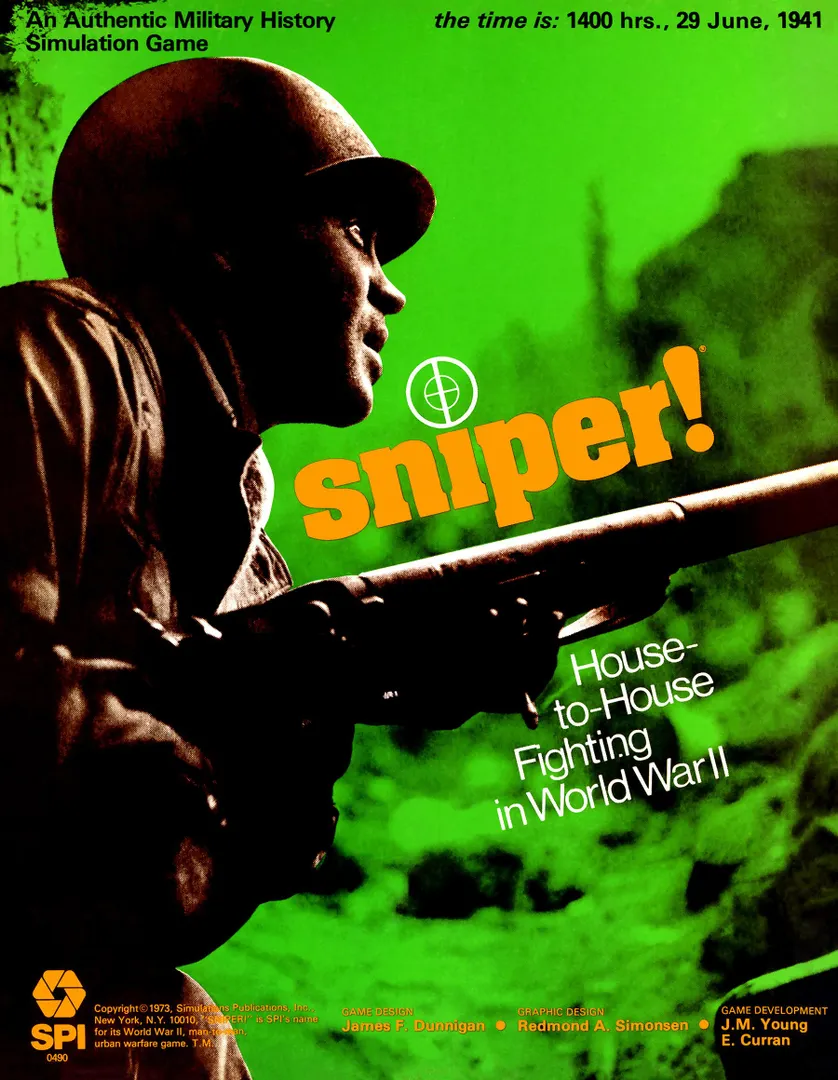
Sniper!
- 2 Spieler
- 180 Min.
- Komplexität 3,3/5
- 1973
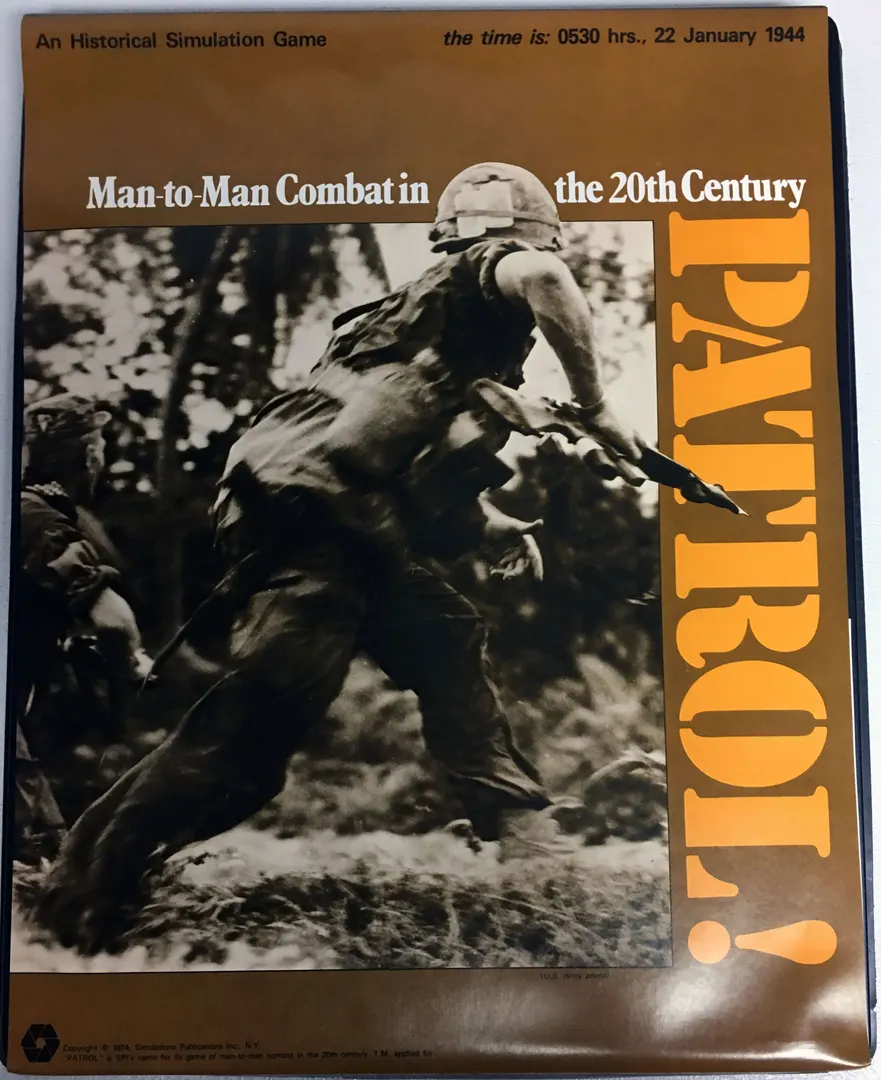
1974
Regelhilfe für Patrol!: Man-to-Man Combat in the 20th Century
Verständliche Erklärungen zu Spielzügen, Karteneffekten und strittigen Situationen mit Verweisen auf offizielle Quellen und gespeichertem Fragenverlauf.
Für 1 Person
Was möchtest du wissen?
Antworten stammen aus dem offiziellen Regelheft, mit Seitenangabe zum Nachprüfen.
Patrol!: Man-to-Man Combat in the 20th Century ist ein Brettspiel aus dem Jahr 1974 für 1–3 Personen, mit 240 Minuten pro Partie und ab 12 Jahren. Entwickelt wurde es von Jim Dunnigan; die wichtigsten Mechaniken sind Dice Rolling, Variable Set-up und Simultaneous Action Selection.



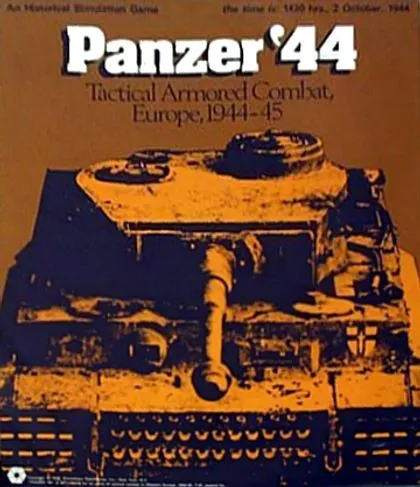


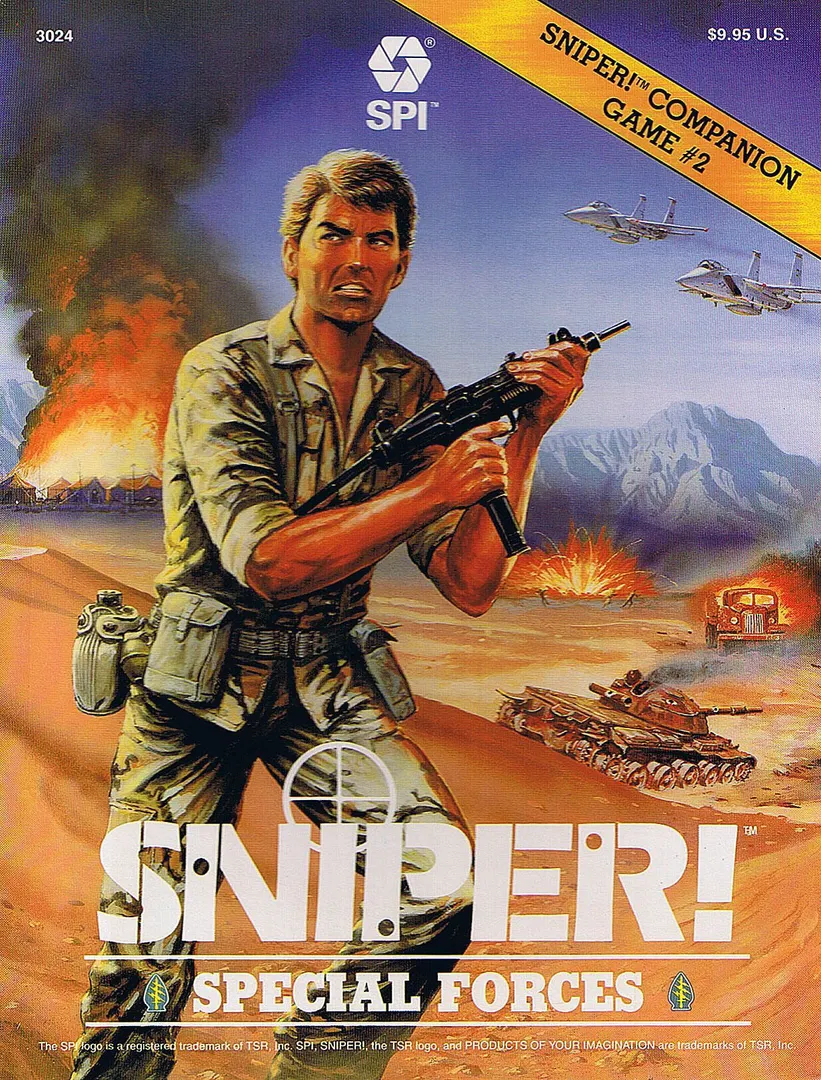
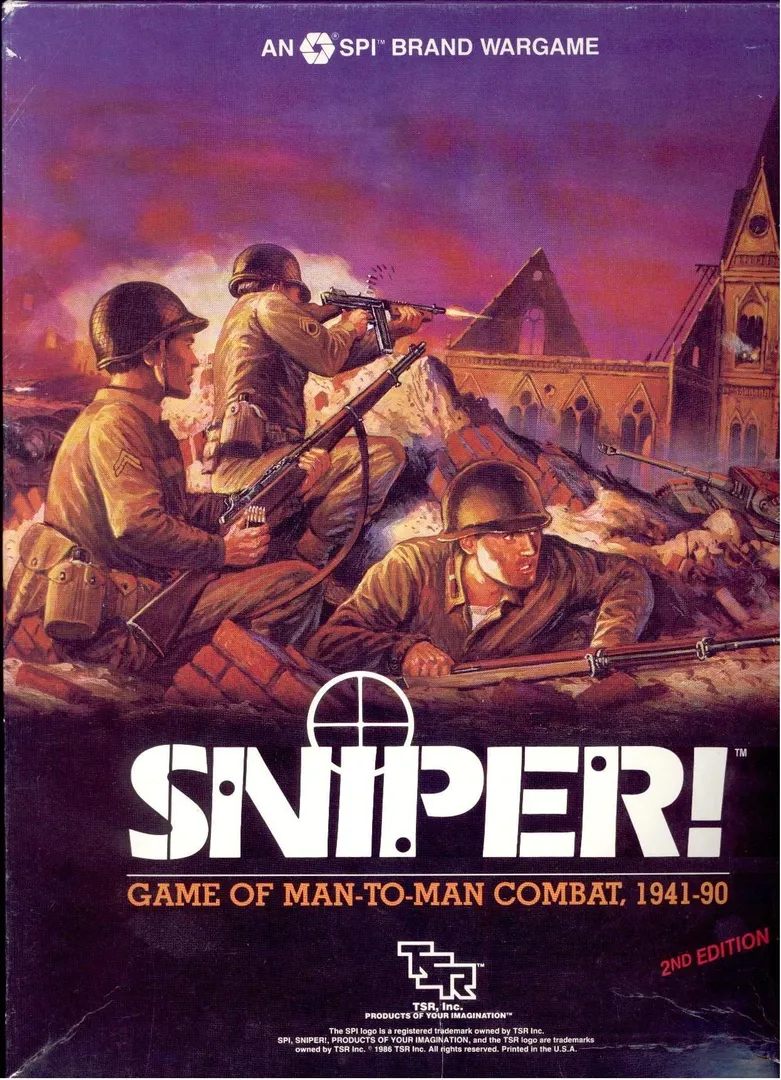

Auf Englisch
Patrol: Man-to-Man Combat in the 20th Century, is an individual man level simulation of non-urban infantry combat from World War 1 to the present. The game features various scenarios in which the average infantry squad would become involved. Typical scenarios simulate meeting engagements, ambushes, raids, snatch missions and assualts on fortified positions. Sequel to the game Sniper! Popular tactical combat system. As in Sniper, each player controls the equivalent of a squad of 5 to 15 men depending on the period, the scenario, and whether you attack or defend. One scenario corresponds to a few (one to five) minutes of real time action. The scale is a little larger than in Sniper (5 meters/hex, 5 seconds/turn vs 3 and 3 in Sniper), and there is no facing. The game system (though rated 7.1, ie pretty high, on SPI complexity scale), is quite straightforward and easy to learn. In the beginning of each turn, players secretly "buy" actions for all of their men. A normal man has 10 Movement Points to expend per turn. Fire, direct or opportunity, consumes all MP, as reloading one's weapon, or rearming (ie readying to use it after throwing a grenade or shooting a rifle grenade). Standing up, preparing a grenade, throwing it, cost 5MP. And movement costs MP depending on terrain... After all actions have been plotted, players check for panic: a certain percentage of all your men, depending on their hex number, have their actions canceled, or move randomly. (although very annoying, this rule does wonders at simulating low level control problems). Then, all remaining actions are performed: combat, movement, and finally grenade and artillery impacts. Rules cover a large variety of equipment: weapons like rifles, MP, MG, rocket launchers, grenade launchers and flamethrowers, but also barbed wire, pillboxes, artillery, mines, and up to one vehicle (APC or tank) per side. Five kind of combat situations are covered: patrol, reconnaissance, ambush, raid and assault. Some lending themselves quite well to solitaire play. A large number of scenarios (from WWI to modern) are provided, and you can easily design your own. A standard scenario plays in a couple of hours. Altogether, I think the system is pretty good for such a man to man combat situation. However, be warned that this very detailed scale has a peculiar feeling, which not all "tactical" game players (ie players used to ASL or Gamers TCS, which focus on company/battalion level units) will like: in Patrol! the player is a sergeant, not a captain. review by: Francois Charton Game Scale: Game Turn: 5 seconds to 5 minutes Hex: 5.4 yards / 5 meters Units: Individual Soldiers & Vehicles Game Inventory: Six 9 x 9" four color maps One dual-side printed countersheet (400 1/2" counters) One 32-page Patrol rulebook Foure Player Aids Cards Two 6-sided dice Solitaire Playability: Medium Complexity Level: Medium Players: 1 or more Playing Time: 2-6 hours
Laut Katalog unterstützt Patrol!: Man-to-Man Combat in the 20th Century 1–3 Personen. Diese Spanne entspricht der vom Verlag angegebenen Spielerzahl, das Spiel lässt sich also für jede Gruppengröße innerhalb dieser Spanne aufbauen. Aufbau, einzelne Regeln und Wertungsdetails können je nach Personenzahl trotzdem abweichen; prüfe daher die genaue Konfiguration in der Anleitung deiner Ausgabe.
Die angegebene Spieldauer für Patrol!: Man-to-Man Combat in the 20th Century beträgt 240 Minuten. Das ist die Schätzung des Verlags für eine vollständige Partie. Die tatsächliche Dauer hängt von der Gruppe, der Personenzahl und der Regelkenntnis ab: Erste Partien dauern meist länger, erfahrene Gruppen sind oft schneller fertig. Aufbau und Regelerklärung sind in dieser Schätzung nicht enthalten.
Im Katalog wird Patrol!: Man-to-Man Combat in the 20th Century ab 12 Jahren empfohlen. Das ist die Empfehlung des Verlags und berücksichtigt Leseanforderungen, Regelkomplexität und Kleinteile, nicht nur das Thema. Jüngere Kinder können oft mit Hilfe eines Erwachsenen mitspielen; beachte die Altersangabe deiner Ausgabe und die Brettspielerfahrung deiner Gruppe.
Patrol!: Man-to-Man Combat in the 20th Century hat bei BoardGameGeek eine Komplexitätswertung von 3,3 von 5 und gilt damit als mittelschweres Spiel. Die Wertung zeigt, wie viel Regelwissen, Planung und Entscheidungen eine typische Partie verlangt. Schwerere Spiele brauchen bei der ersten Erklärung mehr Zeit, daher hilft vor dem Spieleabend eine Vorbereitungsanleitung.
Patrol!: Man-to-Man Combat in the 20th Century gehört zu diesen Kategorien: Wargame, World War II und Modern Warfare. Die wichtigsten Mechaniken sind Dice Rolling, Variable Set-up und Simultaneous Action Selection. Kategorien beschreiben Thema und Setting eines Spiels, Mechaniken dagegen, was die Spielenden in ihrem Zug tatsächlich tun. Jede Mechanik führt zu einer Katalogseite mit ähnlichen Spielen, falls du etwas Vergleichbares suchst.
Als Autoren von Patrol!: Man-to-Man Combat in the 20th Century sind angegeben: Jim Dunnigan. Diese Angaben stammen aus den veröffentlichten Spieldaten und nennen die für das Spieldesign verantwortlichen Personen, nicht die Illustratoren oder Verlage. Die Autorenseiten auf MeepleRules sammeln weitere Titel derselben Autoren – praktisch, wenn dir ein Spiel gefällt und du ähnliche Spiele suchst.
Im Katalog ist Patrol!: Man-to-Man Combat in the 20th Century als Grundspiel aufgeführt. Es lässt sich eigenständig mit dem Material aus der Schachtel spielen und benötigt keinen weiteren Titel. Erweiterungen, sofern es welche gibt, ergänzen neues Material oder neue Regeln und sind im Katalog separat mit einem Verweis auf dieses Grundspiel aufgeführt.