

- BGG-Rang
- BGG #12.793
- BGG-Bewertung
- 8,2
Cocktail
- 2–9 Spieler
- 15–45 Min.
- Komplexität 1,3/5
- 2021
2022
Regelhilfe für Plant-Based Riot
Verständliche Erklärungen zu Spielzügen, Karteneffekten und strittigen Situationen mit Verweisen auf offizielle Quellen und gespeichertem Fragenverlauf.
Für 2 Personen
Was möchtest du wissen?
Antworten stammen aus dem offiziellen Regelheft, mit Seitenangabe zum Nachprüfen.
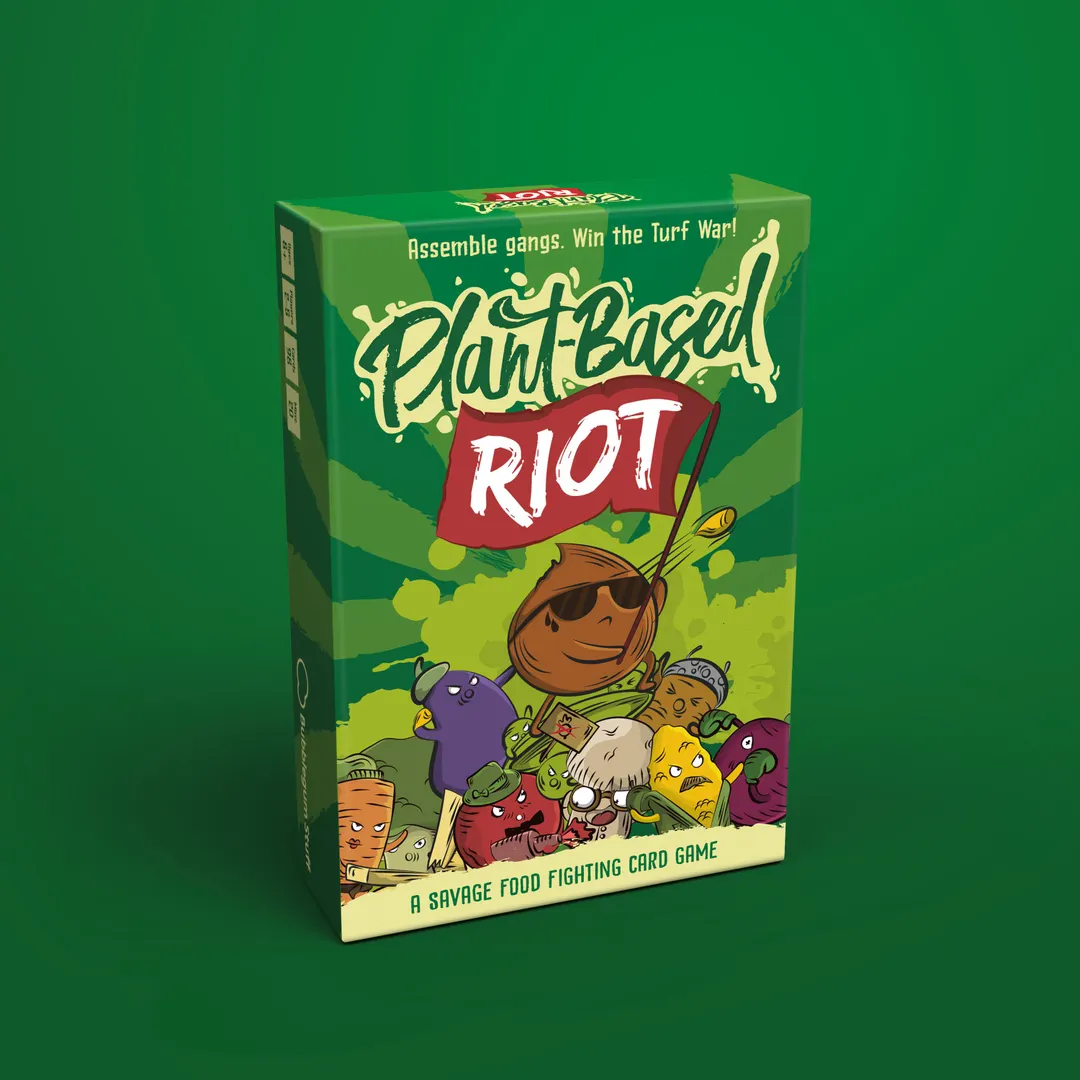
Plant-Based Riot ist ein Brettspiel aus dem Jahr 2022 für 2–5 Personen, mit 10–30 Minuten pro Partie und ab 8 Jahren. Entwickelt wurde es von Roberto Rotaru, Courtney Wood und Matt Ludlow; die wichtigsten Mechaniken sind Take That, Set Collection und Matching.


Auf Englisch
In the criminal underworld of villainous vegetables, 10 gangs are vying for supremacy, and ultimately trying to topple the ruthless Cartel that runs the whole racket. The aim of the game is to assemble gangs, destroy your rivals and overthrow the Cartel to win. You do this by collecting sets, stealing from your opponents and matching the Cartel cards. As you play, you’ll learn what gangs you gotta collect to topple the Cartel. And then you’ll need to bluff, steal and screw people over to get the gangs you need. There can be only one winner; everyone else will sleep with the dishes. Throughout the game, you’ll draw gang and action cards from the draw deck, and then take up to three moves. You can lay gang cards in your Turf - that’s where your gangs are assembled; you can protect your gang cards with security cards; you can use an action card to steal from an opponent; and you can start a Turf War with the Cartel. But be warned, the more you steal from your rivals, the more likely they’ll be to take revenge. And if you don’t match at least two full gangs with the Cartel during a Turf War, you’ll lose those gangs to the discard pile. Plant Based Riot is a light strategy, set collecting, card matching tabletop card game for 2-5 players. There’s gangs of terrible edibles, there’s thieving fruit, and there’s tons of card-based carnage. It’s got all the brutality of an actual food fight, only with way less clearing up afterwards. It’s designed with fluidity and fun in mind. It’s adaptable to all experience levels - from beginners to veterans - and age groups from 8 to 88. It’s also scalable, so the experience is just as riotous whether you’re playing one-on-one or a 5-way battle royale. A typical game takes between 15 and 30 minutes, depending on the number of players. And, like organic mushrooms, no two games of Plant Based Riot are the same, thanks to its unique mechanic. You won’t need any dice or additional pieces to play. Just a dastardly desire to collect and conquer. —description from the publisher
Laut Katalog unterstützt Plant-Based Riot 2–5 Personen. Diese Spanne entspricht der vom Verlag angegebenen Spielerzahl, das Spiel lässt sich also für jede Gruppengröße innerhalb dieser Spanne aufbauen. Aufbau, einzelne Regeln und Wertungsdetails können je nach Personenzahl trotzdem abweichen; prüfe daher die genaue Konfiguration in der Anleitung deiner Ausgabe.
Die angegebene Spieldauer für Plant-Based Riot beträgt 10–30 Minuten. Das ist die Schätzung des Verlags für eine vollständige Partie. Die tatsächliche Dauer hängt von der Gruppe, der Personenzahl und der Regelkenntnis ab: Erste Partien dauern meist länger, erfahrene Gruppen sind oft schneller fertig. Aufbau und Regelerklärung sind in dieser Schätzung nicht enthalten.
Im Katalog wird Plant-Based Riot ab 8 Jahren empfohlen. Das ist die Empfehlung des Verlags und berücksichtigt Leseanforderungen, Regelkomplexität und Kleinteile, nicht nur das Thema. Jüngere Kinder können oft mit Hilfe eines Erwachsenen mitspielen; beachte die Altersangabe deiner Ausgabe und die Brettspielerfahrung deiner Gruppe.
Plant-Based Riot hat bei BoardGameGeek eine Komplexitätswertung von 1,0 von 5 und gilt damit als leichtes Spiel. Die Wertung zeigt, wie viel Regelwissen, Planung und Entscheidungen eine typische Partie verlangt. Schwerere Spiele brauchen bei der ersten Erklärung mehr Zeit, daher hilft vor dem Spieleabend eine Vorbereitungsanleitung.
Plant-Based Riot gehört zu diesen Kategorien: Card Game, Fighting und Children's Game. Die wichtigsten Mechaniken sind Take That, Set Collection und Matching. Kategorien beschreiben Thema und Setting eines Spiels, Mechaniken dagegen, was die Spielenden in ihrem Zug tatsächlich tun. Jede Mechanik führt zu einer Katalogseite mit ähnlichen Spielen, falls du etwas Vergleichbares suchst.
Als Autoren von Plant-Based Riot sind angegeben: Roberto Rotaru, Courtney Wood und Matt Ludlow. Diese Angaben stammen aus den veröffentlichten Spieldaten und nennen die für das Spieldesign verantwortlichen Personen, nicht die Illustratoren oder Verlage. Die Autorenseiten auf MeepleRules sammeln weitere Titel derselben Autoren – praktisch, wenn dir ein Spiel gefällt und du ähnliche Spiele suchst.
Im Katalog ist Plant-Based Riot als Grundspiel aufgeführt. Es lässt sich eigenständig mit dem Material aus der Schachtel spielen und benötigt keinen weiteren Titel. Erweiterungen, sofern es welche gibt, ergänzen neues Material oder neue Regeln und sind im Katalog separat mit einem Verweis auf dieses Grundspiel aufgeführt.