
- BGG-Rang
- BGG #20.895
- BGG-Bewertung
- 6,3
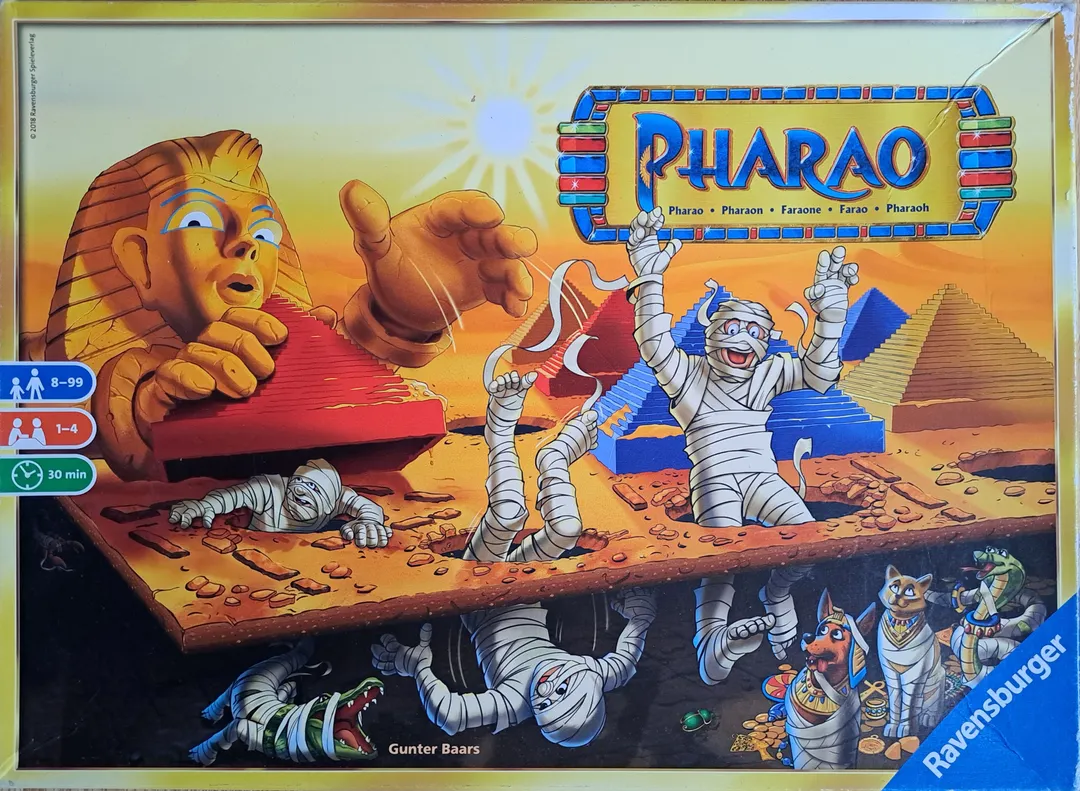
Pharao
- 1–4 Spieler
- 30 Min.
- Komplexität 1,5/5
- 2017
1997
Regelhilfe für Ramses II
Verständliche Erklärungen zu Spielzügen, Karteneffekten und strittigen Situationen mit Verweisen auf offizielle Quellen und gespeichertem Fragenverlauf.
Für 1 Person
Was möchtest du wissen?
Antworten stammen aus dem offiziellen Regelheft, mit Seitenangabe zum Nachprüfen.
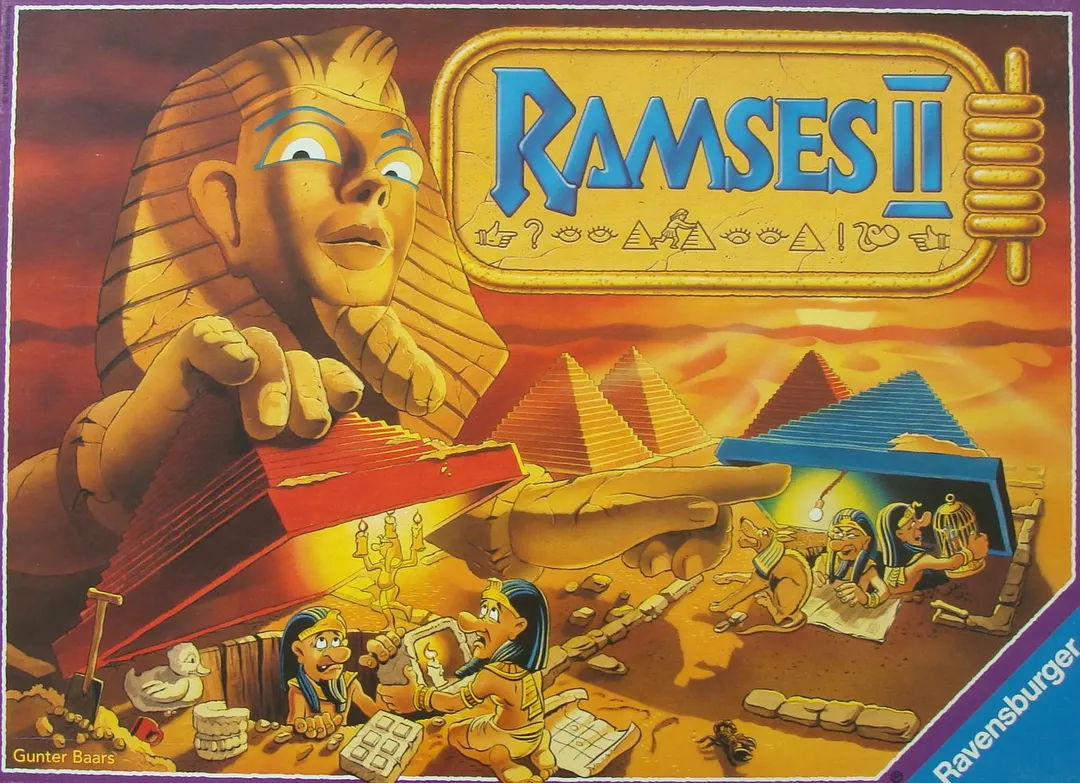
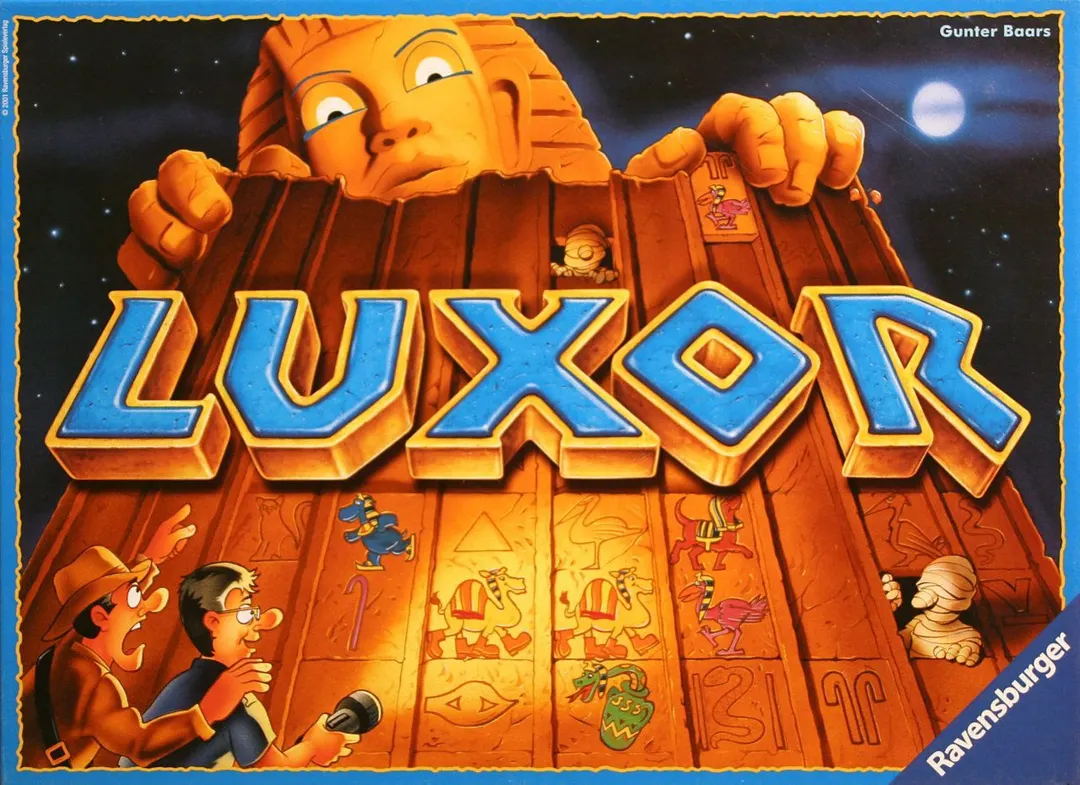
Ramses II ist ein Brettspiel aus dem Jahr 1997 für 1–5 Personen, mit 30 Minuten pro Partie und ab 7 Jahren. Entwickelt wurde es von Gunter Baars; die wichtigsten Mechaniken sind Variable Set-up, Memory und Grid Movement.





Auf Englisch
The immensely rich but unfortunately somewhat scatter-brained Pharaoh had, during his life, collected treasures from throughout his kingdom. He decided to hide them in his pyramid to prevent then from being stolen. Unfortunately he is no longer sure where he has buried what. With luck you will be able to help him find his treasure again. The player that finds the most of the Pharaoh's treasures and thereby collects the greatest number of search cards is the winner. After chips have placed in the game board, pyramids placed on top and the board spun around a few times in the hopes the players won’t know where treasure chips are located, the first player chooses a treasure card which assigns the number or points that the treasure will be worth would the player find it. The treasure cards have been separated into three piles marked 1, 2 and 3. Once pile 1 is exhausted, game continues with pile 2, etc. Then the player slides a pyramid into an empty space on the board. If no treasure chip is found, the player moves another pyramid. If the chip does not match his card, their turn is over. If the treasure is found, the player keeps the treasure card but the token stays where it is. Mixed in with the treasure cards are event cards as follows: Sandstorm: Turn the board through 180 degrees and take the next pile from the card. Gift: Move to one of the twelve treasures. Each player that has one or more search cards depicting this treasure must give you one of them. Risk: Nominate two treasures that are not currently displayed on the board. Move first to one and then to the other. If you succeed - well done! If you don't then you must give one of your opponents' one of your search cards. Mirage: You draw a search card from your right hand neighbor's collection. If you are able to move to this treasure without making a mistake then you may keep the card. If you do not manage it then you must give your right hand neighbor one of your cards. Desert Poker: A player of you choice must try to find a treasure that you nominate. If he succeeds then he can take one of your search cards. If he fails then you can take one of his. End Game: The Pharaoh is happy because all the treasure has been found. As soon as this (Pile 3 only) card is turned over the game ends and the players total up the points that are shown on their search cards. After each player has found a treasure the board is rotated through 90 degrees in a chosen direction. Once all the search cards from the second pile are used up then pile "3" is used. In this final round all the treasures on the search cards are worth 4 points and anyone who has not yet been particularly successful can, with brains and luck, overtake all the others. When a player finds a treasure chip that is not the one that he was looking for he is out of the game. The remaining players continue. Play continues until all the players are eliminated or the End Game Card is turned over. All the players total up the points that they have showing on the search cards they have collected. The player with the greatest number of points is the winner.
Laut Katalog unterstützt Ramses II 1–5 Personen. Diese Spanne entspricht der vom Verlag angegebenen Spielerzahl, das Spiel lässt sich also für jede Gruppengröße innerhalb dieser Spanne aufbauen. Aufbau, einzelne Regeln und Wertungsdetails können je nach Personenzahl trotzdem abweichen; prüfe daher die genaue Konfiguration in der Anleitung deiner Ausgabe.
Die angegebene Spieldauer für Ramses II beträgt 30 Minuten. Das ist die Schätzung des Verlags für eine vollständige Partie. Die tatsächliche Dauer hängt von der Gruppe, der Personenzahl und der Regelkenntnis ab: Erste Partien dauern meist länger, erfahrene Gruppen sind oft schneller fertig. Aufbau und Regelerklärung sind in dieser Schätzung nicht enthalten.
Im Katalog wird Ramses II ab 7 Jahren empfohlen. Das ist die Empfehlung des Verlags und berücksichtigt Leseanforderungen, Regelkomplexität und Kleinteile, nicht nur das Thema. Jüngere Kinder können oft mit Hilfe eines Erwachsenen mitspielen; beachte die Altersangabe deiner Ausgabe und die Brettspielerfahrung deiner Gruppe.
Ramses II hat bei BoardGameGeek eine Komplexitätswertung von 1,3 von 5 und gilt damit als leichtes Spiel. Die Wertung zeigt, wie viel Regelwissen, Planung und Entscheidungen eine typische Partie verlangt. Schwerere Spiele brauchen bei der ersten Erklärung mehr Zeit, daher hilft vor dem Spieleabend eine Vorbereitungsanleitung.
Ramses II gehört zu diesen Kategorien: Children's Game, Memory und Exploration. Die wichtigsten Mechaniken sind Variable Set-up, Memory und Grid Movement. Kategorien beschreiben Thema und Setting eines Spiels, Mechaniken dagegen, was die Spielenden in ihrem Zug tatsächlich tun. Jede Mechanik führt zu einer Katalogseite mit ähnlichen Spielen, falls du etwas Vergleichbares suchst.
Als Autoren von Ramses II sind angegeben: Gunter Baars. Diese Angaben stammen aus den veröffentlichten Spieldaten und nennen die für das Spieldesign verantwortlichen Personen, nicht die Illustratoren oder Verlage. Die Autorenseiten auf MeepleRules sammeln weitere Titel derselben Autoren – praktisch, wenn dir ein Spiel gefällt und du ähnliche Spiele suchst.
Im Katalog ist Ramses II als Grundspiel aufgeführt. Es lässt sich eigenständig mit dem Material aus der Schachtel spielen und benötigt keinen weiteren Titel. Erweiterungen, sofern es welche gibt, ergänzen neues Material oder neue Regeln und sind im Katalog separat mit einem Verweis auf dieses Grundspiel aufgeführt.