- BGG-Rang
- BGG #3.281
- BGG-Bewertung
- 7,3
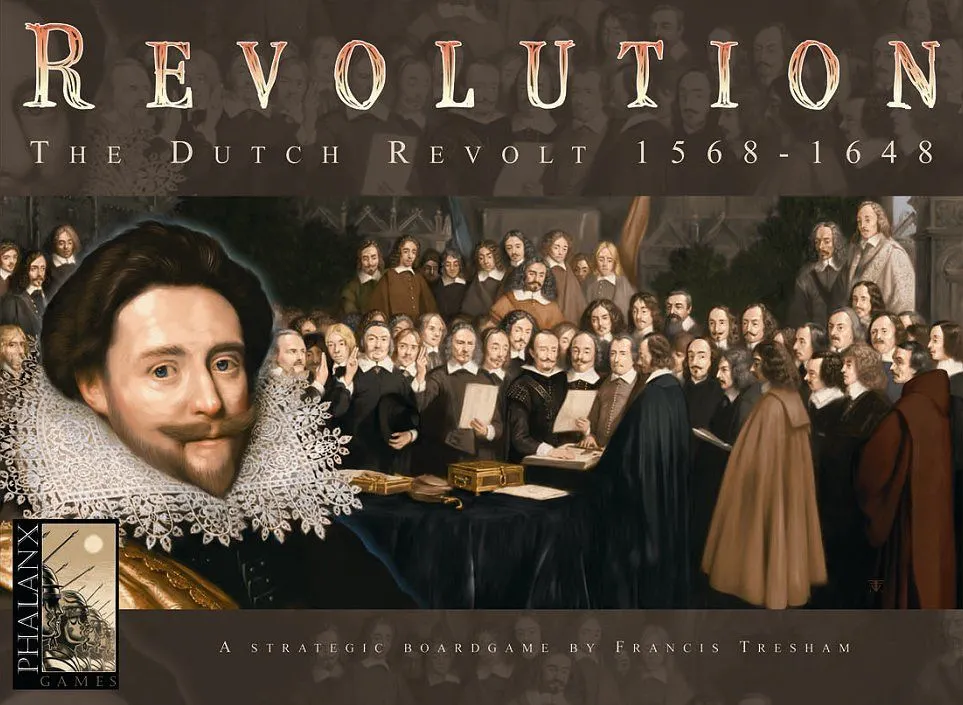
Revolution: The Dutch Revolt 1568-1648
2004
Regelhilfe für Revolution: The Dutch Revolt 1568-1648
Verständliche Erklärungen zu Spielzügen, Karteneffekten und strittigen Situationen mit Verweisen auf offizielle Quellen und gespeichertem Fragenverlauf.
- 2–5 Spieler
- 240–480 Min.
- 12+
- Komplexität 4,2/5

Für 2 Personen
Regelassistent für Revolution: The Dutch Revolt 1568-1648
Was möchtest du wissen?
Antworten stammen aus dem offiziellen Regelheft, mit Seitenangabe zum Nachprüfen.
Revolution: The Dutch Revolt 1568-1648 ist ein Brettspiel aus dem Jahr 2004 für 2–5 Personen, mit 240–480 Minuten pro Partie und ab 12 Jahren. Entwickelt wurde es von Francis Tresham; die wichtigsten Mechaniken sind Variable Player Powers, Area Majority / Influence und Simulation.
Über das Spiel
Auf Englisch
(from Phalanx Games:) Revolution: The Dutch Revolt simulates the Eighty Years' War between Spain and the Netherlands. This epic struggle lasted from 1568 until 1648 and eventually brought independence to Holland and the northern provinces. In the south, the revolt was less successful and Belgium did not emerge as an independent state until after the Napoleonic era. During the initial stages of the struggle, William of Orange became the symbol of freedom. His main adversary was the Spanish King Philip II, who sent in the Duke of Alba with his formidable conquistadores to stop the rebellion. Revolution depicts a power struggle with many facets. Each player represents one of the principal factions involved: the Catholics, Habsburgs, Nobility, Burghers and Reformers. Each faction has its particular goals, which are often partly common. Although factions may sometimes co-operate, they are not allies for long and easily turn on each other if the situation calls for this. Historically, there were periods of open warfare and others of uneasy peace. The reforming factions gradually became more established, particularly in the north and along the coast. The once supreme Habsburg armies were slowly driven out of these areas through a series of siege battles. The defeat of the mighty Armada by a combined Dutch/English fleet in 1588 cost the Spaniards dearly. The Catholics were eventually allowed to retain some of their influence, while the local Nobility, initially catholic but with local sympathies, succeeded or failed according to their willingness to accept the changed circumstances. This game is not a detailed military re-enactment of the Eighty Years' War. It tries to capture the flavor of these interesting times in a much broader sense. It contains an element of warfare in the form of battles and sieges but the main theme is built on economic, religious and political control. The constantly shifting balance of power, caused by temporary alliances, makes Revolution an immensely challenging game, and not for the faint-hearted. Clever and timely use of available resources, including those of foreign sympathizers and allies, is needed to achieve ultimate success. Revolution: The Dutch Revolt was more than 15 years in the making, and marks Francis Tresham's long-awaited return to the forefront of game design. He is most famous for his widely acclaimed board games Civilization and 1829. Revolution: The Dutch Revolt includes 1 large gameboard, 41 playing cards, 416 colorful game pieces (56 resource pieces in each of 5 colors, 8 army pieces in each of 5 colors, 47 neutral pieces, 3 water beggars, 1 VP marker for each color, 1 game turn marker and 40 status markers), 1 player aid card and 1 rules booklet.
Kategorien
Autoren
Verlage
- Phalanx Games B.V.
Fragen und Antworten
Laut Katalog unterstützt Revolution: The Dutch Revolt 1568-1648 2–5 Personen. Diese Spanne entspricht der vom Verlag angegebenen Spielerzahl, das Spiel lässt sich also für jede Gruppengröße innerhalb dieser Spanne aufbauen. Aufbau, einzelne Regeln und Wertungsdetails können je nach Personenzahl trotzdem abweichen; prüfe daher die genaue Konfiguration in der Anleitung deiner Ausgabe.
Die angegebene Spieldauer für Revolution: The Dutch Revolt 1568-1648 beträgt 240–480 Minuten. Das ist die Schätzung des Verlags für eine vollständige Partie. Die tatsächliche Dauer hängt von der Gruppe, der Personenzahl und der Regelkenntnis ab: Erste Partien dauern meist länger, erfahrene Gruppen sind oft schneller fertig. Aufbau und Regelerklärung sind in dieser Schätzung nicht enthalten.
Im Katalog wird Revolution: The Dutch Revolt 1568-1648 ab 12 Jahren empfohlen. Das ist die Empfehlung des Verlags und berücksichtigt Leseanforderungen, Regelkomplexität und Kleinteile, nicht nur das Thema. Jüngere Kinder können oft mit Hilfe eines Erwachsenen mitspielen; beachte die Altersangabe deiner Ausgabe und die Brettspielerfahrung deiner Gruppe.
Revolution: The Dutch Revolt 1568-1648 hat bei BoardGameGeek eine Komplexitätswertung von 4,2 von 5 und gilt damit als schweres Spiel. Die Wertung zeigt, wie viel Regelwissen, Planung und Entscheidungen eine typische Partie verlangt. Schwerere Spiele brauchen bei der ersten Erklärung mehr Zeit, daher hilft vor dem Spieleabend eine Vorbereitungsanleitung.
Revolution: The Dutch Revolt 1568-1648 gehört zu diesen Kategorien: Wargame, Political und Renaissance. Die wichtigsten Mechaniken sind Variable Player Powers, Area Majority / Influence und Simulation. Kategorien beschreiben Thema und Setting eines Spiels, Mechaniken dagegen, was die Spielenden in ihrem Zug tatsächlich tun. Jede Mechanik führt zu einer Katalogseite mit ähnlichen Spielen, falls du etwas Vergleichbares suchst.
Als Autoren von Revolution: The Dutch Revolt 1568-1648 sind angegeben: Francis Tresham. Diese Angaben stammen aus den veröffentlichten Spieldaten und nennen die für das Spieldesign verantwortlichen Personen, nicht die Illustratoren oder Verlage. Die Autorenseiten auf MeepleRules sammeln weitere Titel derselben Autoren – praktisch, wenn dir ein Spiel gefällt und du ähnliche Spiele suchst.
Im Katalog ist Revolution: The Dutch Revolt 1568-1648 als Grundspiel aufgeführt. Es lässt sich eigenständig mit dem Material aus der Schachtel spielen und benötigt keinen weiteren Titel. Erweiterungen, sofern es welche gibt, ergänzen neues Material oder neue Regeln und sind im Katalog separat mit einem Verweis auf dieses Grundspiel aufgeführt.