
- BGG-Rang
- BGG #6.201
- BGG-Bewertung
- 6,0
Scarab Lords
- 2 Spieler
- 20–40 Min.
- Komplexität 1,9/5
- 2002
2001
Regelhilfe für Rome: Imperium, Circus Maximus, Hannibal vs Rome
Verständliche Erklärungen zu Spielzügen, Karteneffekten und strittigen Situationen mit Verweisen auf offizielle Quellen und gespeichertem Fragenverlauf.
Für 2 Personen
Was möchtest du wissen?
Antworten stammen aus dem offiziellen Regelheft, mit Seitenangabe zum Nachprüfen.
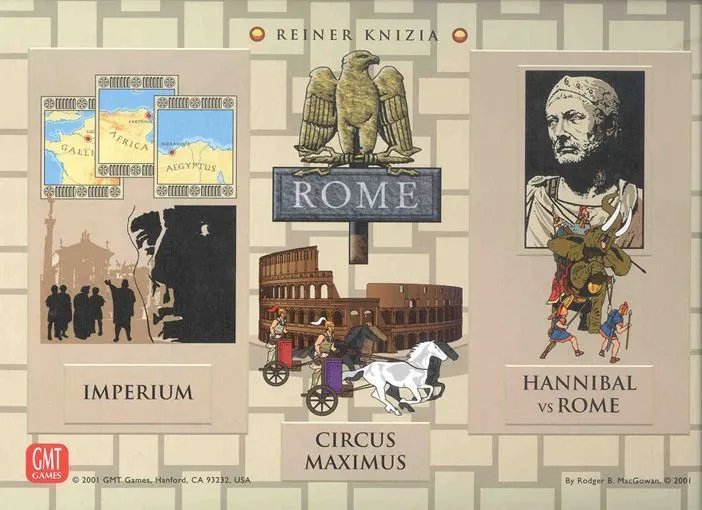
Rome: Imperium, Circus Maximus, Hannibal vs Rome ist ein Brettspiel aus dem Jahr 2001 für 2–5 Personen, mit 10–45 Minuten pro Partie und ab 8 Jahren. Entwickelt wurde es von Reiner Knizia; die wichtigsten Mechaniken sind Hand Management, Area Movement und Area Majority / Influence.



Auf Englisch
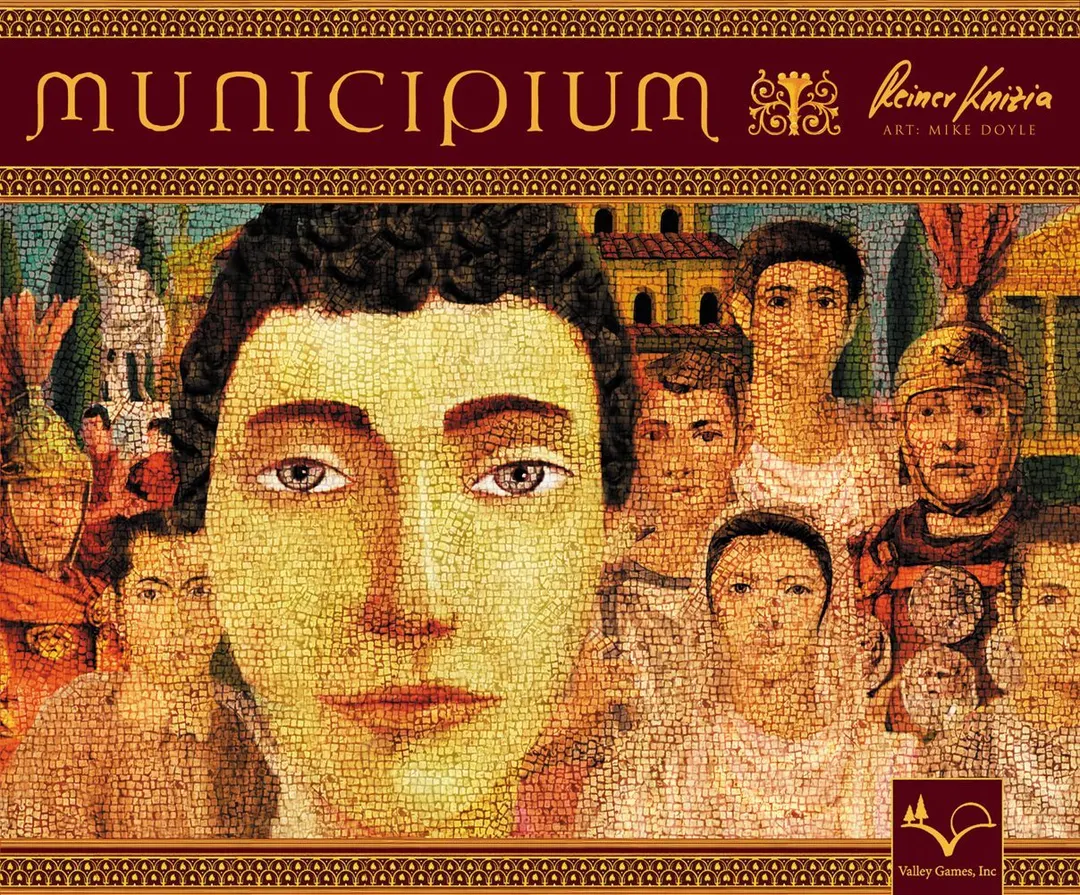
Reiner Knizia has designed a number of games set in Ancient Rome. This collection brings together three of the finest, covering three very different aspects of the Roman Empire: Hannibal versus Rome, Imperium and Circus Maximus. Hannibal versus Rome is a 30-minute two-player game depicing the initial struggle for supremacy between Rome and Carthage, which finally established Rome as the leading power in the Mediterranean. It draws on the events of the Second Punic War, during which Hannibal crossed the Alps with his elephants, and defeated Rome in the battle of Cannae. The Roman general Scipio succeeded in moving the fighting away from Italy, into Spain and Africa, where he defeated the Carthaginians at Zama. The map covers the Western Mediterranean. Players move Legions and Fleets, deciding conflicts by the use of cards in order to determine who will be the dominant power in the Mediterranean region. Imperium (a game for two to five players) focuses on Rome's political and territorial expansion during the Imperial period. Powerful families controlled the individual provinces in order to increase their wealth and power in Rome, until the Roman Empire reached its zenith in size in the year 100 under the Emperor Trajan. In each round the two to five players distribute markers onto areas of the Empire, with control of one area being decided each round. The players need to have the right influence at the decisive moment to take control, without neglecting long-term development. It is a game of planning and timing. Circus Maximus leads us into the heart of Rome itself with its renowned public entertainment for the masses; chariot racing. Chariot races were immensely popular in Rome. The Circus Maximus offered room for 200,000 spectators who avidly followed the races, roaring and cheering on their favourites. The courageous charioteers were divided into teams distinguished by different colours. The most successful were worshipped as heroes, but the risks were high and many paid for their fame and daring with their lives. Each of two to five players controls a team of three chariots. In a game of pure tactics, players receive five movement cards that they can assign each turn to individual chariots as they wish. The first to bring all three across the finish line wins the game and the laurel wreath. Note: the 3 games in this were previously released in Neue Spiele im alten Rom.
Laut Katalog unterstützt Rome: Imperium, Circus Maximus, Hannibal vs Rome 2–5 Personen. Diese Spanne entspricht der vom Verlag angegebenen Spielerzahl, das Spiel lässt sich also für jede Gruppengröße innerhalb dieser Spanne aufbauen. Aufbau, einzelne Regeln und Wertungsdetails können je nach Personenzahl trotzdem abweichen; prüfe daher die genaue Konfiguration in der Anleitung deiner Ausgabe.
Die angegebene Spieldauer für Rome: Imperium, Circus Maximus, Hannibal vs Rome beträgt 10–45 Minuten. Das ist die Schätzung des Verlags für eine vollständige Partie. Die tatsächliche Dauer hängt von der Gruppe, der Personenzahl und der Regelkenntnis ab: Erste Partien dauern meist länger, erfahrene Gruppen sind oft schneller fertig. Aufbau und Regelerklärung sind in dieser Schätzung nicht enthalten.
Im Katalog wird Rome: Imperium, Circus Maximus, Hannibal vs Rome ab 8 Jahren empfohlen. Das ist die Empfehlung des Verlags und berücksichtigt Leseanforderungen, Regelkomplexität und Kleinteile, nicht nur das Thema. Jüngere Kinder können oft mit Hilfe eines Erwachsenen mitspielen; beachte die Altersangabe deiner Ausgabe und die Brettspielerfahrung deiner Gruppe.
Rome: Imperium, Circus Maximus, Hannibal vs Rome hat bei BoardGameGeek eine Komplexitätswertung von 1,7 von 5 und gilt damit als leichtes Spiel. Die Wertung zeigt, wie viel Regelwissen, Planung und Entscheidungen eine typische Partie verlangt. Schwerere Spiele brauchen bei der ersten Erklärung mehr Zeit, daher hilft vor dem Spieleabend eine Vorbereitungsanleitung.
Rome: Imperium, Circus Maximus, Hannibal vs Rome gehört zu diesen Kategorien: Card Game, Political und Ancient. Die wichtigsten Mechaniken sind Hand Management, Area Movement und Area Majority / Influence. Kategorien beschreiben Thema und Setting eines Spiels, Mechaniken dagegen, was die Spielenden in ihrem Zug tatsächlich tun. Jede Mechanik führt zu einer Katalogseite mit ähnlichen Spielen, falls du etwas Vergleichbares suchst.
Als Autoren von Rome: Imperium, Circus Maximus, Hannibal vs Rome sind angegeben: Reiner Knizia. Diese Angaben stammen aus den veröffentlichten Spieldaten und nennen die für das Spieldesign verantwortlichen Personen, nicht die Illustratoren oder Verlage. Die Autorenseiten auf MeepleRules sammeln weitere Titel derselben Autoren – praktisch, wenn dir ein Spiel gefällt und du ähnliche Spiele suchst.
Im Katalog ist Rome: Imperium, Circus Maximus, Hannibal vs Rome als Grundspiel aufgeführt. Es lässt sich eigenständig mit dem Material aus der Schachtel spielen und benötigt keinen weiteren Titel. Erweiterungen, sofern es welche gibt, ergänzen neues Material oder neue Regeln und sind im Katalog separat mit einem Verweis auf dieses Grundspiel aufgeführt.