- BGG-Rang
- BGG #2.029
- BGG-Bewertung
- 7,1
Sanssouci
2013
Regelhilfe für Sanssouci
Verständliche Erklärungen zu Spielzügen, Karteneffekten und strittigen Situationen mit Verweisen auf offizielle Quellen und gespeichertem Fragenverlauf.
- 2–4 Spieler
- 30–45 Min.
- 8+
- Komplexität 2,1/5

Für 2 Personen
Regelassistent für Sanssouci
Was möchtest du wissen?
Antworten stammen aus dem offiziellen Regelheft, mit Seitenangabe zum Nachprüfen.
Sanssouci ist ein Brettspiel aus dem Jahr 2013 für 2–4 Personen, mit 30–45 Minuten pro Partie und ab 8 Jahren. Entwickelt wurde es von Michael Kiesling; die wichtigsten Mechaniken sind Hand Management, Tile Placement und Pattern Building.
Über das Spiel
Auf Englisch
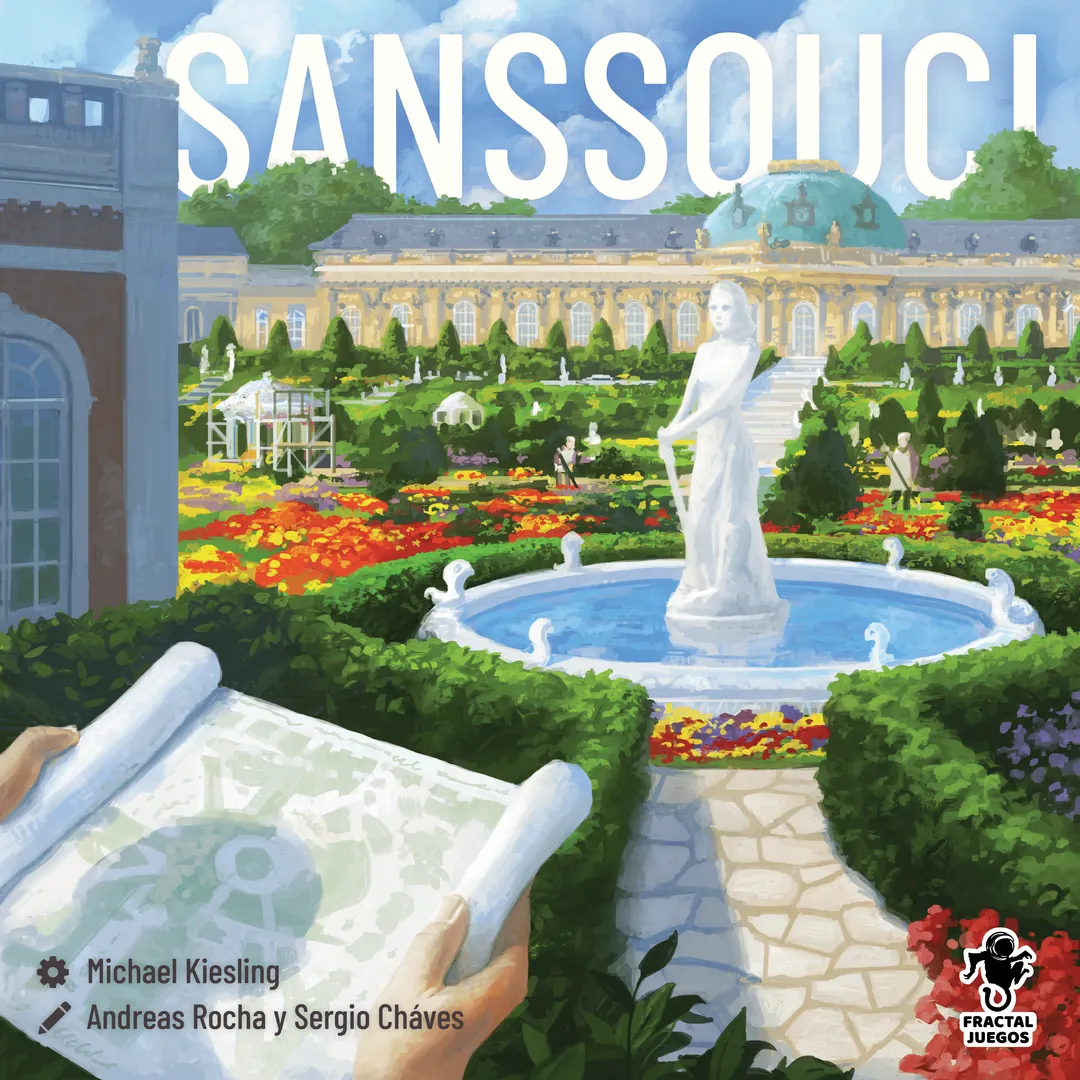
Your task in the tile-laying game Sanssouci is to create a flower garden for the world-famous Sanssouci Palace. Competing against up to three other landscape architects, you'll have your own garden layout game board on which you'll build rose gardens and vineyard terraces, labyrinths and fountains – but not just anywhere, mind you. No, the landscapers must meet certain building requirements, and unfortunately you won't always have at hand everything that you might need. In game terms, each player has a personal garden that's divided into rows and columns; each row shows a color, while each column shows one of nine garden elements, such as the wells or a pavilion. Players start with one noble at the top of each column. A shared tile supply board has five rows – with colored spaces matching the colors on each player board – and two columns, which are unlabeled. At the start of the game, ten tiles are placed on this supply board; each tile depicts one of the nine garden elements. Each turn, a player plays one of his two cards in hand, which determines the tile he can take from the supply, e.g. take a pavilion tile, take a tile from the red or gray spaces, etc. The player has only a single card that lets him take any tile – but if he plays a card showing a garden element that isn't present, then he can instead take any tile! The player must place this tile on his player board in the column that matches the image on the tile and the row that matches the color from which the tile was taken. If this space is already filled, he flips the tile to show the gardener on the other side, then places this tile on any free space in the same row or the same column. After placing the tile, he may move one of his nobles along a path of placed tiles as long as the noble ends up in the same column in which it started, but on a lower row. The player scores points equal to the row reached. The player then refills the supply and draws a new card. The game ends after 18 rounds. Each player then receives bonus points for each completed row and column. Furthermore, each player has received two order cards at the start of the game, each of which shows one of the nine columns; each player receives bonus points for the row reached by the noble in that column. The player with the most points wins.
Kategorien
Autoren
Verlage
- Arclight Games
- Ravensburger AG
- Maldito Games
- Fractal Juegos
- Across the Board
- Imperial Publishing, Inc
Fragen und Antworten
Laut Katalog unterstützt Sanssouci 2–4 Personen. Diese Spanne entspricht der vom Verlag angegebenen Spielerzahl, das Spiel lässt sich also für jede Gruppengröße innerhalb dieser Spanne aufbauen. Aufbau, einzelne Regeln und Wertungsdetails können je nach Personenzahl trotzdem abweichen; prüfe daher die genaue Konfiguration in der Anleitung deiner Ausgabe.
Die angegebene Spieldauer für Sanssouci beträgt 30–45 Minuten. Das ist die Schätzung des Verlags für eine vollständige Partie. Die tatsächliche Dauer hängt von der Gruppe, der Personenzahl und der Regelkenntnis ab: Erste Partien dauern meist länger, erfahrene Gruppen sind oft schneller fertig. Aufbau und Regelerklärung sind in dieser Schätzung nicht enthalten.
Im Katalog wird Sanssouci ab 8 Jahren empfohlen. Das ist die Empfehlung des Verlags und berücksichtigt Leseanforderungen, Regelkomplexität und Kleinteile, nicht nur das Thema. Jüngere Kinder können oft mit Hilfe eines Erwachsenen mitspielen; beachte die Altersangabe deiner Ausgabe und die Brettspielerfahrung deiner Gruppe.
Sanssouci hat bei BoardGameGeek eine Komplexitätswertung von 2,1 von 5 und gilt damit als eher leichtes Spiel. Die Wertung zeigt, wie viel Regelwissen, Planung und Entscheidungen eine typische Partie verlangt. Schwerere Spiele brauchen bei der ersten Erklärung mehr Zeit, daher hilft vor dem Spieleabend eine Vorbereitungsanleitung.
Sanssouci gehört zu diesen Kategorien: Puzzle und Age of Reason. Die wichtigsten Mechaniken sind Hand Management, Tile Placement und Pattern Building. Kategorien beschreiben Thema und Setting eines Spiels, Mechaniken dagegen, was die Spielenden in ihrem Zug tatsächlich tun. Jede Mechanik führt zu einer Katalogseite mit ähnlichen Spielen, falls du etwas Vergleichbares suchst.
Als Autoren von Sanssouci sind angegeben: Michael Kiesling. Diese Angaben stammen aus den veröffentlichten Spieldaten und nennen die für das Spieldesign verantwortlichen Personen, nicht die Illustratoren oder Verlage. Die Autorenseiten auf MeepleRules sammeln weitere Titel derselben Autoren – praktisch, wenn dir ein Spiel gefällt und du ähnliche Spiele suchst.
Im Katalog ist Sanssouci als Grundspiel aufgeführt. Es lässt sich eigenständig mit dem Material aus der Schachtel spielen und benötigt keinen weiteren Titel. Erweiterungen, sofern es welche gibt, ergänzen neues Material oder neue Regeln und sind im Katalog separat mit einem Verweis auf dieses Grundspiel aufgeführt.