
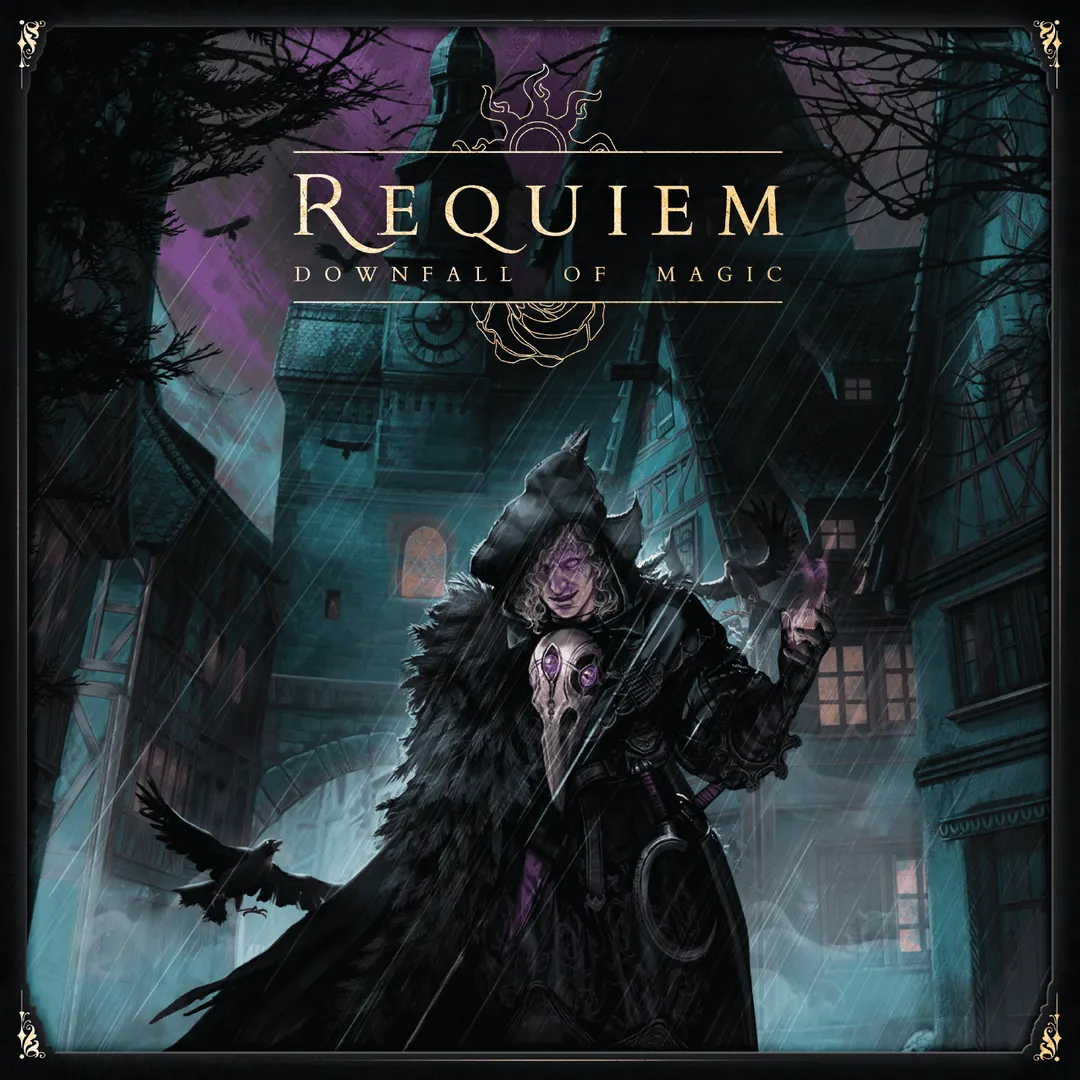
- BGG-Rang
- BGG #21.342
- BGG-Bewertung
- 8,5
Requiem: Downfall of Magic
- 1–4 Spieler
- 60–90 Min.
- 2026
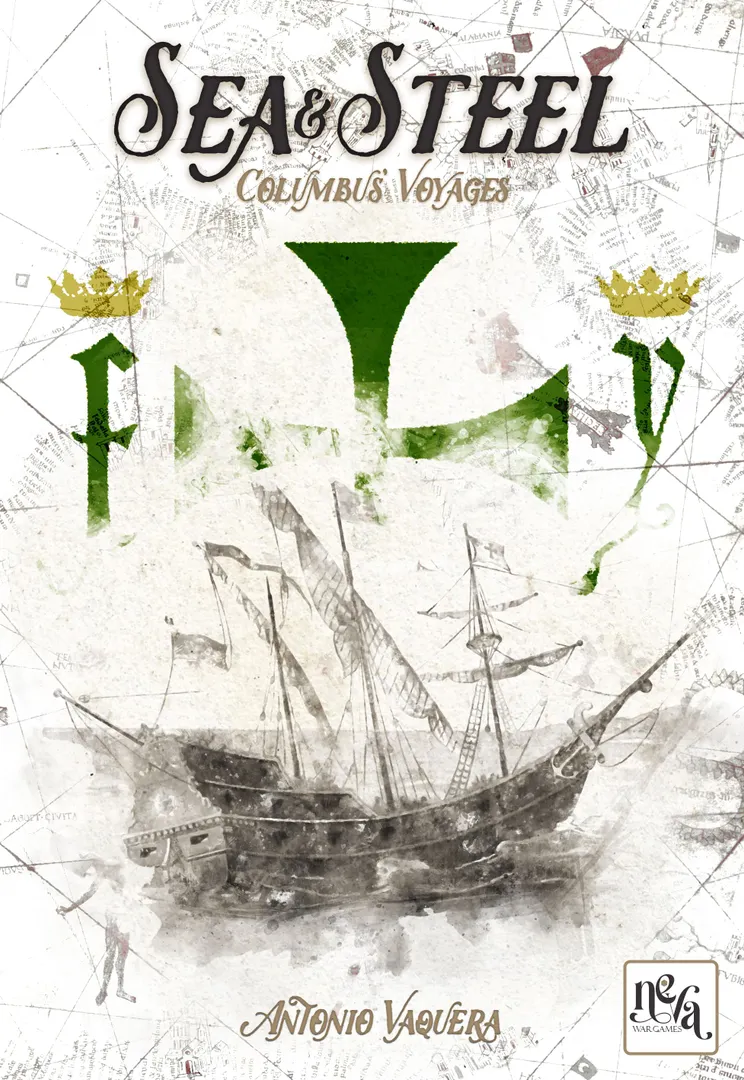
2025
Regelhilfe für Sea & Steel: Columbus' Voyages
Verständliche Erklärungen zu Spielzügen, Karteneffekten und strittigen Situationen mit Verweisen auf offizielle Quellen und gespeichertem Fragenverlauf.
Für 1 Person
Was möchtest du wissen?
Antworten stammen aus dem offiziellen Regelheft, mit Seitenangabe zum Nachprüfen.
Sea & Steel: Columbus' Voyages ist ein Brettspiel aus dem Jahr 2025 für 1–2 Personen, mit 60–90 Minuten pro Partie und ab 14 Jahren. Entwickelt wurde es von Antonio Vaquera; die wichtigsten Mechaniken sind Area Movement, Dice Rolling und Events.
Auf Englisch
THE HISTORICAL CONTEXT In the late 15th century, European powers, particularly Spain and Portugal, were driven by a desire for new trade routes to Asia. The traditional overland “Silk Road” was becoming increasingly difficult and expensive due to the rise of the Ottoman Empire. This spurred a quest for a westward sea route to the lucrative markets of the “East Indies” (Asia), rich in spices, gold, and other valuable goods. Christopher Columbus, believed he could reach Asia by sailing west across the Atlantic Ocean, a concept considered improbable by many at the time who underestimated the Earth’s circumference. After years of seeking patronage, he finally gained the support of the Spanish monarchs, King Ferdinand II and Queen Isabella I. They had just completed the Reconquista, expelling the Moors from Spain, and were eager to expand their influence, wealth, and spread Catholicism. Columbus set sail on August 3, 1492, with three ships: the Niña, the Pinta, and the Santa María. After a long and challenging voyage, land was sighted on October 12, 1492. Instead of reaching Asia, Columbus had stumbled upon islands in the Caribbean, specifically an island in the Bahamas (which he named San Salvador, though the indigenous people called it Guanahani). His arrival marked the beginning of a profound encounter between the Old World and the New. Columbus believed he had reached the Indies, hence his naming of the indigenous people as “Indians.” He encountered various native groups, including the Lucayan, Taíno, and Arawak peoples. This initial voyage, and the subsequent ones, ushered in the Age of Exploration, leading to centuries of European colonization, the transatlantic slave trade, and the “Columbian Exchange” – a massive transfer of plants, animals, culture, technology, and unfortunately, diseases between the Americas, Europe, and Africa, with devastating consequences for the indigenous populations of the Caribbean. GAMEPLAY AT A GLANCE The game is a strategic experience for one or two players that immerses you in the historical encounters between the Spanish conquistadors and the native peoples of the Caribbean during Christopher Columbus’s four voyages. It covers the period between 1492 and 1505, when the Spanish Crown financed these voyages, leading to the conquest of the main Caribbean islands inhabited by the Taíno and Carib peoples. Players can choose to lead the ambitious Spanish Side to conquer the paradisiacal Caribbean islands, or lead the indigenous Taíno and Carib forces (who are not always cooperative) to eliminate the new threat from across the sea, while also managing internal conflicts among their forces. Objective and how to win: In the game, there is only one Victory Point (VP) tracker. The Spanish Side advances on the VP tracker when they gain Victory Points. Conversely, the Indigenous Side aims to reduce that score, moving the tracker backward each time they gain VP. Specifically, when conquering a new area: •The Spanish Side adds 1 VP or 2 VP if they gain control of an area. •The Indigenous Side subtracts 1 VP or 2 VP from the Spanish VP tracker each time they gain control of an area. Automatic Victory: A game ends automatically if the last unit of one side is removed from the map, granting victory to the opposing side. For the Spanish side, a Citadel on the map counts as a unit for this purpose. At the end of the game (game turn 6), you’ll need to check various conditions related to leaders, citadels, and royal support to determine modifications to your final Victory Points. Spanish Victory: The Spanish Side wins if their PV score is equal to or exceeds 15 PV. Indigenous Victory: The Indigenous Side wins if the PV score is less than 15 PV. Sequence of play: Game Turn 1 (“1492”): A Destiny Card is revealed, determining Columbus’s initial landing and deployment of Spanish units, followed by immediate combat and a gold search. The turn concludes, moving to Turn 2. Game Turns 2-6: Each turn follows five main phases: 1. Destiny: Reveals the turn’s special event, sets the number of actions (impulses), and other turn-wide conditions. 2. Event: Both players secretly choose and reveal Event Cards, resolving their effects and deploying immediate reinforcements. 3. Reinforcements & Replacements: New units arrive or existing ones are strengthened, based on the Event Cards played. 4. Impulses: Players alternate taking one action per impulse (e.g., movement, combat, area activation, building, raiding, gold search), with the Indigenous Side always acting first. 5. Final: Checks are performed for automatic victory (if a side has no units left) or, at the end of Turn 6, for final Victory Point condition. Key decision/challenges: The designer aimed to create a “simple, but not simplistic” design, featuring an agile mechanic and a simple turn sequence. This design choice makes it suitable for introducing new players to wargames, while still offering “variable strategic options” and “agonizing” decision-making dilemmas that experienced wargamers will enjoy. The game is designed for quick play, with sessions lasting between 60 to 90 minutes. The Extended Movement is a very important mechanic. This allows units to activate an area and move, and if they arrive in an area without enemy units, that new area can be activated again for another movement, potentially creating a “chain” of activations. This indeed enables rapid expansion and movement across the map. Mastering this mechanic is crucial for both the Spanish and Indigenous sides, as the game emphasizes maximizing the effects of decisions. Despite its quick pace, this game delivers intense, nail-biting matches. You’ll need to keep pushing relentlessly by making good strategic decisions, even when things look grim, as the tide can turn in an instant, leading to a dramatic victory. Many games are decided in the very last moments, a tension players consistently rave about. WHAT’S IN THE BOX? 1 Mounted Map 180 Counters 52 Cards 6 6-sided dice 3 Player Aid Sheets 6 Cloth bags 1 Rulebook —description from the publisher
Laut Katalog unterstützt Sea & Steel: Columbus' Voyages 1–2 Personen. Diese Spanne entspricht der vom Verlag angegebenen Spielerzahl, das Spiel lässt sich also für jede Gruppengröße innerhalb dieser Spanne aufbauen. Aufbau, einzelne Regeln und Wertungsdetails können je nach Personenzahl trotzdem abweichen; prüfe daher die genaue Konfiguration in der Anleitung deiner Ausgabe.
Die angegebene Spieldauer für Sea & Steel: Columbus' Voyages beträgt 60–90 Minuten. Das ist die Schätzung des Verlags für eine vollständige Partie. Die tatsächliche Dauer hängt von der Gruppe, der Personenzahl und der Regelkenntnis ab: Erste Partien dauern meist länger, erfahrene Gruppen sind oft schneller fertig. Aufbau und Regelerklärung sind in dieser Schätzung nicht enthalten.
Im Katalog wird Sea & Steel: Columbus' Voyages ab 14 Jahren empfohlen. Das ist die Empfehlung des Verlags und berücksichtigt Leseanforderungen, Regelkomplexität und Kleinteile, nicht nur das Thema. Jüngere Kinder können oft mit Hilfe eines Erwachsenen mitspielen; beachte die Altersangabe deiner Ausgabe und die Brettspielerfahrung deiner Gruppe.
Sea & Steel: Columbus' Voyages hat bei BoardGameGeek eine Komplexitätswertung von 2,0 von 5 und gilt damit als eher leichtes Spiel. Die Wertung zeigt, wie viel Regelwissen, Planung und Entscheidungen eine typische Partie verlangt. Schwerere Spiele brauchen bei der ersten Erklärung mehr Zeit, daher hilft vor dem Spieleabend eine Vorbereitungsanleitung.
Sea & Steel: Columbus' Voyages gehört zu diesen Kategorien: Wargame, Nautical und Renaissance. Die wichtigsten Mechaniken sind Area Movement, Dice Rolling und Events. Kategorien beschreiben Thema und Setting eines Spiels, Mechaniken dagegen, was die Spielenden in ihrem Zug tatsächlich tun. Jede Mechanik führt zu einer Katalogseite mit ähnlichen Spielen, falls du etwas Vergleichbares suchst.
Als Autoren von Sea & Steel: Columbus' Voyages sind angegeben: Antonio Vaquera. Diese Angaben stammen aus den veröffentlichten Spieldaten und nennen die für das Spieldesign verantwortlichen Personen, nicht die Illustratoren oder Verlage. Die Autorenseiten auf MeepleRules sammeln weitere Titel derselben Autoren – praktisch, wenn dir ein Spiel gefällt und du ähnliche Spiele suchst.
Im Katalog ist Sea & Steel: Columbus' Voyages als Grundspiel aufgeführt. Es lässt sich eigenständig mit dem Material aus der Schachtel spielen und benötigt keinen weiteren Titel. Erweiterungen, sofern es welche gibt, ergänzen neues Material oder neue Regeln und sind im Katalog separat mit einem Verweis auf dieses Grundspiel aufgeführt.