
- BGG-Rang
- BGG #642
- BGG-Bewertung
- 8,2
La Granja: Deluxe Master Set
- 1–4 Spieler
- 90–120 Min.
- Komplexität 3,5/5
- 2023
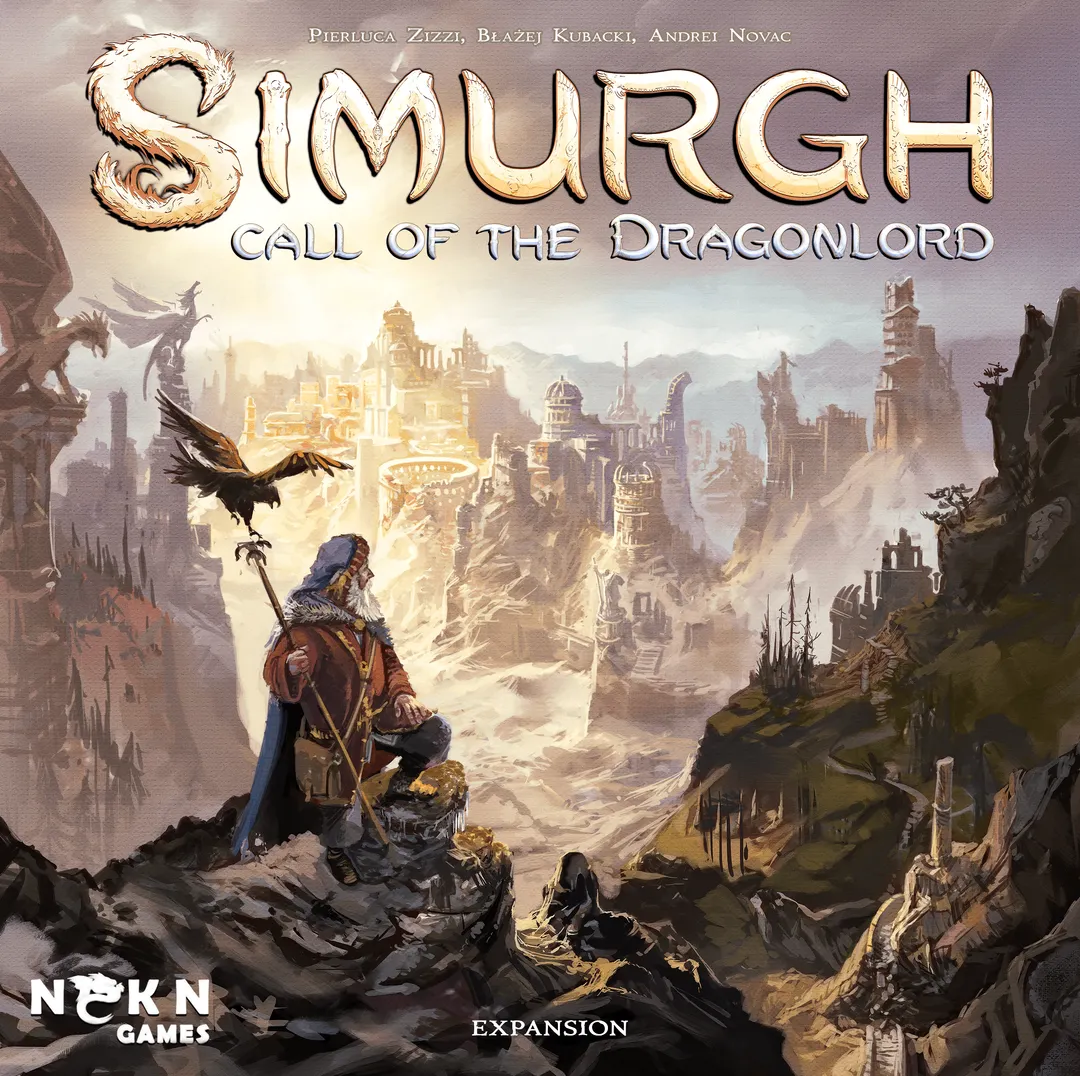
Regelhilfe für Simurgh: Call of the Dragonlord
Verständliche Erklärungen zu Spielzügen, Karteneffekten und strittigen Situationen mit Verweisen auf offizielle Quellen und gespeichertem Fragenverlauf.
Was möchtest du wissen?
Antworten stammen aus dem offiziellen Regelheft, mit Seitenangabe zum Nachprüfen.
Simurgh: Call of the Dragonlord ist eine Erweiterung für Simurgh aus dem Jahr 2016 für 2–5 Personen und ab 12 Jahren. Entwickelt wurde es von Andrei Novac, Błażej Kubacki und Pierluca Zizzi; die wichtigsten Mechaniken sind Variable Player Powers, Tile Placement und Open Drafting.






Auf Englisch
Following a seemingly insignificant tremor, one of the inner walls of the library collapsed, revealing a hidden chamber filled with ancient scrolls of wisdom and power. Among them the scholars found a map showing the way to the First City – a forgotten metropolis reputed to had been built atop the Tomb of Muratan the Dragonlord himself, and now a new target for the Noble Houses locked in a power struggle. Whose Wizard will show the most skill navigating the Forgotten Metropolis? Who will uncover Muratan’s Legacy? Who will be the first to answer the Call of the Dragonlord? Call of the Dragonlord is a premium modular expansion for Simurgh, a dynamic tile-laying, worker-placement game that debuted during Essen Spiel 2015. Introducing a second board depicting the Forgotten Metropolis, Call of the Dragonlord also adds a new type of Vassal – the Wizard – as well as a set of new Action Tiles. As an addition to each player’s workforce, the Wizard can be used separately, or in conjunction with the new board. With the Forgotten Metropolis in play, players will move their Wizards on three different tracks, each providing Power Points and resources. But this movement comes with a cost, and only managing their Spellbook smartly will allow a player to reap the benefits of their Wizard being first to enter the Dragonlord’s Tomb. Apart from expanding the pool of Resource, Transformation, Exploration, Research and Objective Tiles, Simurgh: Call of the Dragonlord also introduces Leadership Tiles – a new type of Action Tiles that may be used with the new board, or simply added to the base game without using any other expansion elements. With Action Spaces allowing for movement of multiple Vassals in one turn, Leadership Tiles add unexpected mobility to players able to make smart use of the unique abilities these tiles provide.
Laut Katalog unterstützt Simurgh: Call of the Dragonlord 2–5 Personen. Diese Spanne entspricht der vom Verlag angegebenen Spielerzahl, das Spiel lässt sich also für jede Gruppengröße innerhalb dieser Spanne aufbauen. Aufbau, einzelne Regeln und Wertungsdetails können je nach Personenzahl trotzdem abweichen; prüfe daher die genaue Konfiguration in der Anleitung deiner Ausgabe.
Im Katalog wird Simurgh: Call of the Dragonlord ab 12 Jahren empfohlen. Das ist die Empfehlung des Verlags und berücksichtigt Leseanforderungen, Regelkomplexität und Kleinteile, nicht nur das Thema. Jüngere Kinder können oft mit Hilfe eines Erwachsenen mitspielen; beachte die Altersangabe deiner Ausgabe und die Brettspielerfahrung deiner Gruppe.
Simurgh: Call of the Dragonlord hat bei BoardGameGeek eine Komplexitätswertung von 3,6 von 5 und gilt damit als mittelschweres Spiel. Die Wertung zeigt, wie viel Regelwissen, Planung und Entscheidungen eine typische Partie verlangt. Schwerere Spiele brauchen bei der ersten Erklärung mehr Zeit, daher hilft vor dem Spieleabend eine Vorbereitungsanleitung.
Simurgh: Call of the Dragonlord gehört zu diesen Kategorien: Fantasy, Racing und Farming. Die wichtigsten Mechaniken sind Variable Player Powers, Tile Placement und Open Drafting. Kategorien beschreiben Thema und Setting eines Spiels, Mechaniken dagegen, was die Spielenden in ihrem Zug tatsächlich tun. Jede Mechanik führt zu einer Katalogseite mit ähnlichen Spielen, falls du etwas Vergleichbares suchst.
Als Autoren von Simurgh: Call of the Dragonlord sind angegeben: Andrei Novac, Błażej Kubacki und Pierluca Zizzi. Diese Angaben stammen aus den veröffentlichten Spieldaten und nennen die für das Spieldesign verantwortlichen Personen, nicht die Illustratoren oder Verlage. Die Autorenseiten auf MeepleRules sammeln weitere Titel derselben Autoren – praktisch, wenn dir ein Spiel gefällt und du ähnliche Spiele suchst.
Im Katalog ist Simurgh: Call of the Dragonlord als Erweiterung zu Simurgh aufgeführt. Erweiterungen ergänzen das Grundspiel um neues Material, neue Regeln oder Szenarien und sind meist nicht eigenständig spielbar; du brauchst also Simurgh, um sie zu nutzen. Prüfe, ob deine Ausgabe von Simurgh kompatibel ist, da manche Erweiterungen zwischen den Auflagen überarbeitet wurden.