
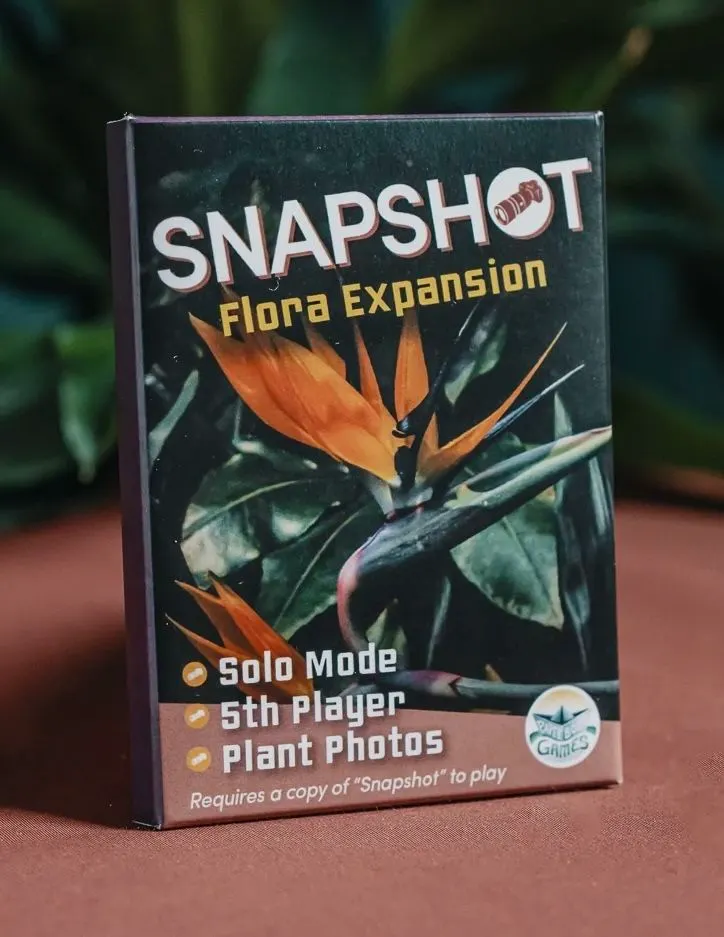
- BGG-Bewertung
- 6,8
Snapshot: Flora Expansion
- 1–5 Spieler
- 15–45 Min.
- Komplexität 2,0/5
- 2021
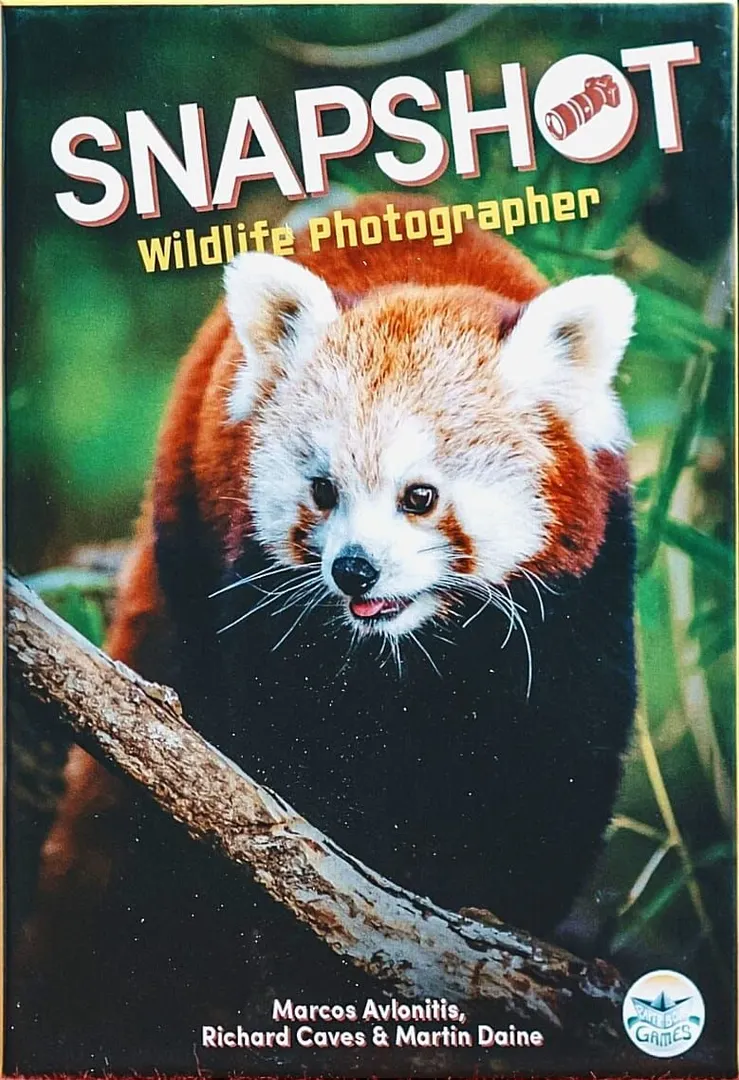
2021
Regelhilfe für Snapshot: Wildlife Photographer
Verständliche Erklärungen zu Spielzügen, Karteneffekten und strittigen Situationen mit Verweisen auf offizielle Quellen und gespeichertem Fragenverlauf.
Für 2 Personen
Was möchtest du wissen?
Antworten stammen aus dem offiziellen Regelheft, mit Seitenangabe zum Nachprüfen.
Snapshot: Wildlife Photographer ist ein Brettspiel aus dem Jahr 2021 für 2–4 Personen, mit 15–45 Minuten pro Partie und ab 14 Jahren. Entwickelt wurde es von Martin Daine, Marcos Avlonitis und Richard Caves; die wichtigsten Mechaniken sind Hand Management, Set Collection und Push Your Luck.




Auf Englisch
Snapshot: a wildlife photography board game Explore habitats and photograph animals in this beautiful, tactical dice management game of wildlife photography! So you want to be a wildlife photographer? Travel to exotic locations and brave difficult terrain to take that perfect shot; win prestigious awards, and complete secret assignments for Snapshot Magazine to become Wildlife Photographer of the Year. Crammed with beautiful wildlife photography, Snapshot is easy to learn but filled with exciting tactical decisions and difficult choices. Gameplay Snapshot combines dice-management with set collection and a touch of push-your-luck. Each turn, players attempt to find and then photograph the most prestigious animals by following these 3 stages: Stage 1: Research So, you thought you could just rock up with your camera and take a photo, eh? Well, first you need to do your homework! Turn over new animal cards to increase your options and gain tracking tokens to boost your rolls... but be careful - if you draw too many cards, the animals will get spooked, ending your turn. To avoid spooking animals, you can reserve animal cards and roll for them later. However, you have a hand limit of two reserved cards at a time so be careful not to clog up your hand with animals you don't want. Other players can also reserve animals on your turn so they will be keeping their eyes peeled for the animals they need! Stage 2: Prepare Now that you know which animals are available this turn, you must choose your destinations and subjects, represented by placing dice on the animals you plan to photograph and their habitats. The rarer the animals, and the more difficult its habitat, the higher the prestige for photographing it. You can photograph as many animals in as many habitats as you have dice for... Be careful, though – go for too many difficult animals and you could end up with none, so allocate your dice wisely. You only have six dice to roll so you’ll need to decide how best to allocate them; do you go cautious and allocate them all to one animal or spread them out and roll for more? You’re in control of the odds so, do you feel lucky? Don’t forget that you also need to use dice to explore the habitat. You only need to roll for each habitat once, so going for more than one animal in the same location can be a great tactic. You can also spend tracking tokens to increase your chances: do you use them now or save them for that crucial roll later on? Stage 3: Photograph At last! It's time to get out into nature, click the shutter and hope for the best... First, roll the dice on each habitat to explore it. (Tokens can be used to re-roll habitat dice.) If you fail, your chosen animals are spooked and run away! Then, if you explored the habitat successfully, you may roll to photograph your chosen animals! If you manage to photograph 3 animals from the same habitat, or one from each habitat, you can collect the corresponding photography award. The earlier you get them, the more they are worth! If you failed to get any photographs, don't worry - you learn from the experience and gain 3 tracking tokens to improve your chances next turn… Game End The game ends when one player has taken a set amount of photographs and everyone then gets to tally up their score. Each player also has a secret Assignment card which bestows bonus prestige for photographing specific animals and characteristics. Simply total the prestige on all your animal photographs, Photography Awards and Assignment card to see who becomes Photographer of the Year! Snapshot is fun, fast and simple to learn and is well-suited for families while also offering enough depth and tactical opportunities to keep advanced players engaged.
Laut Katalog unterstützt Snapshot: Wildlife Photographer 2–4 Personen. Diese Spanne entspricht der vom Verlag angegebenen Spielerzahl, das Spiel lässt sich also für jede Gruppengröße innerhalb dieser Spanne aufbauen. Aufbau, einzelne Regeln und Wertungsdetails können je nach Personenzahl trotzdem abweichen; prüfe daher die genaue Konfiguration in der Anleitung deiner Ausgabe.
Die angegebene Spieldauer für Snapshot: Wildlife Photographer beträgt 15–45 Minuten. Das ist die Schätzung des Verlags für eine vollständige Partie. Die tatsächliche Dauer hängt von der Gruppe, der Personenzahl und der Regelkenntnis ab: Erste Partien dauern meist länger, erfahrene Gruppen sind oft schneller fertig. Aufbau und Regelerklärung sind in dieser Schätzung nicht enthalten.
Im Katalog wird Snapshot: Wildlife Photographer ab 14 Jahren empfohlen. Das ist die Empfehlung des Verlags und berücksichtigt Leseanforderungen, Regelkomplexität und Kleinteile, nicht nur das Thema. Jüngere Kinder können oft mit Hilfe eines Erwachsenen mitspielen; beachte die Altersangabe deiner Ausgabe und die Brettspielerfahrung deiner Gruppe.
Snapshot: Wildlife Photographer hat bei BoardGameGeek eine Komplexitätswertung von 2,0 von 5 und gilt damit als eher leichtes Spiel. Die Wertung zeigt, wie viel Regelwissen, Planung und Entscheidungen eine typische Partie verlangt. Schwerere Spiele brauchen bei der ersten Erklärung mehr Zeit, daher hilft vor dem Spieleabend eine Vorbereitungsanleitung.
Snapshot: Wildlife Photographer gehört zu diesen Kategorien: Card Game, Animals und Dice. Die wichtigsten Mechaniken sind Hand Management, Set Collection und Push Your Luck. Kategorien beschreiben Thema und Setting eines Spiels, Mechaniken dagegen, was die Spielenden in ihrem Zug tatsächlich tun. Jede Mechanik führt zu einer Katalogseite mit ähnlichen Spielen, falls du etwas Vergleichbares suchst.
Als Autoren von Snapshot: Wildlife Photographer sind angegeben: Martin Daine, Marcos Avlonitis und Richard Caves. Diese Angaben stammen aus den veröffentlichten Spieldaten und nennen die für das Spieldesign verantwortlichen Personen, nicht die Illustratoren oder Verlage. Die Autorenseiten auf MeepleRules sammeln weitere Titel derselben Autoren – praktisch, wenn dir ein Spiel gefällt und du ähnliche Spiele suchst.
Im Katalog ist Snapshot: Wildlife Photographer als Grundspiel aufgeführt. Es lässt sich eigenständig mit dem Material aus der Schachtel spielen und benötigt keinen weiteren Titel. Erweiterungen, sofern es welche gibt, ergänzen neues Material oder neue Regeln und sind im Katalog separat mit einem Verweis auf dieses Grundspiel aufgeführt.