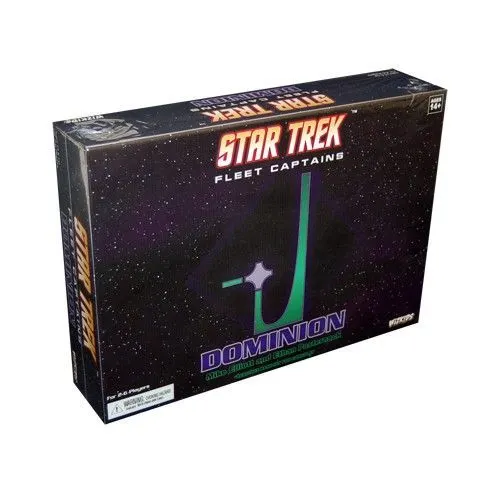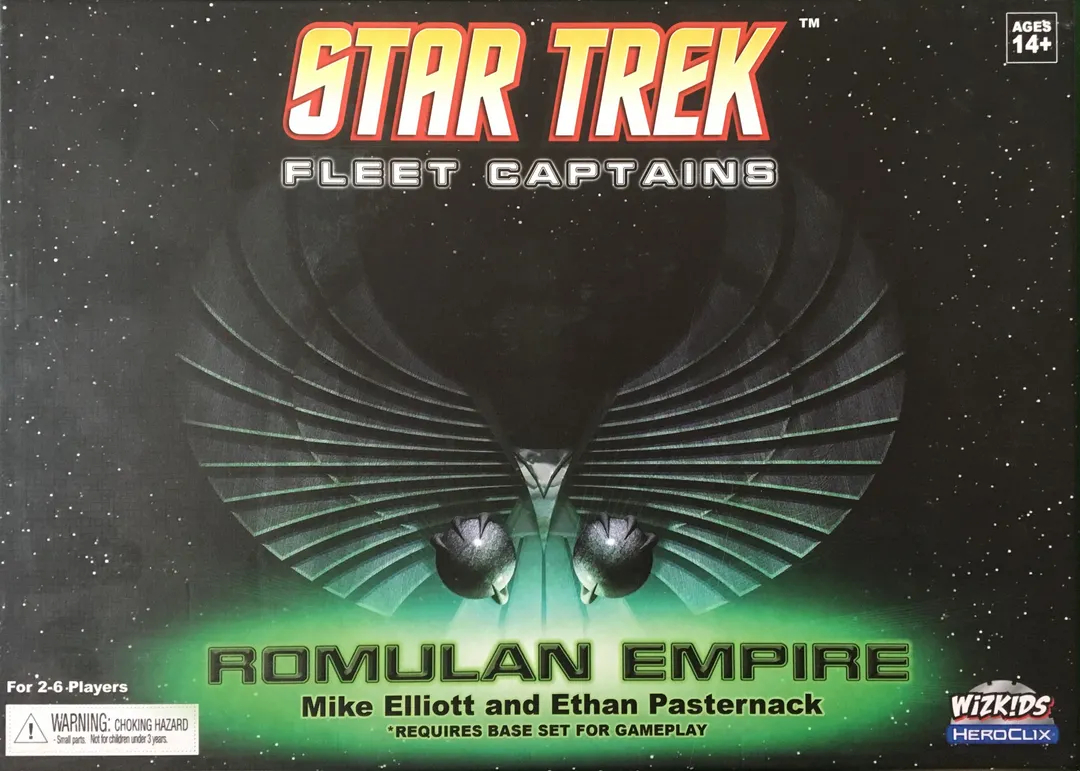
- BGG-Bewertung
- 7,9
Star Trek: Fleet Captains – Romulan Empire
- 2–6 Spieler
- 90–120 Min.
- Komplexität 3,2/5
- 2012
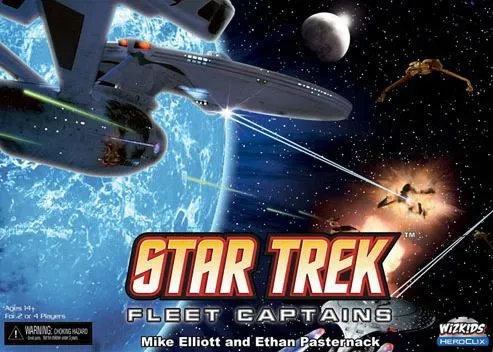
2011
Regelhilfe für Star Trek: Fleet Captains
Verständliche Erklärungen zu Spielzügen, Karteneffekten und strittigen Situationen mit Verweisen auf offizielle Quellen und gespeichertem Fragenverlauf.
Für 2 Personen
Was möchtest du wissen?
Antworten stammen aus dem offiziellen Regelheft, mit Seitenangabe zum Nachprüfen.
Star Trek: Fleet Captains ist ein Brettspiel aus dem Jahr 2011 für 2–4 Personen, mit 90–120 Minuten pro Partie und ab 14 Jahren. Entwickelt wurde es von Mike Elliott, Ethan Pasternack und Bryan Kinsella; die wichtigsten Mechaniken sind Dice Rolling, Tile Placement und Modular Board.

Auf Englisch
Star Trek: Fleet Captains, designed for two or four players, is set in the "Prime Universe" of STAR TREK (as seen in the various TV series and movies up to Star Trek: Nemesis) and is more adversarial in nature when compared to Star Trek: Expeditions. Each player takes the role of a faction (or race) from the universe. In the base game, the choices are Klingons and Federation. Each faction has a number of ships (on Clix dials similar to the Heroclix line of components) of varying ability and with a corresponding “size.” Fleets of ships are drafted to a given size total which reflects the victory points required to win. Thus, larger fleet sizes lead to higher point (and longer games). Players then “shuffle build” a deck of command cards. Choosing four decks from a set of ten decks per faction. Each deck has a unique flavor or theme, with corresponding major characters. For instance the Klingons have a deck themed around larger ships and imperial domination and Gowron is a central character. The four decks chosen will help to set the player’s strategy for winning. The ships chosen have physical stats like weapons, shields, engines, and sensors. They also have mission totals for science, influence, and combat missions. These determine the kinds and numbers of each kind of mission cards the player draws to form a mission deck. Completing missions gains the player points, which will win them the game. Missions could be as simple as damage an opposing ship that is larger than your own (combat), to as complex as claiming the spaces connecting your command post to your opponents (influence). Thus a player’s chosen ships sets the types of missions they will need to earn points and the deck they build determines the way they will complete missions. Points can also be earned for non-mission actions such as destroying a ship or building a starbase. The game itself plays out on a randomly built board of hex cards, called sectors that start the game unexplored. As each ship progresses through the sector, the cards are turned face up, revealing what is in that part of the sector (a Class-M planet, a Class-J Nebula, empty space, etc...). There are additionally random events that can occur when exploring, which usually correspond to a single episode of a series (for instance one encounter is “trouble with tribbles.” Some of these encounters also give victory points. Overall, the game can best be thought of as playing out an entire season of Star Trek with the conflict between players representing the major story arc and the turns, missions, and random encounters representing individual episodes. Players will move their ships, explore space, complete missions, play cards to upgrade their ships (and staff them with famous and not so famous crewmembers), or boost their stats in combat. Combat, while important, is not the sole path to victory, with the mission cards being the primary factor (some of which will encourage combat). The style of game will depend heavily on individual player decisions, but no matter what, it will feel like Star Trek.
Laut Katalog unterstützt Star Trek: Fleet Captains 2–4 Personen. Diese Spanne entspricht der vom Verlag angegebenen Spielerzahl, das Spiel lässt sich also für jede Gruppengröße innerhalb dieser Spanne aufbauen. Aufbau, einzelne Regeln und Wertungsdetails können je nach Personenzahl trotzdem abweichen; prüfe daher die genaue Konfiguration in der Anleitung deiner Ausgabe.
Die angegebene Spieldauer für Star Trek: Fleet Captains beträgt 90–120 Minuten. Das ist die Schätzung des Verlags für eine vollständige Partie. Die tatsächliche Dauer hängt von der Gruppe, der Personenzahl und der Regelkenntnis ab: Erste Partien dauern meist länger, erfahrene Gruppen sind oft schneller fertig. Aufbau und Regelerklärung sind in dieser Schätzung nicht enthalten.
Im Katalog wird Star Trek: Fleet Captains ab 14 Jahren empfohlen. Das ist die Empfehlung des Verlags und berücksichtigt Leseanforderungen, Regelkomplexität und Kleinteile, nicht nur das Thema. Jüngere Kinder können oft mit Hilfe eines Erwachsenen mitspielen; beachte die Altersangabe deiner Ausgabe und die Brettspielerfahrung deiner Gruppe.
Star Trek: Fleet Captains hat bei BoardGameGeek eine Komplexitätswertung von 3,1 von 5 und gilt damit als mittelschweres Spiel. Die Wertung zeigt, wie viel Regelwissen, Planung und Entscheidungen eine typische Partie verlangt. Schwerere Spiele brauchen bei der ersten Erklärung mehr Zeit, daher hilft vor dem Spieleabend eine Vorbereitungsanleitung.
Star Trek: Fleet Captains gehört zu diesen Kategorien: Fighting, Movies / TV / Radio theme und Science Fiction. Die wichtigsten Mechaniken sind Dice Rolling, Tile Placement und Modular Board. Kategorien beschreiben Thema und Setting eines Spiels, Mechaniken dagegen, was die Spielenden in ihrem Zug tatsächlich tun. Jede Mechanik führt zu einer Katalogseite mit ähnlichen Spielen, falls du etwas Vergleichbares suchst.
Als Autoren von Star Trek: Fleet Captains sind angegeben: Mike Elliott, Ethan Pasternack und Bryan Kinsella. Diese Angaben stammen aus den veröffentlichten Spieldaten und nennen die für das Spieldesign verantwortlichen Personen, nicht die Illustratoren oder Verlage. Die Autorenseiten auf MeepleRules sammeln weitere Titel derselben Autoren – praktisch, wenn dir ein Spiel gefällt und du ähnliche Spiele suchst.
Im Katalog ist Star Trek: Fleet Captains als Grundspiel aufgeführt. Es lässt sich eigenständig mit dem Material aus der Schachtel spielen und benötigt keinen weiteren Titel. Erweiterungen, sofern es welche gibt, ergänzen neues Material oder neue Regeln und sind im Katalog separat mit einem Verweis auf dieses Grundspiel aufgeführt.