
- BGG-Rang
- BGG #1.899
- BGG-Bewertung
- 7,7
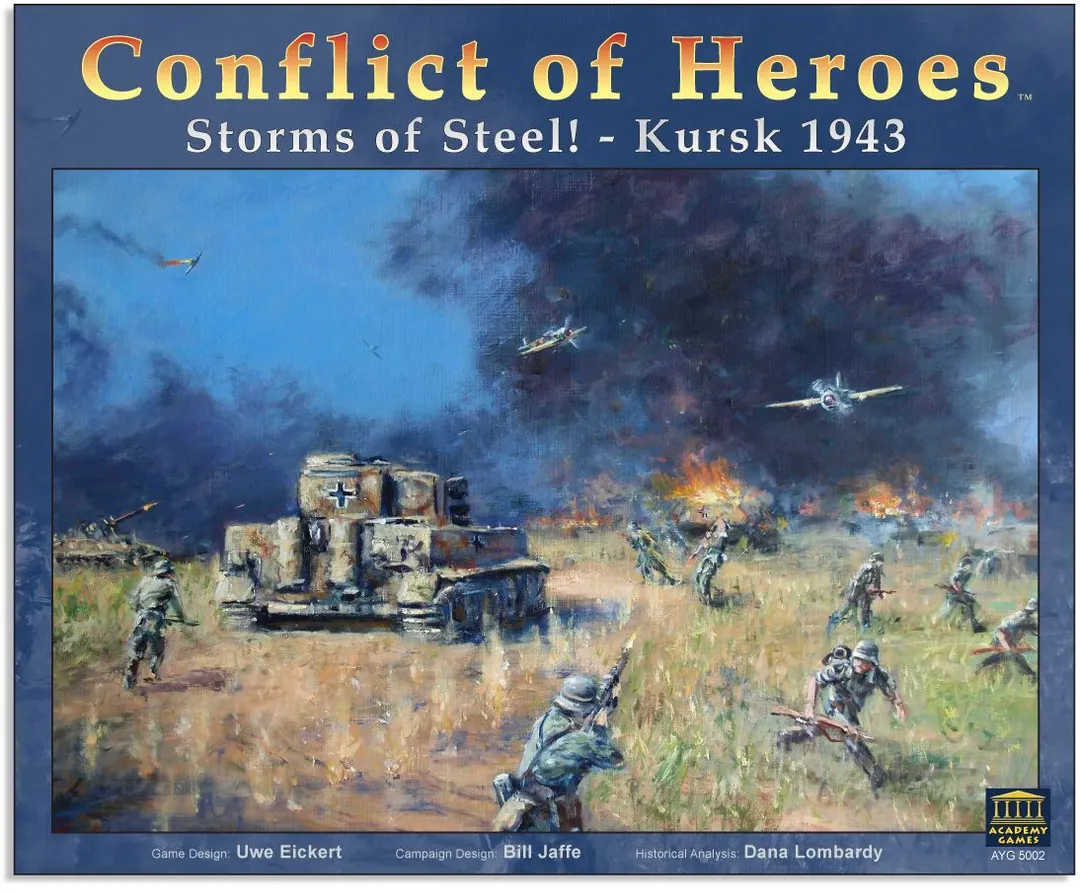
Conflict of Heroes: Storms of Steel! – Kursk 1943
- 1–4 Spieler
- 120 Min.
- Komplexität 3,1/5
- 2009
1979
Regelhilfe für Streets of Stalingrad
Verständliche Erklärungen zu Spielzügen, Karteneffekten und strittigen Situationen mit Verweisen auf offizielle Quellen und gespeichertem Fragenverlauf.
Für 2 Personen
Was möchtest du wissen?
Antworten stammen aus dem offiziellen Regelheft, mit Seitenangabe zum Nachprüfen.
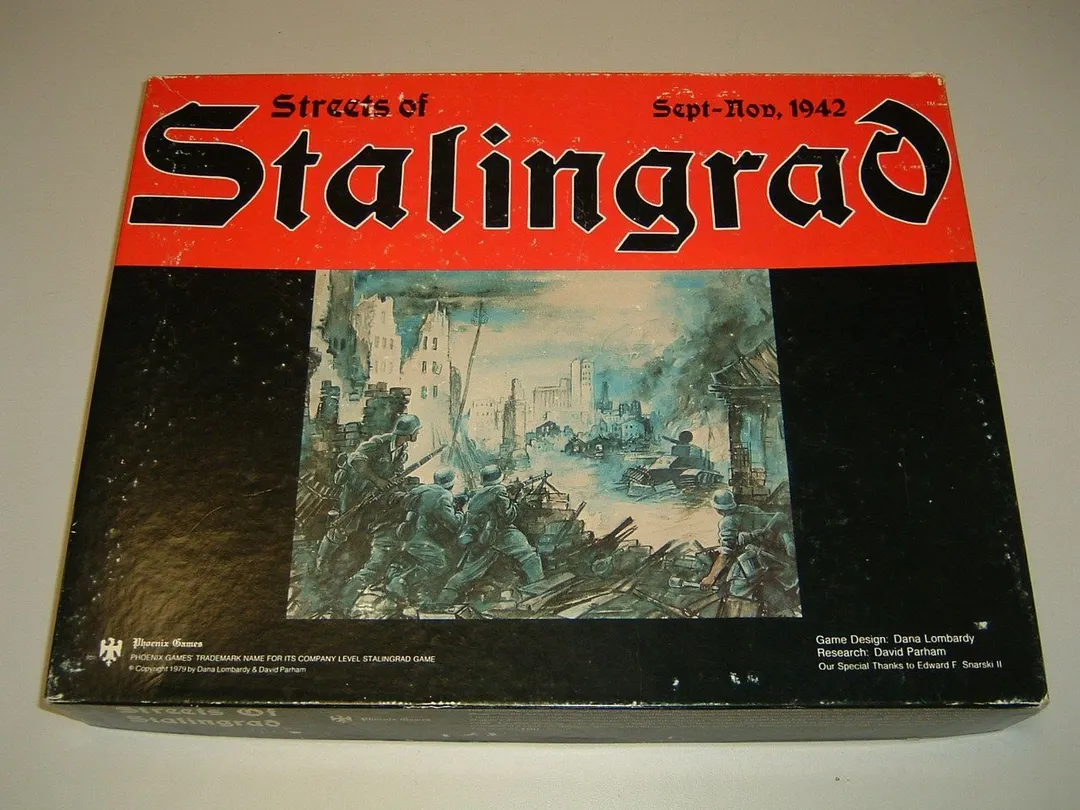
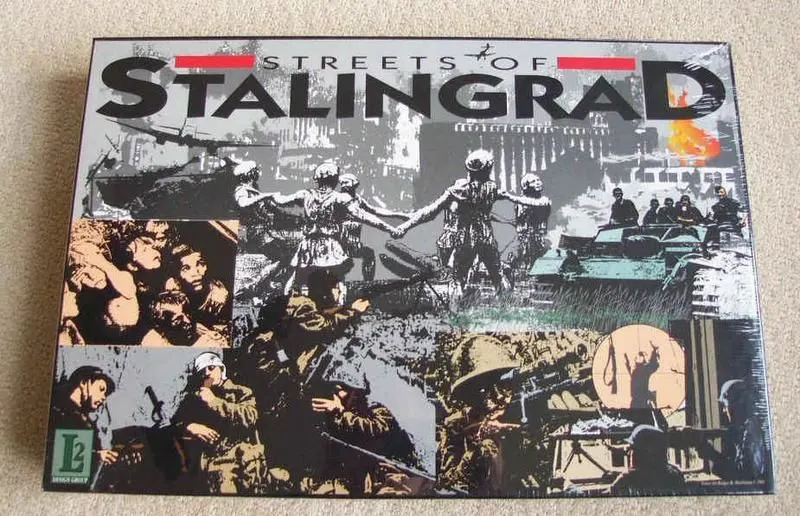
Streets of Stalingrad ist ein Brettspiel aus dem Jahr 1979 für 2 Personen, mit 180 Minuten pro Partie und ab 12 Jahren. Entwickelt wurde es von Dana Lombardy und David Parham; die wichtigsten Mechaniken sind Dice Rolling und Hexagon Grid.
Auf Englisch
"Streets of Stalingrad" is a World War 2 East Front wargame that models the fight for the city of Stalingrad, September-October, 1942, at the company level. It employs a scale of 300 meters per hex, with daily turns and 2160 counters. The two designers spent years researching the orders of battle and aerial maps to produce a game that is possibly the most researched and arguably the most accurate depiction of a battle, mechanics aside. The large, fairly thin but sturdy counters are the shades of the uniforms of the armies according to the designers. Instead of the usual American style designations on the counters to depict what type of unit it is, the designers used the actual designations used by the separate armies. This could be confusing except for the wonderful large player aids supplied with actual photos of the unit types. Labels and ziplock bag are even supplied for sorting purposes although sorting can be confusing. Moves mag put out an issue in the late '70's, early '80's with an article that fixed the problem. The 3 large maps are taken straight from aerial photos. You see the city block by block and outside the city individual buildings can even be seen. There is very little color on the maps but they are beautiful and very functional. The terrain effects chart once again has actual photos of the terrain so you can get an idea of exactly what the soldiers were facing. There are many scenarios available so you can tailor the game for time and room as some only use 1 map or a portion of a map. Each scenario has a separate set up sheet for both sides that are large enough to put all the counters on the sheets. Each scenario has a miniature version of the map to be used with set up information. For a monster game it is very easy to set up and get into a game. There are 3 rulebooks included, 2 basic game and 1 advanced game. When learning the game it is fantastic that they included a rulebook for each player. This is the kind of detail that is evident throughout the game. The rule books are detailed without being overbearing, as a lot of Avalon Hill's and SPI's were from the time period. They are chock full of examples to clear up ambiguities. The game is difficult because of the scale only. It is actually a fairly simple game, mechanics wise, and can be played by anyone with some wargame experience. This game shows that it has been designed to play, by wargamers, in every detail.
Laut Katalog unterstützt Streets of Stalingrad 2 Personen. Das ist die vom Verlag angegebene Spielerzahl, das Spiel ist also genau für diese Anzahl von Mitspielenden ausgelegt. Varianten für andere Gruppengrößen sind, sofern vorhanden, in der Anleitung deiner Ausgabe beschrieben; prüfe sie, bevor du eine andere Konfiguration aufbaust.
Die angegebene Spieldauer für Streets of Stalingrad beträgt 180 Minuten. Das ist die Schätzung des Verlags für eine vollständige Partie. Die tatsächliche Dauer hängt von der Gruppe, der Personenzahl und der Regelkenntnis ab: Erste Partien dauern meist länger, erfahrene Gruppen sind oft schneller fertig. Aufbau und Regelerklärung sind in dieser Schätzung nicht enthalten.
Im Katalog wird Streets of Stalingrad ab 12 Jahren empfohlen. Das ist die Empfehlung des Verlags und berücksichtigt Leseanforderungen, Regelkomplexität und Kleinteile, nicht nur das Thema. Jüngere Kinder können oft mit Hilfe eines Erwachsenen mitspielen; beachte die Altersangabe deiner Ausgabe und die Brettspielerfahrung deiner Gruppe.
Streets of Stalingrad hat bei BoardGameGeek eine Komplexitätswertung von 4,3 von 5 und gilt damit als schweres Spiel. Die Wertung zeigt, wie viel Regelwissen, Planung und Entscheidungen eine typische Partie verlangt. Schwerere Spiele brauchen bei der ersten Erklärung mehr Zeit, daher hilft vor dem Spieleabend eine Vorbereitungsanleitung.
Streets of Stalingrad gehört zu diesen Kategorien: Wargame und World War II. Die wichtigsten Mechaniken sind Dice Rolling und Hexagon Grid. Kategorien beschreiben Thema und Setting eines Spiels, Mechaniken dagegen, was die Spielenden in ihrem Zug tatsächlich tun. Jede Mechanik führt zu einer Katalogseite mit ähnlichen Spielen, falls du etwas Vergleichbares suchst.
Als Autoren von Streets of Stalingrad sind angegeben: Dana Lombardy und David Parham. Diese Angaben stammen aus den veröffentlichten Spieldaten und nennen die für das Spieldesign verantwortlichen Personen, nicht die Illustratoren oder Verlage. Die Autorenseiten auf MeepleRules sammeln weitere Titel derselben Autoren – praktisch, wenn dir ein Spiel gefällt und du ähnliche Spiele suchst.
Im Katalog ist Streets of Stalingrad als Grundspiel aufgeführt. Es lässt sich eigenständig mit dem Material aus der Schachtel spielen und benötigt keinen weiteren Titel. Erweiterungen, sofern es welche gibt, ergänzen neues Material oder neue Regeln und sind im Katalog separat mit einem Verweis auf dieses Grundspiel aufgeführt.