- BGG-Bewertung
- 7,1
The Artemis Project: "Alien Relic" Mini-Expansion
- 1–5 Spieler
- 60–75 Min.
- Komplexität 3,0/5
- 2019
2019
Regelhilfe für The Artemis Project
Verständliche Erklärungen zu Spielzügen, Karteneffekten und strittigen Situationen mit Verweisen auf offizielle Quellen und gespeichertem Fragenverlauf.
Für 1 Person
Was möchtest du wissen?
Antworten stammen aus dem offiziellen Regelheft, mit Seitenangabe zum Nachprüfen.
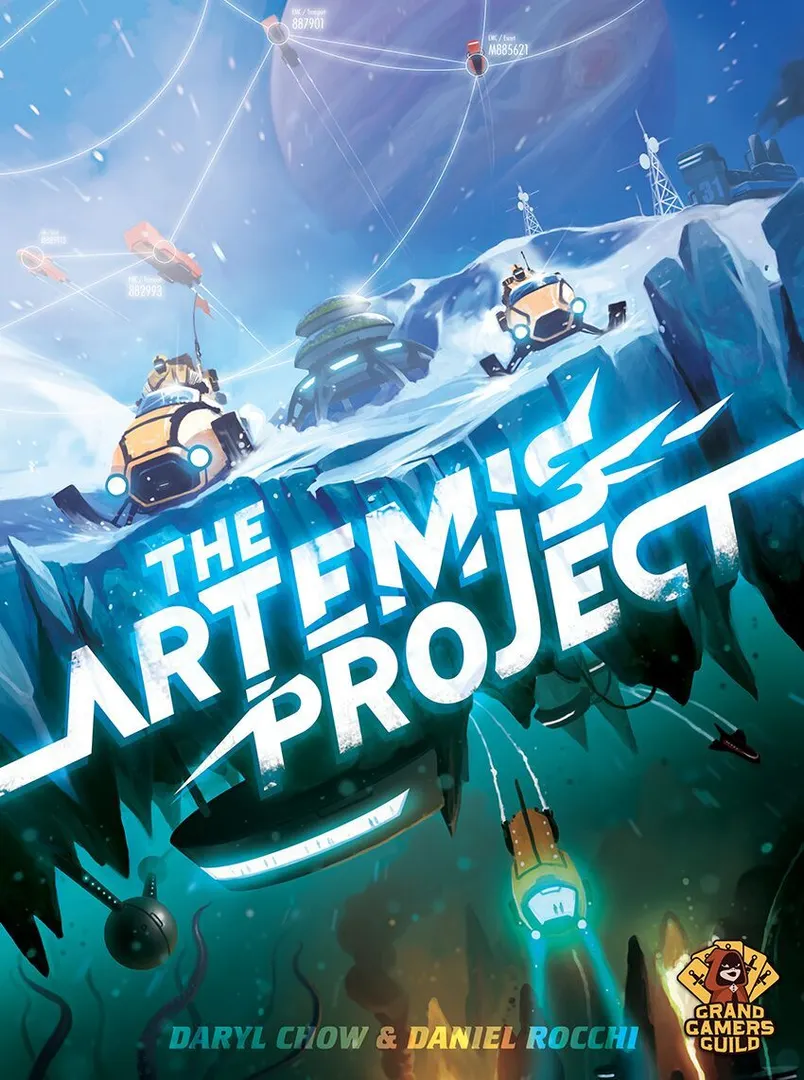
The Artemis Project ist ein Brettspiel aus dem Jahr 2019 für 1–5 Personen, mit 60–75 Minuten pro Partie und ab 13 Jahren. Entwickelt wurde es von Daryl Chow und Daniel Rocchi; die wichtigsten Mechaniken sind Set Collection, Auction / Bidding und Dice Rolling.
Auf Englisch
Europa, Jupiter's moon. Deep beneath the crust, the oceans are teeming with alien sea life. Shellfish, plants, corals, arthropods, even strange fish and larger sea creatures populate a wide-ranging interconnected web of hidden seas. Volcanism is rampant, warming the mineral-rich waters and creating excellent conditions for energy-harvesting. The largest cavern close to the surface is known as The Pocket. This is where the initial teams of Stabilizers built their first outposts, with the intent to establish long-term communities capable of surviving indefinitely. Aqua-farming is well established; food and other sundries are efficiently gathered. The Pocket has many deposits of minerals and crystals that can be mined and processed to create strong and versatile construction materials locally. Colonists arrive at the Doorstep at regular intervals when the Threshold is opened. The arrivals are of four general types: Pioneers (who are tasked with exploring the changing surface of the moon and the labyrinth of seas beneath), Engineers (who develop and operate the machinery and structures needed to run the colonies), Marines (who defend the colonies from hostile sea life, unwanted intruders, and other colonies), and Stewards (overseers responsible for strategy and negotiation). Colony development mostly occurs beneath the ice; this is where all of the moon’s resources are concentrated, so this is where the effort is best spent. To keep close to the surface, most colony structures are built clinging onto the underside of the ice crust. Surface structures will be built only once an undersea outpost is well established and beginning to thrive. In addition to construction and resource-gathering, colonies spend a lot of effort on exploring this new environment. The volcanic action and mineral-heavy waters make long-range scanning unreliable, so physical exploration is required to plumb the depths. As the Pocket is explored and expanded, the established colonies have been making some unusual discoveries beneath the ice. Deep in the trenches, artifacts of non-human origin are starting to be found. The dark seas hide many secrets. Squads of mercenaries occasionally appear on the surface and beneath the sea, penetrating the Threshold somehow to carry out an unknown mission on the moon. These aspects are worrisome but can’t distract the colonies from their main goals. It is still early in the Artemis project. A foothold on life here has been gained, but it will take tenacious effort from the competing colonies to reach the point where Europa is truly viable as a home. The Artemis Project is a dice (dis)placement and engine building game that has you fighting the planet as well as the other players. Roll your dice and place them tactically to thwart the other colonists. Harvest energy and minerals. Bid for buildings. Work together to go on Expeditions to earn rewards. Train workers. Will your efforts be enough to survive?
Laut Katalog unterstützt The Artemis Project 1–5 Personen. Diese Spanne entspricht der vom Verlag angegebenen Spielerzahl, das Spiel lässt sich also für jede Gruppengröße innerhalb dieser Spanne aufbauen. Aufbau, einzelne Regeln und Wertungsdetails können je nach Personenzahl trotzdem abweichen; prüfe daher die genaue Konfiguration in der Anleitung deiner Ausgabe.
Die angegebene Spieldauer für The Artemis Project beträgt 60–75 Minuten. Das ist die Schätzung des Verlags für eine vollständige Partie. Die tatsächliche Dauer hängt von der Gruppe, der Personenzahl und der Regelkenntnis ab: Erste Partien dauern meist länger, erfahrene Gruppen sind oft schneller fertig. Aufbau und Regelerklärung sind in dieser Schätzung nicht enthalten.
Im Katalog wird The Artemis Project ab 13 Jahren empfohlen. Das ist die Empfehlung des Verlags und berücksichtigt Leseanforderungen, Regelkomplexität und Kleinteile, nicht nur das Thema. Jüngere Kinder können oft mit Hilfe eines Erwachsenen mitspielen; beachte die Altersangabe deiner Ausgabe und die Brettspielerfahrung deiner Gruppe.
The Artemis Project hat bei BoardGameGeek eine Komplexitätswertung von 2,9 von 5 und gilt damit als eher leichtes Spiel. Die Wertung zeigt, wie viel Regelwissen, Planung und Entscheidungen eine typische Partie verlangt. Schwerere Spiele brauchen bei der ersten Erklärung mehr Zeit, daher hilft vor dem Spieleabend eine Vorbereitungsanleitung.
The Artemis Project gehört zu diesen Kategorien: Dice, Science Fiction und Space Exploration. Die wichtigsten Mechaniken sind Set Collection, Auction / Bidding und Dice Rolling. Kategorien beschreiben Thema und Setting eines Spiels, Mechaniken dagegen, was die Spielenden in ihrem Zug tatsächlich tun. Jede Mechanik führt zu einer Katalogseite mit ähnlichen Spielen, falls du etwas Vergleichbares suchst.
Als Autoren von The Artemis Project sind angegeben: Daryl Chow und Daniel Rocchi. Diese Angaben stammen aus den veröffentlichten Spieldaten und nennen die für das Spieldesign verantwortlichen Personen, nicht die Illustratoren oder Verlage. Die Autorenseiten auf MeepleRules sammeln weitere Titel derselben Autoren – praktisch, wenn dir ein Spiel gefällt und du ähnliche Spiele suchst.
Im Katalog ist The Artemis Project als Grundspiel aufgeführt. Es lässt sich eigenständig mit dem Material aus der Schachtel spielen und benötigt keinen weiteren Titel. Erweiterungen, sofern es welche gibt, ergänzen neues Material oder neue Regeln und sind im Katalog separat mit einem Verweis auf dieses Grundspiel aufgeführt.