

- BGG-Rang
- BGG #4.078
- BGG-Bewertung
- 7,1
Flames of War: The World War II Miniatures Game
- 2 Spieler
- 120 Min.
- Komplexität 3,3/5
- 2002
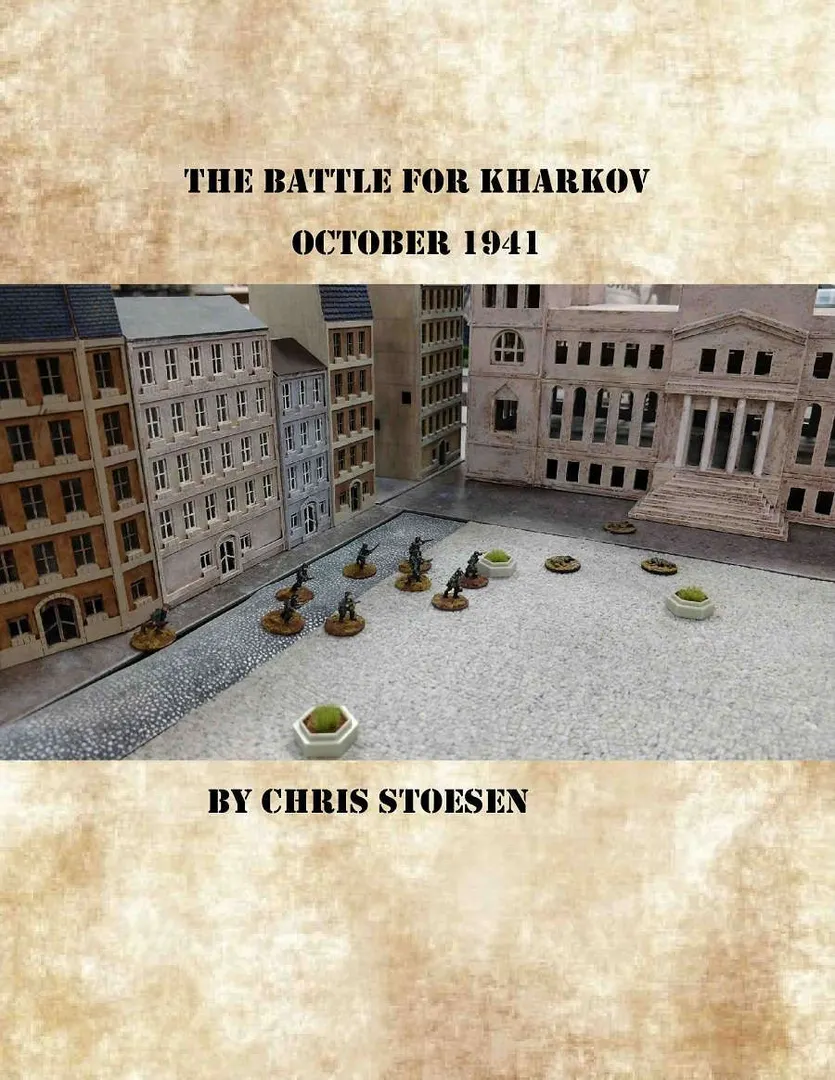
Regelhilfe für The Battle for Kharkov: October 1941
Verständliche Erklärungen zu Spielzügen, Karteneffekten und strittigen Situationen mit Verweisen auf offizielle Quellen und gespeichertem Fragenverlauf.
Was möchtest du wissen?
Antworten stammen aus dem offiziellen Regelheft, mit Seitenangabe zum Nachprüfen.
The Battle for Kharkov: October 1941 ist eine Erweiterung für Chain of Command aus dem Jahr 2017 für 2 Personen, mit 120–180 Minuten pro Partie und ab 14 Jahren. Entwickelt wurde es von Chris Stoesen; die wichtigsten Mechaniken sind Simulation und Scenario / Mission / Campaign Game.







Auf Englisch
The Campaign for Kharkov contains two pint sized campaigns designed for the TooFatLardies Chain of Command rules. They are easily converted to any skirmish ruleset such as Bolt Action. One covers the advance of the German 57th Infantry Division and the other the German 101st Light Division. The attack came in October of 1941. This city would be the site of three major battles for the city. The interesting aspect of the October 1941 battle is in the nature of the troops involved. The Soviets had superiority in armor. The Germans advanced with only a single STUG battalion in support of the 57th ID. The Soviets fielded the T34 as well as several improvised armored vehicles such as the KhTZ-16. While not a success on the battlefield, it demonstrated the Soviet inventiveness under the extreme pressure of the blitzkrieg. There are twelve total scenarios in the campaign. Full force lists are available for both German Divisions and the Soviet troops present. Maps are based on aerial reconnaissance photographs taken by German troops in September 1941. —description from the publisher
Laut Katalog unterstützt The Battle for Kharkov: October 1941 2 Personen. Das ist die vom Verlag angegebene Spielerzahl, das Spiel ist also genau für diese Anzahl von Mitspielenden ausgelegt. Varianten für andere Gruppengrößen sind, sofern vorhanden, in der Anleitung deiner Ausgabe beschrieben; prüfe sie, bevor du eine andere Konfiguration aufbaust.
Die angegebene Spieldauer für The Battle for Kharkov: October 1941 beträgt 120–180 Minuten. Das ist die Schätzung des Verlags für eine vollständige Partie. Die tatsächliche Dauer hängt von der Gruppe, der Personenzahl und der Regelkenntnis ab: Erste Partien dauern meist länger, erfahrene Gruppen sind oft schneller fertig. Aufbau und Regelerklärung sind in dieser Schätzung nicht enthalten.
Im Katalog wird The Battle for Kharkov: October 1941 ab 14 Jahren empfohlen. Das ist die Empfehlung des Verlags und berücksichtigt Leseanforderungen, Regelkomplexität und Kleinteile, nicht nur das Thema. Jüngere Kinder können oft mit Hilfe eines Erwachsenen mitspielen; beachte die Altersangabe deiner Ausgabe und die Brettspielerfahrung deiner Gruppe.
The Battle for Kharkov: October 1941 gehört zu diesen Kategorien: Wargame, Miniatures und World War II. Die wichtigsten Mechaniken sind Simulation und Scenario / Mission / Campaign Game. Kategorien beschreiben Thema und Setting eines Spiels, Mechaniken dagegen, was die Spielenden in ihrem Zug tatsächlich tun. Jede Mechanik führt zu einer Katalogseite mit ähnlichen Spielen, falls du etwas Vergleichbares suchst.
Als Autoren von The Battle for Kharkov: October 1941 sind angegeben: Chris Stoesen. Diese Angaben stammen aus den veröffentlichten Spieldaten und nennen die für das Spieldesign verantwortlichen Personen, nicht die Illustratoren oder Verlage. Die Autorenseiten auf MeepleRules sammeln weitere Titel derselben Autoren – praktisch, wenn dir ein Spiel gefällt und du ähnliche Spiele suchst.
Im Katalog ist The Battle for Kharkov: October 1941 als Erweiterung zu Chain of Command aufgeführt. Erweiterungen ergänzen das Grundspiel um neues Material, neue Regeln oder Szenarien und sind meist nicht eigenständig spielbar; du brauchst also Chain of Command, um sie zu nutzen. Prüfe, ob deine Ausgabe von Chain of Command kompatibel ist, da manche Erweiterungen zwischen den Auflagen überarbeitet wurden.