
- BGG-Rang
- BGG #15.275
- BGG-Bewertung
- 7,3
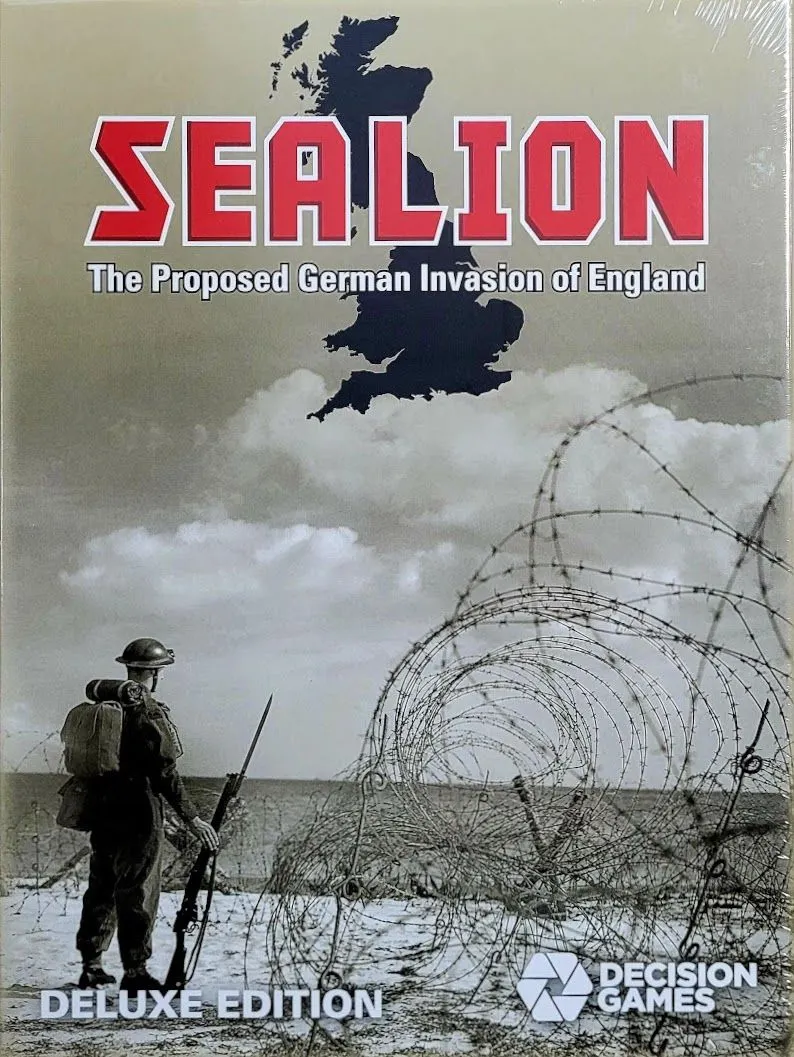
Sealion: The Proposed German Invasion of England
- 2–6 Spieler
- 180–240 Min.
- Komplexität 3,0/5
- 2017
2011
Regelhilfe für The Battle of Lepanto
Verständliche Erklärungen zu Spielzügen, Karteneffekten und strittigen Situationen mit Verweisen auf offizielle Quellen und gespeichertem Fragenverlauf.
Für 1 Person
Was möchtest du wissen?
Antworten stammen aus dem offiziellen Regelheft, mit Seitenangabe zum Nachprüfen.
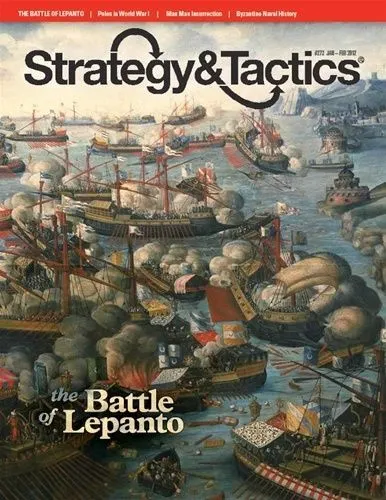
The Battle of Lepanto ist ein Brettspiel aus dem Jahr 2011 für 1–2 Personen. Entwickelt wurde es von Eric R. Harvey und Robert Cowling; die wichtigsten Mechaniken sind Hexagon Grid.
Auf Englisch
The Battle of Lepanto is a two-player or multi-player (Ottoman versus Christian) operational level game, designed by Robert Cowling. The game includes 280 die-cut counters, with the each warship chit representing two ships per counter; there are three primary ships types: Galleys, Galliots and Galleasses, each with different capabilities. The colorful map features the Ionian Sea, printed with the historical set up of both sides just as the two opposing fleets were arrayed to begin battle, as well as various charts and tables for easy reference during play. The land area featured represents the peninsular areas of the Grecian mainland. The rules entail a variety of mechanics pertaining to 16th century naval combat, such as Wind Direction, Ramming, Boarding, Small-Arms Fire, Gunnery Ranges, Exhaustion, Galliot Shoreline Movement, Christian Small-Arms Advantages, Ottoman Maneuver Advantages, as well as the designations of the historical admirals in the battle, such as Don Juan, Ali Pasha, etc. The easy and quick game sequence is as follows: Movement Combat Reorientation Movement is regulated in terms of the front and back side of each warship chit. As each ship completes its movement, it is flipped from its A (Alpha) side over to its O (Omega) side (or vice versa, if they began the turn on their Omega sides). When all desired moves have been completed, the player’s remaining ships are also flipped to their O (Omega) side (or vice versa, if they began the turn on their Omega sides) to indicate the end of the entire Movement Phase. In this way, players may easily keep track of which ships have moved, and which have not, during each game turn. Victory in the game is determined by the accumulation of VPs for eliminated and damaged ships that have been inflicted by each side.
Laut Katalog unterstützt The Battle of Lepanto 1–2 Personen. Diese Spanne entspricht der vom Verlag angegebenen Spielerzahl, das Spiel lässt sich also für jede Gruppengröße innerhalb dieser Spanne aufbauen. Aufbau, einzelne Regeln und Wertungsdetails können je nach Personenzahl trotzdem abweichen; prüfe daher die genaue Konfiguration in der Anleitung deiner Ausgabe.
The Battle of Lepanto hat bei BoardGameGeek eine Komplexitätswertung von 2,3 von 5 und gilt damit als eher leichtes Spiel. Die Wertung zeigt, wie viel Regelwissen, Planung und Entscheidungen eine typische Partie verlangt. Schwerere Spiele brauchen bei der ersten Erklärung mehr Zeit, daher hilft vor dem Spieleabend eine Vorbereitungsanleitung.
The Battle of Lepanto gehört zu diesen Kategorien: Wargame, Nautical und Renaissance. Die wichtigsten Mechaniken sind Hexagon Grid. Kategorien beschreiben Thema und Setting eines Spiels, Mechaniken dagegen, was die Spielenden in ihrem Zug tatsächlich tun. Jede Mechanik führt zu einer Katalogseite mit ähnlichen Spielen, falls du etwas Vergleichbares suchst.
Als Autoren von The Battle of Lepanto sind angegeben: Eric R. Harvey und Robert Cowling. Diese Angaben stammen aus den veröffentlichten Spieldaten und nennen die für das Spieldesign verantwortlichen Personen, nicht die Illustratoren oder Verlage. Die Autorenseiten auf MeepleRules sammeln weitere Titel derselben Autoren – praktisch, wenn dir ein Spiel gefällt und du ähnliche Spiele suchst.
Im Katalog ist The Battle of Lepanto als Grundspiel aufgeführt. Es lässt sich eigenständig mit dem Material aus der Schachtel spielen und benötigt keinen weiteren Titel. Erweiterungen, sofern es welche gibt, ergänzen neues Material oder neue Regeln und sind im Katalog separat mit einem Verweis auf dieses Grundspiel aufgeführt.