
- BGG-Rang
- BGG #2.444
- BGG-Bewertung
- 8,0
Successors (Fourth Edition)
- 2–5 Spieler
- 300 Min.
- Komplexität 4,2/5
- 2021
2006
Regelhilfe für The Conquerors: Alexander the Great
Verständliche Erklärungen zu Spielzügen, Karteneffekten und strittigen Situationen mit Verweisen auf offizielle Quellen und gespeichertem Fragenverlauf.
Für 1 Person
Was möchtest du wissen?
Antworten stammen aus dem offiziellen Regelheft, mit Seitenangabe zum Nachprüfen.
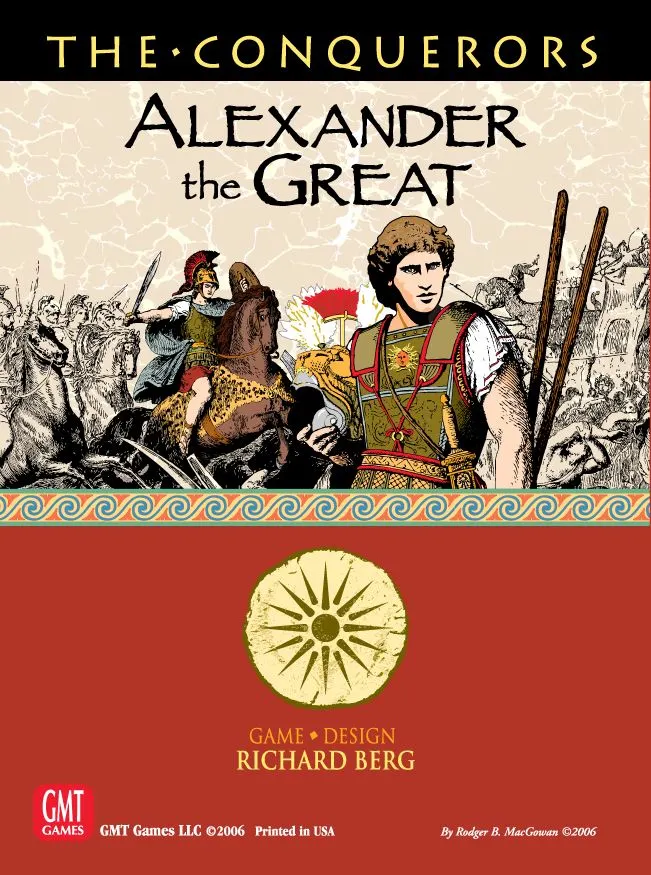
The Conquerors: Alexander the Great ist ein Brettspiel aus dem Jahr 2006 für 1–2 Personen, mit 240 Minuten pro Partie und ab 12 Jahren. Entwickelt wurde es von Richard H. Berg; die wichtigsten Mechaniken sind Variable Player Powers, Dice Rolling und Point to Point Movement.

Auf Englisch
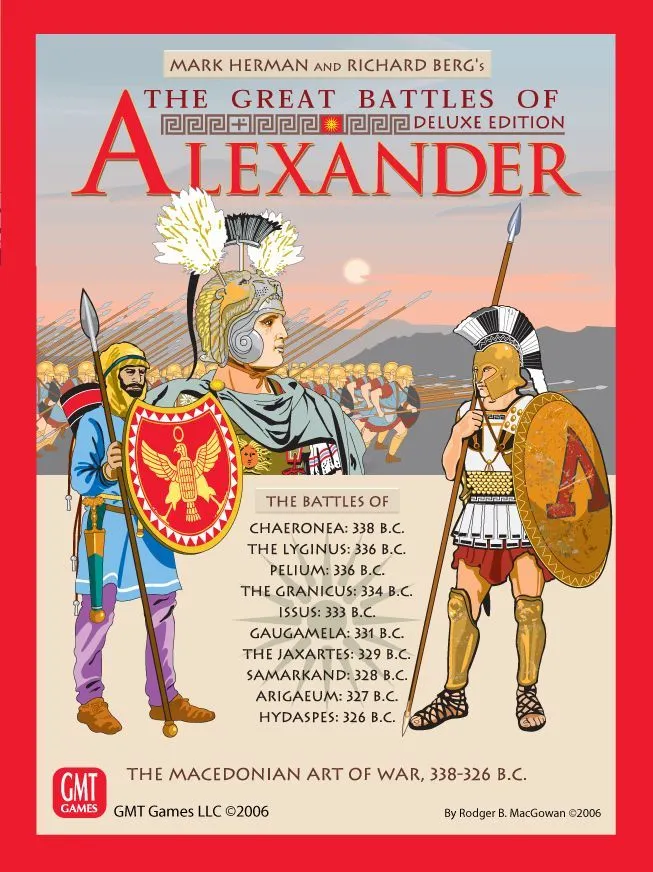
The Conquerors is a projected series of games that will focus on history's great conquerors, those figures whose vision, greed for power, and remarkable military abilities have changed the map of the world, sometimes fleetingly, often permanently. The first game in this new series is Alexander the Great, a game that covers the career of the fabled King of Macedon, from his ascension to the throne until his army has "Hellenized" half the known world. The Conquerors: Alexander the Great uses an interesting new system that gives the players a feel for the era and the problems of campaigning therein. For one, there are no turns. Play keeps going until the Macedonian Player wins or Alexander dies. And winning, for the Macedonian Player, is no mean feat. Yes, his armies are mighty, but Alexander is a game in which the player must not just win battles, but also overcome the logistics of campaigning … building armies, getting them to where they're needed, understanding battle fatigue and weariness, dealing with personalities, and adapting to the society you are trying to seize. The player's goals, as Alexander, are multiple and difficult. To win, he must maintain his hegemony of Greece, become Great King and establish his Deity. The latter two require him to achieve eight separate, often difficult objectives, including controlling key provinces, building Alexandria, gaining control of the Royal Family, and invoking proskynesis (homage by prostration). A clever Persian player has many ways to stop the Macedonian from earning these, and the money and manpower to help him. Given Alexander's "greatness," play testers found the game to be remarkably balanced. The Conquerors: Alexander the Great uses cards, but it is not a game "driven" by cards - this is not a Paths of Glory system game. Rather, it uses them to provide the players with the historical opportunities and outside events that shaped Alexander's campaigns. The cards cover such events as Alexander's drinking problems, the shadowy figure of Bagoas, the friendly presence of Black Cleitus, and possibilities of assassination, mass marriages, Spartan revolts … even a Honeymoon for the weary Macedonians! Combat uses a fun, two-tiered battle resolution system that accounts for many more factors than just numbers, and often leaves armies- even winning armies- in far worse shape than you may want. The Conquerors: Alexander the Great is a game rich in historical detail, a game that places major burdens on the players to achieve victory, and a game that's great fun! It can be played by two to four gamers in around 4 hours, and it can be played solitaire. TIME SCALE: 4 months per turn MAP SCALE: 150 miles per hex UNIT SCALE: Brigade, Division, Corps, and Army NUMBER OF PLAYERS: 1-2 COMPONENTS: 140 half-inch counters & 88 5/8-inch counters 55 Event cards One 22"x34" Mapsheet 24-page Rule Book 2 Player Aid Cards Three six-sided dice Designed by Richard Berg Developed by Bill Ramsay (from GMT webpage)
Laut Katalog unterstützt The Conquerors: Alexander the Great 1–2 Personen. Diese Spanne entspricht der vom Verlag angegebenen Spielerzahl, das Spiel lässt sich also für jede Gruppengröße innerhalb dieser Spanne aufbauen. Aufbau, einzelne Regeln und Wertungsdetails können je nach Personenzahl trotzdem abweichen; prüfe daher die genaue Konfiguration in der Anleitung deiner Ausgabe.
Die angegebene Spieldauer für The Conquerors: Alexander the Great beträgt 240 Minuten. Das ist die Schätzung des Verlags für eine vollständige Partie. Die tatsächliche Dauer hängt von der Gruppe, der Personenzahl und der Regelkenntnis ab: Erste Partien dauern meist länger, erfahrene Gruppen sind oft schneller fertig. Aufbau und Regelerklärung sind in dieser Schätzung nicht enthalten.
Im Katalog wird The Conquerors: Alexander the Great ab 12 Jahren empfohlen. Das ist die Empfehlung des Verlags und berücksichtigt Leseanforderungen, Regelkomplexität und Kleinteile, nicht nur das Thema. Jüngere Kinder können oft mit Hilfe eines Erwachsenen mitspielen; beachte die Altersangabe deiner Ausgabe und die Brettspielerfahrung deiner Gruppe.
The Conquerors: Alexander the Great hat bei BoardGameGeek eine Komplexitätswertung von 2,8 von 5 und gilt damit als eher leichtes Spiel. Die Wertung zeigt, wie viel Regelwissen, Planung und Entscheidungen eine typische Partie verlangt. Schwerere Spiele brauchen bei der ersten Erklärung mehr Zeit, daher hilft vor dem Spieleabend eine Vorbereitungsanleitung.
The Conquerors: Alexander the Great gehört zu diesen Kategorien: Wargame und Ancient. Die wichtigsten Mechaniken sind Variable Player Powers, Dice Rolling und Point to Point Movement. Kategorien beschreiben Thema und Setting eines Spiels, Mechaniken dagegen, was die Spielenden in ihrem Zug tatsächlich tun. Jede Mechanik führt zu einer Katalogseite mit ähnlichen Spielen, falls du etwas Vergleichbares suchst.
Als Autoren von The Conquerors: Alexander the Great sind angegeben: Richard H. Berg. Diese Angaben stammen aus den veröffentlichten Spieldaten und nennen die für das Spieldesign verantwortlichen Personen, nicht die Illustratoren oder Verlage. Die Autorenseiten auf MeepleRules sammeln weitere Titel derselben Autoren – praktisch, wenn dir ein Spiel gefällt und du ähnliche Spiele suchst.
Im Katalog ist The Conquerors: Alexander the Great als Grundspiel aufgeführt. Es lässt sich eigenständig mit dem Material aus der Schachtel spielen und benötigt keinen weiteren Titel. Erweiterungen, sofern es welche gibt, ergänzen neues Material oder neue Regeln und sind im Katalog separat mit einem Verweis auf dieses Grundspiel aufgeführt.