
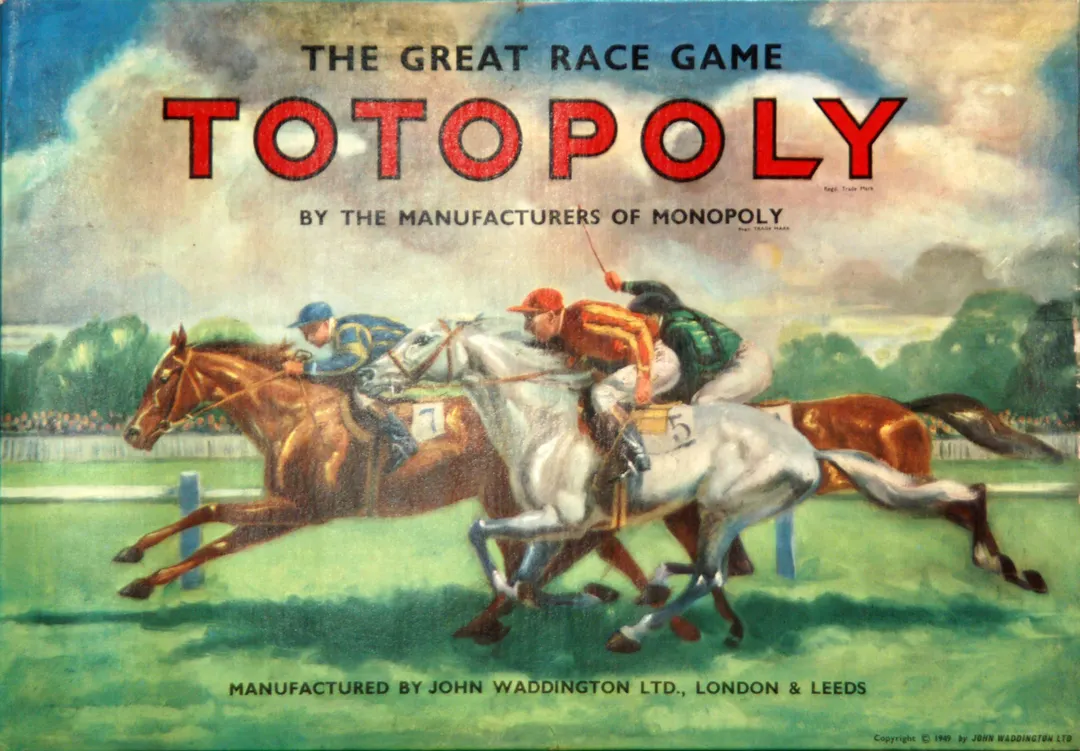
- BGG-Rang
- BGG #9.960
- BGG-Bewertung
- 6,1
Totopoly
- 2–6 Spieler
- 90 Min.
- Komplexität 1,8/5
- 1938
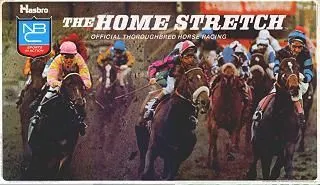
1970
Regelhilfe für The Home Stretch
Verständliche Erklärungen zu Spielzügen, Karteneffekten und strittigen Situationen mit Verweisen auf offizielle Quellen und gespeichertem Fragenverlauf.
Was möchtest du wissen?
Antworten stammen aus dem offiziellen Regelheft, mit Seitenangabe zum Nachprüfen.
The Home Stretch ist ein Brettspiel aus dem Jahr 1970 für 2–20 Personen, mit 60 Minuten pro Partie und ab 8 Jahren. Die wichtigsten Mechaniken sind Auction / Bidding, Roll / Spin and Move und Grid Movement.

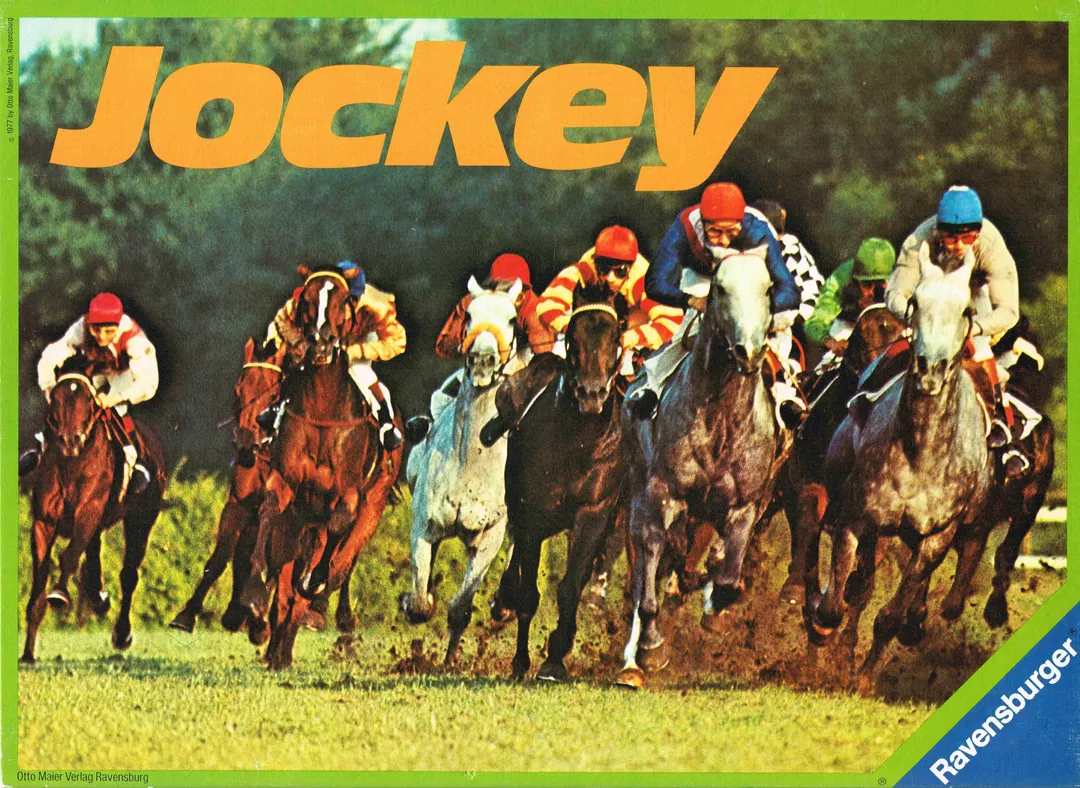

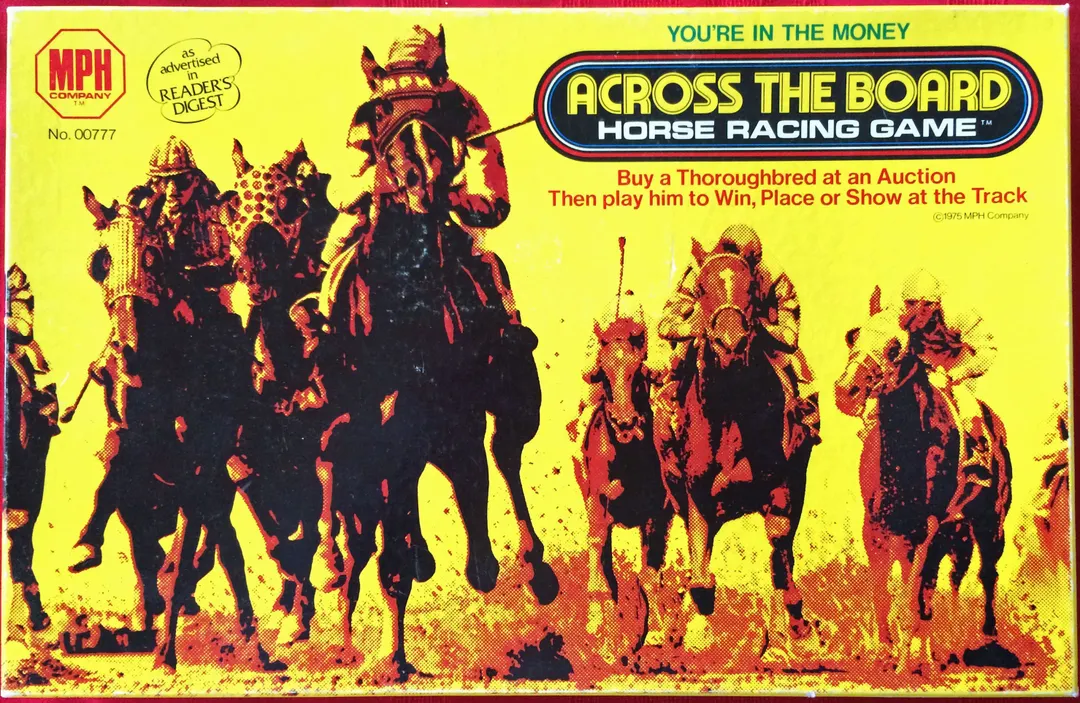





Auf Englisch
Horse racing game released by Hasbro and NBC (Yes, the US Television company) in a format nearly identical to the 3M plastic "wrap-around" boards. The Home Stretch is a horse racing game. The players represent the owners and jockeys of the horses in the race and the people betting on the race. To start the game, each player is given a certain amount of cash. This money is used to bid on horses. Each horse is represented by an "Ownership Card" which shows the horse's name, stable and "Speed". Speed is used to determine the likelihood of gaining an "Advantage" during the race. Bidding for each horse lasts three rounds and the high bidder gets the horse. Once the horses have been assigned their starting positions are determined and the Ownership Cards are placed in the "Readout Machine". This is a tray which holds the cards and will be used to determine movement. After all the horses are in the tray "Odds Cards" are placed below each Ownership Card. Odds Cards will determine the actual movement of each horse. Players may now make wagers on any horse they choose. Wagers may be made on any number of horses and may be made for Win, Place or Show. The player records their bets on a "Betting Slip" and places it face down on the board, then pays the total amount of the bets. To run the race the spinner is used to generate a random number. This number is used on the Readout Machine to determine the number of spaces moved and the "Diagonal Allowance" for each horse. Each Odds card has a column of numbers for total movement and a second column for Diagonal allowance. The Diagonal Allowance is the number of diagonal moves the horse may make and is therefore the number of times the horse can change lanes. The horse must use all of its movement but does not have to use all of its allowed lane changes. The spinner's random number determines which row of numbers on the Odds cards will be used in the current round for moving the horses along the track. Sometimes the spinner will indicate "Advantage". When this happens an Advantage card is drawn. Advantage Cards each show the name of one horse and that horse is allowed a free move of 6 with a diagonal allowance of 2. Other horses may not move. The better a horse's speed, the more Advantage Cards that horse has in the deck. The race continues until all of the horses have crossed the finish line. If more than one horse crosses the line in the same turn the horse which moves the furtherest past the finish line is the winner. The second and third place horse is determined the same way. Once all the horses have crossed the finish line the betting slips are revealed and winning wagers are paid. The players then set up the horses and the Readout Machine for the next race. Ownership of the horses remains the same but the starting order and Odds Cards change. A total of six races are run. The player with the most cash at the end of all six races is the winner. This is a very good game. Players can spend a good deal of money buying the best horses at the start of the game, but they then have less cash to place bets with. Meanwhile, other players can bet on their horses anyway. Also, the randomness of the appearance of the Advantage Cards mean that a good horse can have a bad showing and the slowest horse may come from behind to win. There is nothing to prevent a player from betting on another horse and racing theirs badly to influence the outcome but the other players may be doing the same thing and the fact that six races are run means that no one is likely to try it more than once (though it may show up as a race 6 strategy). A very interesting game.
Laut Katalog unterstützt The Home Stretch 2–20 Personen. Diese Spanne entspricht der vom Verlag angegebenen Spielerzahl, das Spiel lässt sich also für jede Gruppengröße innerhalb dieser Spanne aufbauen. Aufbau, einzelne Regeln und Wertungsdetails können je nach Personenzahl trotzdem abweichen; prüfe daher die genaue Konfiguration in der Anleitung deiner Ausgabe.
Die angegebene Spieldauer für The Home Stretch beträgt 60 Minuten. Das ist die Schätzung des Verlags für eine vollständige Partie. Die tatsächliche Dauer hängt von der Gruppe, der Personenzahl und der Regelkenntnis ab: Erste Partien dauern meist länger, erfahrene Gruppen sind oft schneller fertig. Aufbau und Regelerklärung sind in dieser Schätzung nicht enthalten.
Im Katalog wird The Home Stretch ab 8 Jahren empfohlen. Das ist die Empfehlung des Verlags und berücksichtigt Leseanforderungen, Regelkomplexität und Kleinteile, nicht nur das Thema. Jüngere Kinder können oft mit Hilfe eines Erwachsenen mitspielen; beachte die Altersangabe deiner Ausgabe und die Brettspielerfahrung deiner Gruppe.
The Home Stretch hat bei BoardGameGeek eine Komplexitätswertung von 1,0 von 5 und gilt damit als leichtes Spiel. Die Wertung zeigt, wie viel Regelwissen, Planung und Entscheidungen eine typische Partie verlangt. Schwerere Spiele brauchen bei der ersten Erklärung mehr Zeit, daher hilft vor dem Spieleabend eine Vorbereitungsanleitung.
The Home Stretch gehört zu diesen Kategorien: Animals, Racing und Sports. Die wichtigsten Mechaniken sind Auction / Bidding, Roll / Spin and Move und Grid Movement. Kategorien beschreiben Thema und Setting eines Spiels, Mechaniken dagegen, was die Spielenden in ihrem Zug tatsächlich tun. Jede Mechanik führt zu einer Katalogseite mit ähnlichen Spielen, falls du etwas Vergleichbares suchst.
Im Katalog ist The Home Stretch als Grundspiel aufgeführt. Es lässt sich eigenständig mit dem Material aus der Schachtel spielen und benötigt keinen weiteren Titel. Erweiterungen, sofern es welche gibt, ergänzen neues Material oder neue Regeln und sind im Katalog separat mit einem Verweis auf dieses Grundspiel aufgeführt.