
- BGG-Rang
- BGG #12.794
- BGG-Bewertung
- 7,4
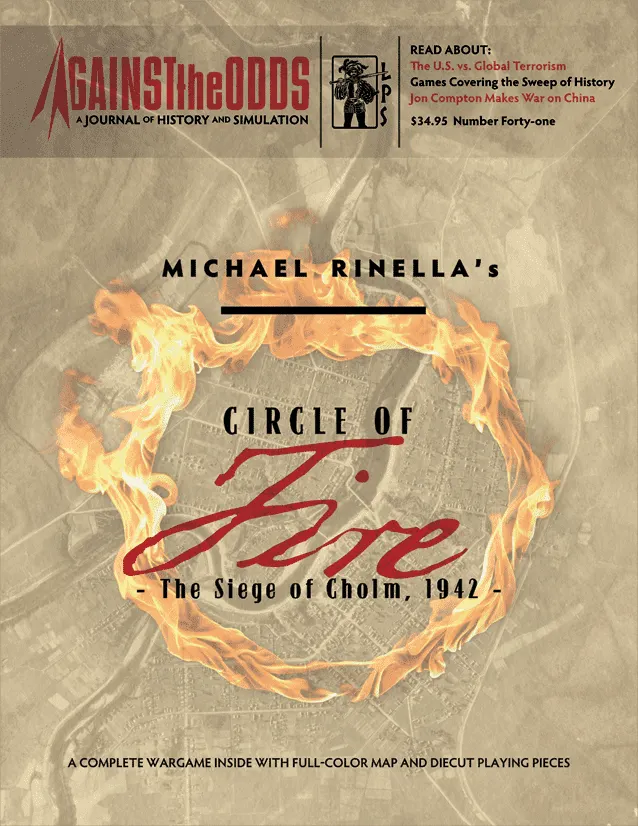
Circle of Fire: The Siege of Cholm, 1942
- 1–2 Spieler
- 180–240 Min.
- Komplexität 2,3/5
- 2014
2009
Regelhilfe für The Pocket at Falaise
Verständliche Erklärungen zu Spielzügen, Karteneffekten und strittigen Situationen mit Verweisen auf offizielle Quellen und gespeichertem Fragenverlauf.
Für 1 Person
Was möchtest du wissen?
Antworten stammen aus dem offiziellen Regelheft, mit Seitenangabe zum Nachprüfen.
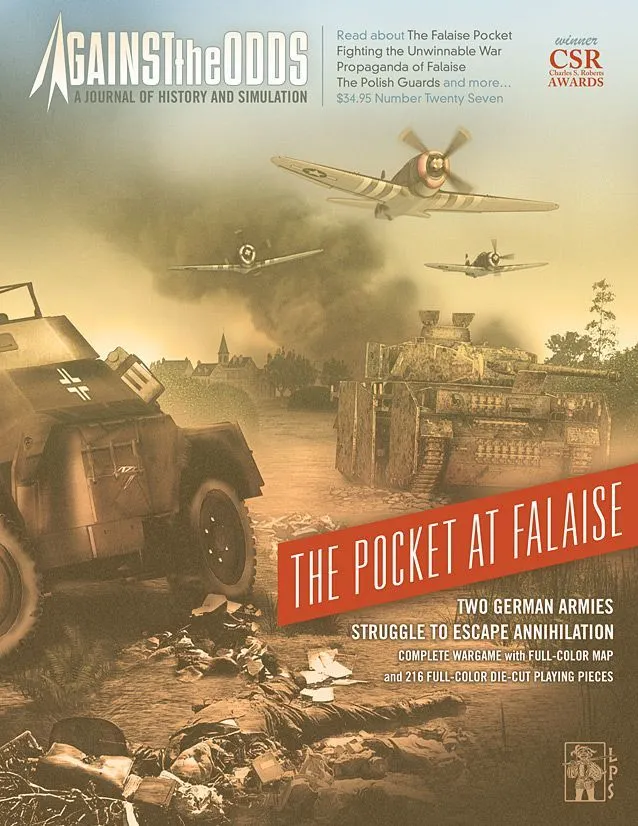
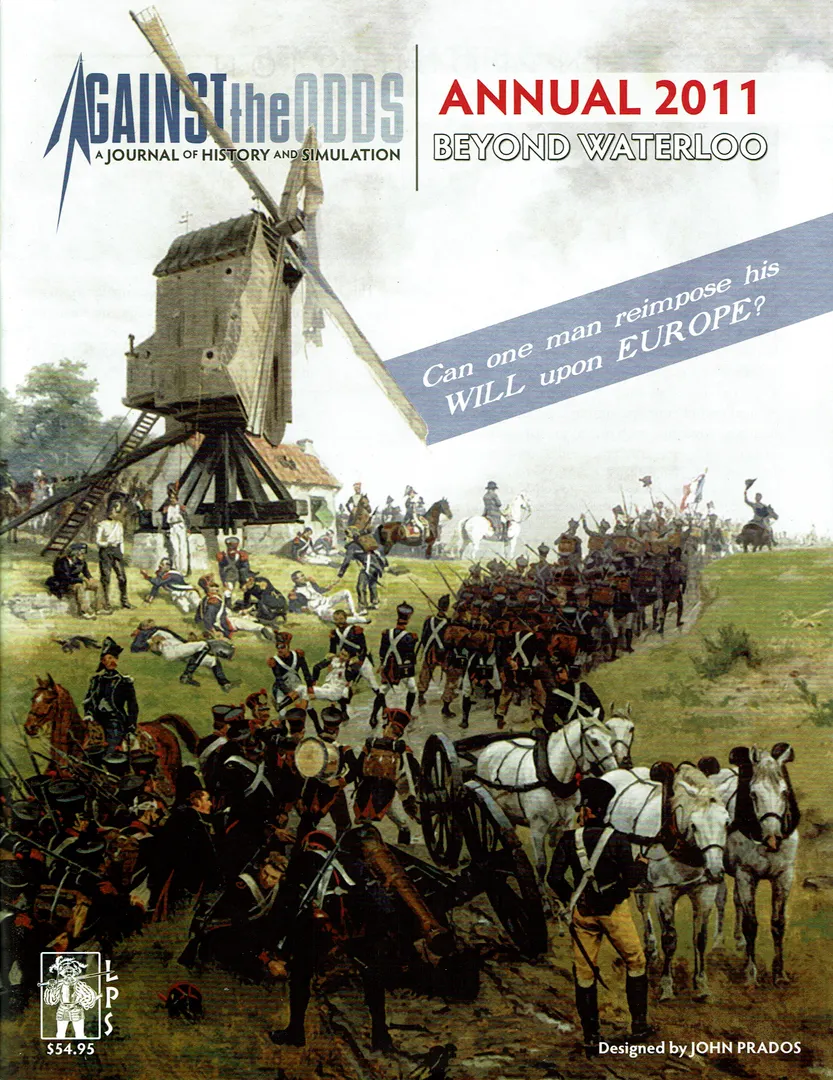
The Pocket at Falaise ist ein Brettspiel aus dem Jahr 2009 für 1–2 Personen, mit 240 Minuten pro Partie und ab 12 Jahren. Entwickelt wurde es von Ted Raicer, Paul Rohrbaugh und Lembit Tohver; die wichtigsten Mechaniken sind Hexagon Grid und Chit-Pull System.



Auf Englisch
The Pocket at Falaise is a game on the final phase of the Allied campaign in Normandy. After the failure of Hitler’s counterattack in early August to halt the Allied breakout from Normandy, the German 7th and 5th Panzer Armies found themselves on the verge of being pocketed by converging American and British pincers. On the evening of August 16th the Germans began to pull back behind the Orne and Dives rivers, hoping to regroup for a defense of the Seine, even as the Allies attempted to close the trap on some twentyfive German divisions. Ultimately, about half the German forces in the pocket escaped, leaving almost all their heavy equipment behind. It was a major Allied victory, but not a war-winning one. At the end of the Gulf War in '91, cable TV news was full of horrific photos from the "Highway of Death," the route back to Iraq from Kuwait that seemed, almost literally, to be "paved" with burnt-out vehicles. Those who study WWII remember similar destruction... on the road out of the Falaise Pocket... where 25 German divisions raced for survival, while the Allied armies aimed to turn Hitler's delayed counterattack on Normandy from failure to war-ending disaster. In one sense, neither side succeeded. But the devastation was something unprecedented. Now, you have a chance to do better. The Pocket at Falaise puts each player in the difficult position of trying to overcome the obstacles, both human and mechanical, tactical and operational, that interfered with success in 1944. Award-winning designer Ted Racier explains: The story of the Falaise battle is that of two German armies trying to escape a trap set for them by their own high command, and of the Allied armies trying to close the trap, despite the hesitations and divisions of their own higher commanders. While we may think of the Allies as having overwhelming forces, at the actual point of contact, there were relatively weak units trying to "plug the leak" against overwhelming numbers of intensely motivated Germans. The situation means that the "retreating" Germans are actually forced to do a lot of attacking, while the "advancing" allies found themselves in a desperate defense. The Pocket at Falaise uses a chit-pull activation system to capture some of the chaotic and uncoordinated efforts. Players are forced to juggle to make the best out of an increasingly difficult situation, and a combat scale that straddles "tactical" and "operational," aiming to capture the best of both without adding a lot of fiddly rules. A complete set of solitaire rules for the game completes the package. Eisenhower called it, "The Great Killing Ground." What the Germans called it cannot be printed. What you will call it depends on how well you do... Against the Odds. Published in Against the Odds Magazine #27, October 2009. Game Scale: Game Turn: 12 hours Hex: 0.75 miles / 1.2 kilometers Units: Battalion to Brigade Game Inventory: One 22 x 34" full color map Two dual-side printed countersheets (198 9/16" counters) One 12-page Pocket at Falaise rulebook Two dual-side printed Player Aid cards One 6-sided die Solitaire Playability: Medium Complexity Level: Medium Players: 2 or more Playing Time: 4-15 hours
Laut Katalog unterstützt The Pocket at Falaise 1–2 Personen. Diese Spanne entspricht der vom Verlag angegebenen Spielerzahl, das Spiel lässt sich also für jede Gruppengröße innerhalb dieser Spanne aufbauen. Aufbau, einzelne Regeln und Wertungsdetails können je nach Personenzahl trotzdem abweichen; prüfe daher die genaue Konfiguration in der Anleitung deiner Ausgabe.
Die angegebene Spieldauer für The Pocket at Falaise beträgt 240 Minuten. Das ist die Schätzung des Verlags für eine vollständige Partie. Die tatsächliche Dauer hängt von der Gruppe, der Personenzahl und der Regelkenntnis ab: Erste Partien dauern meist länger, erfahrene Gruppen sind oft schneller fertig. Aufbau und Regelerklärung sind in dieser Schätzung nicht enthalten.
Im Katalog wird The Pocket at Falaise ab 12 Jahren empfohlen. Das ist die Empfehlung des Verlags und berücksichtigt Leseanforderungen, Regelkomplexität und Kleinteile, nicht nur das Thema. Jüngere Kinder können oft mit Hilfe eines Erwachsenen mitspielen; beachte die Altersangabe deiner Ausgabe und die Brettspielerfahrung deiner Gruppe.
The Pocket at Falaise hat bei BoardGameGeek eine Komplexitätswertung von 2,8 von 5 und gilt damit als eher leichtes Spiel. Die Wertung zeigt, wie viel Regelwissen, Planung und Entscheidungen eine typische Partie verlangt. Schwerere Spiele brauchen bei der ersten Erklärung mehr Zeit, daher hilft vor dem Spieleabend eine Vorbereitungsanleitung.
The Pocket at Falaise gehört zu diesen Kategorien: Wargame und World War II. Die wichtigsten Mechaniken sind Hexagon Grid und Chit-Pull System. Kategorien beschreiben Thema und Setting eines Spiels, Mechaniken dagegen, was die Spielenden in ihrem Zug tatsächlich tun. Jede Mechanik führt zu einer Katalogseite mit ähnlichen Spielen, falls du etwas Vergleichbares suchst.
Als Autoren von The Pocket at Falaise sind angegeben: Ted Raicer, Paul Rohrbaugh und Lembit Tohver. Diese Angaben stammen aus den veröffentlichten Spieldaten und nennen die für das Spieldesign verantwortlichen Personen, nicht die Illustratoren oder Verlage. Die Autorenseiten auf MeepleRules sammeln weitere Titel derselben Autoren – praktisch, wenn dir ein Spiel gefällt und du ähnliche Spiele suchst.
Im Katalog ist The Pocket at Falaise als Grundspiel aufgeführt. Es lässt sich eigenständig mit dem Material aus der Schachtel spielen und benötigt keinen weiteren Titel. Erweiterungen, sofern es welche gibt, ergänzen neues Material oder neue Regeln und sind im Katalog separat mit einem Verweis auf dieses Grundspiel aufgeführt.