

- BGG-Rang
- BGG #199
- BGG-Bewertung
- 7,9
Xia: Legends of a Drift System
- 3–5 Spieler
- 60–180 Min.
- Komplexität 3,2/5
- 2014
2009
Regelhilfe für The Tower of Mystery
Verständliche Erklärungen zu Spielzügen, Karteneffekten und strittigen Situationen mit Verweisen auf offizielle Quellen und gespeichertem Fragenverlauf.
Was möchtest du wissen?
Antworten stammen aus dem offiziellen Regelheft, mit Seitenangabe zum Nachprüfen.
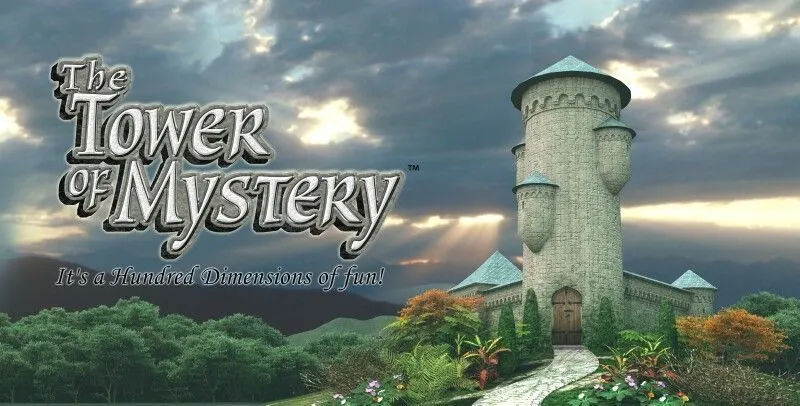
The Tower of Mystery ist ein Brettspiel aus dem Jahr 2009 für 2–8 Personen, mit 30 Minuten pro Partie und ab 8 Jahren. Entwickelt wurde es von Chris Knoll; die wichtigsten Mechaniken sind Variable Player Powers, Roll / Spin and Move und Dice Rolling.






Auf Englisch
Is The Tower of Mystery for You? The Tower of Mystery is highly competitive and very interactive without being highly strategic! Everyone's always involved in the game, even when it's not their turn to move their playing piece! The game is completely different every time you play! Warning: If a board game needs to be all about strategy, setup, and "the win" in order for you to enjoy it, then you may want to avoid The Tower of Mystery because it's a rapidly changing game that's frequently outside of your complete control. But if you enjoy a purely social game that's all about player interaction, fun, laughter, and "the journey", then chances are great that you'll love the Tower of Mystery! Social gamers of all ages (adults, college students, teens) and Families enjoy the game! The Tower of Mystery contains no occult elements, magic, spells, or evil characters. Detailed Game Description The Tower of Mystery combines luck, unpredictability, and a dash of strategy make this an exciting, lively game for everyone. Because up to eight players can play, nobody is left out! It's competitive, interactive, rapidly changing, and fun!Everyone starts in the Garden outside the Tower. Travel around the tower's seven levels, take secret passages, and use staircases, in an attempt to visit each of the four turrets in the tower (in no particular order) and collect a turret token. Once you have all four turret tokens, and have collected Mystery Cards that spell the word "TOWER", declare your impending win to the other players and then head back to the Garden! The first person to return to the Garden with Mystery Cards spelling "TOWER" and has a turret token from each of the four turrets, wins the game! When playing The Tower of Mystery, you win by constantly adjusting your game-play based on unexpected events. No matter how masterful you think your plan for winning the game is, it WILL be up-ended by your opponents, and the crazy events that occur within the tower. Your goal is to keep moving towards achieving the game objectives as best you can! During the game, players move around the seven levels, up and down staircases, and into the four turrets, landing on board spaces where "things happen". Sometimes a player may get money or lose money, get or lose Mystery Cards, may get to roll the dice and see what happens, might have the chance to swap the location of their playing piece with another player's piece, steal cards or money from other players, or any of many different scenarios and possibilities. In addition to the "TOWER" Mystery Cards, there are Mystery Cards that allow you to do nice things to yourself, or try to stop your opponents. There are several ways to collect Mystery Cards. Some ways are free, others cost money. The fastest but most risky way to collect free Mystery Cards is to stay in a turrent for multiple turns. However, while in a turret, a player is vulnerable because they cannot play any Mystery Cards. Players can collect up to 3 free Mystery Cards per turn while in a turret so even though it's risky to stay in a turret for very long, there's definitely a benefit to visiting the turrets even though playing Mystery Cards there is a no-no. Players can play any number of Mystery Cards on any other players (or themselves) even when it's not their turn! This can cause "mayhem" when several players suddenly jump into the action at the same time! You will have to alter your plans over and over in order to stay ahead of your opponents! Almost constant player interaction keeps everyone on their toes, all the while laughing and having fun every step of the way! At the end of each turn that a player's piece is in a turret, they must draw a Turret Card. Turret Cards might affect only the player drawing the card, might affect everyone in the game, or several players but not all. One thing is for sure: Turret Cards often dramatically change the game for everyone in an instant! Some Turret Cards are helpful, but most of them cause unexpected, often funny events to happen to some or all of the players in the game! While money is a component of the game, it has no bearing on winning the game! Tower Bucks are used to buy Mystery Cards and pay penalties. Being broke is risky, because if a player is completely broke and they have to pay a fine to the bank or a penalty to another player, they lose three turns! Hoarding money serves no purpose, however, so each player has to decide how much money is enough to keep and how much is safe to spend. The Tower of Mystery is a great Party Game for all ages! Adults young and old enjoy playing The Tower of Mystery when together for their regular social Game Night. Families enjoy it for Family Game Night because it's equally playable for both the kids and the parents. It is suitable for children as young as about eight as long as they are able to read the cards and know the best time to play their cards. Teens enjoy The Tower of Mystery because it's so unpredictable and lively. Even retired yacht club ladies have been known to give up their Friday afternoon dominoes to play The Tower of Mystery! If you enjoy great player interaction, surprises, laughter and fun, then the Tower of Mystery is the game for you!
Laut Katalog unterstützt The Tower of Mystery 2–8 Personen. Diese Spanne entspricht der vom Verlag angegebenen Spielerzahl, das Spiel lässt sich also für jede Gruppengröße innerhalb dieser Spanne aufbauen. Aufbau, einzelne Regeln und Wertungsdetails können je nach Personenzahl trotzdem abweichen; prüfe daher die genaue Konfiguration in der Anleitung deiner Ausgabe.
Die angegebene Spieldauer für The Tower of Mystery beträgt 30 Minuten. Das ist die Schätzung des Verlags für eine vollständige Partie. Die tatsächliche Dauer hängt von der Gruppe, der Personenzahl und der Regelkenntnis ab: Erste Partien dauern meist länger, erfahrene Gruppen sind oft schneller fertig. Aufbau und Regelerklärung sind in dieser Schätzung nicht enthalten.
Im Katalog wird The Tower of Mystery ab 8 Jahren empfohlen. Das ist die Empfehlung des Verlags und berücksichtigt Leseanforderungen, Regelkomplexität und Kleinteile, nicht nur das Thema. Jüngere Kinder können oft mit Hilfe eines Erwachsenen mitspielen; beachte die Altersangabe deiner Ausgabe und die Brettspielerfahrung deiner Gruppe.
The Tower of Mystery hat bei BoardGameGeek eine Komplexitätswertung von 1,9 von 5 und gilt damit als leichtes Spiel. Die Wertung zeigt, wie viel Regelwissen, Planung und Entscheidungen eine typische Partie verlangt. Schwerere Spiele brauchen bei der ersten Erklärung mehr Zeit, daher hilft vor dem Spieleabend eine Vorbereitungsanleitung.
The Tower of Mystery gehört zu diesen Kategorien: Fantasy, Humor und Party Game. Die wichtigsten Mechaniken sind Variable Player Powers, Roll / Spin and Move und Dice Rolling. Kategorien beschreiben Thema und Setting eines Spiels, Mechaniken dagegen, was die Spielenden in ihrem Zug tatsächlich tun. Jede Mechanik führt zu einer Katalogseite mit ähnlichen Spielen, falls du etwas Vergleichbares suchst.
Als Autoren von The Tower of Mystery sind angegeben: Chris Knoll. Diese Angaben stammen aus den veröffentlichten Spieldaten und nennen die für das Spieldesign verantwortlichen Personen, nicht die Illustratoren oder Verlage. Die Autorenseiten auf MeepleRules sammeln weitere Titel derselben Autoren – praktisch, wenn dir ein Spiel gefällt und du ähnliche Spiele suchst.
Im Katalog ist The Tower of Mystery als Grundspiel aufgeführt. Es lässt sich eigenständig mit dem Material aus der Schachtel spielen und benötigt keinen weiteren Titel. Erweiterungen, sofern es welche gibt, ergänzen neues Material oder neue Regeln und sind im Katalog separat mit einem Verweis auf dieses Grundspiel aufgeführt.