
- BGG-Rang
- BGG #18.092
- BGG-Bewertung
- 8,0
World Cup!
- 2–16 Spieler
- 30–120 Min.
- 2023
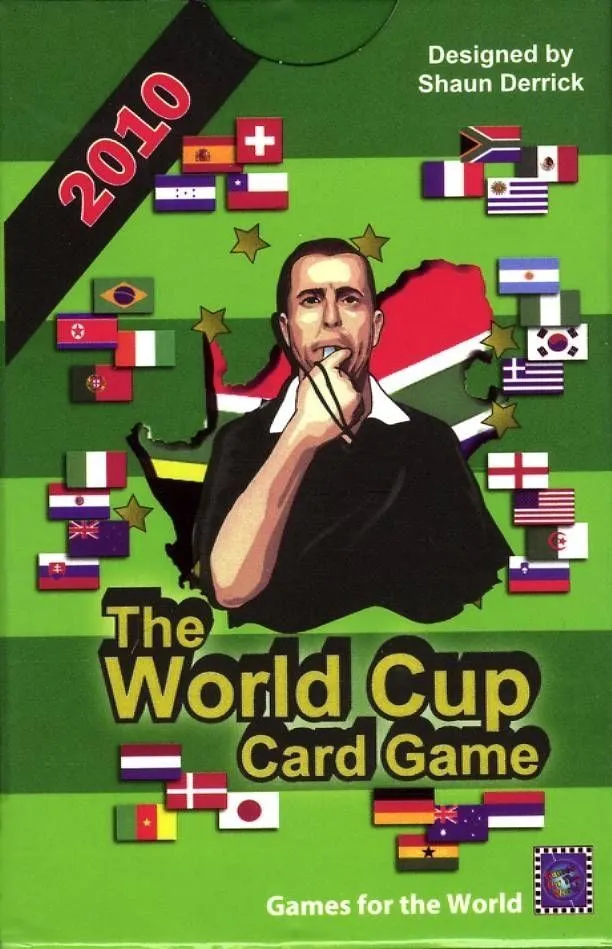
2010
Regelhilfe für The World Cup Card Game 2010
Verständliche Erklärungen zu Spielzügen, Karteneffekten und strittigen Situationen mit Verweisen auf offizielle Quellen und gespeichertem Fragenverlauf.
Für 2 Personen
Was möchtest du wissen?
Antworten stammen aus dem offiziellen Regelheft, mit Seitenangabe zum Nachprüfen.
The World Cup Card Game 2010 ist ein Brettspiel aus dem Jahr 2010 für 2–8 Personen, mit 75 Minuten pro Partie und ab 10 Jahren. Entwickelt wurde es von Shaun Derrick; die wichtigsten Mechaniken sind Hand Management.
Auf Englisch
The greatest single sports show on earth takes place in South Africa this year (2010). The World Cup Card Game allows players to play through the whole tournament in around 75mins. The game consists of 65 cards. 32 of these represent all the national teams taking part. Another 32 cards are Action cards which are used to create the scorelines for each match. The final card is a summary list of what the Action cards can be used for. All the teams are randomly divided between the players. These are kept face-down on the table in front of the player until required. Each group is played match by match. The players controlling the four teams in Group 1: South Africa, Mexico, Uruguay and France now reveal those Team cards. Each team card is coloured according to the national football team strip, it also shows the national flag and a note stating their best performance ever achieved in any World Cup tournament. There is also a grey rectangle with the number of cards that team receives in the group stage - this is always 7 or 8. There is also a 2 Goal and 3 Goal symbol, sometimes covered by a cross. Any crossed symbol means that this particular team cannot use that type of card to it's full potential e.g, Argentina have the 3 Goal symbol crossed but the 2 Goal symbol uncrossed, therefore Argentina can only play a 3 Goal card as a 2 Goal card. The number of cards and the status of the 3 and 2 goal symbols distinguishes the better teams from the lesser teams. Brazil, for example, have 8 cards and no crossed symbols which gives them the maximum options; New Zealand have 7 cards and both symbols are crossed which gives them the fewest options. Despite the small difference between the various teams, the better teams generally have a better chance. However, the differences are not as great as in The World Cup Board Game. Play continues with the first group games being played in the order on the tournament format in the rules. The first game is South Africa v. Mexico, so each player controlling those teams play from 1 to 4 cards out of that teams' hand. The number of cards should be kept secret until both players have chosen, then they are both revealed. Goals are scored for that team in that match, Defences, Fouls and Offsides can reduce goals whereas Penalties and multiple Attacks add goals. Any spare Attacks and penalties require a card draw from the unused deck to see if they can be turned into goals. Each match is resolved in the same way. All scores from all games are recorded - best to use the pre-formatted scoresheet on the www.gamesfortheworld.co.uk/Downloads web page. The KO stages are played differently, more akin to the Board game. The Round of 16 is split into 2 sessions with 3 cards dealt to each player involved, irrespective of the number of teams. Cards can be played on any active team until the deck is exhausted and all cards played. From the Quarter-Finals onwards all games are played in each round simultaneously. Draws are resolved by card draws to determine if goals have been scored. Easy to play and a great sequel to the Board game.
Laut Katalog unterstützt The World Cup Card Game 2010 2–8 Personen. Diese Spanne entspricht der vom Verlag angegebenen Spielerzahl, das Spiel lässt sich also für jede Gruppengröße innerhalb dieser Spanne aufbauen. Aufbau, einzelne Regeln und Wertungsdetails können je nach Personenzahl trotzdem abweichen; prüfe daher die genaue Konfiguration in der Anleitung deiner Ausgabe.
Die angegebene Spieldauer für The World Cup Card Game 2010 beträgt 75 Minuten. Das ist die Schätzung des Verlags für eine vollständige Partie. Die tatsächliche Dauer hängt von der Gruppe, der Personenzahl und der Regelkenntnis ab: Erste Partien dauern meist länger, erfahrene Gruppen sind oft schneller fertig. Aufbau und Regelerklärung sind in dieser Schätzung nicht enthalten.
Im Katalog wird The World Cup Card Game 2010 ab 10 Jahren empfohlen. Das ist die Empfehlung des Verlags und berücksichtigt Leseanforderungen, Regelkomplexität und Kleinteile, nicht nur das Thema. Jüngere Kinder können oft mit Hilfe eines Erwachsenen mitspielen; beachte die Altersangabe deiner Ausgabe und die Brettspielerfahrung deiner Gruppe.
The World Cup Card Game 2010 hat bei BoardGameGeek eine Komplexitätswertung von 1,6 von 5 und gilt damit als leichtes Spiel. Die Wertung zeigt, wie viel Regelwissen, Planung und Entscheidungen eine typische Partie verlangt. Schwerere Spiele brauchen bei der ersten Erklärung mehr Zeit, daher hilft vor dem Spieleabend eine Vorbereitungsanleitung.
The World Cup Card Game 2010 gehört zu diesen Kategorien: Card Game und Sports. Die wichtigsten Mechaniken sind Hand Management. Kategorien beschreiben Thema und Setting eines Spiels, Mechaniken dagegen, was die Spielenden in ihrem Zug tatsächlich tun. Jede Mechanik führt zu einer Katalogseite mit ähnlichen Spielen, falls du etwas Vergleichbares suchst.
Als Autoren von The World Cup Card Game 2010 sind angegeben: Shaun Derrick. Diese Angaben stammen aus den veröffentlichten Spieldaten und nennen die für das Spieldesign verantwortlichen Personen, nicht die Illustratoren oder Verlage. Die Autorenseiten auf MeepleRules sammeln weitere Titel derselben Autoren – praktisch, wenn dir ein Spiel gefällt und du ähnliche Spiele suchst.
Im Katalog ist The World Cup Card Game 2010 als Grundspiel aufgeführt. Es lässt sich eigenständig mit dem Material aus der Schachtel spielen und benötigt keinen weiteren Titel. Erweiterungen, sofern es welche gibt, ergänzen neues Material oder neue Regeln und sind im Katalog separat mit einem Verweis auf dieses Grundspiel aufgeführt.