
- BGG-Rang
- BGG #12.853
- BGG-Bewertung
- 7,7
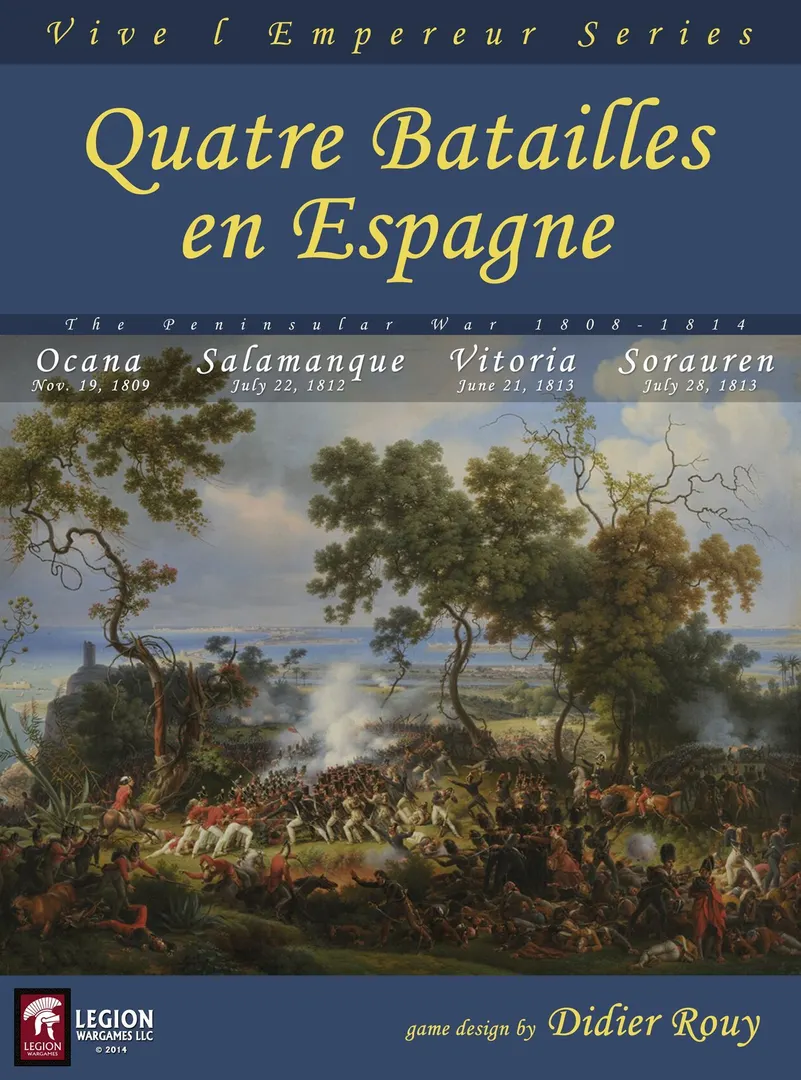
Quatre Batailles en Espagne
- 2–4 Spieler
- Komplexität 3,2/5
- 2015
2020
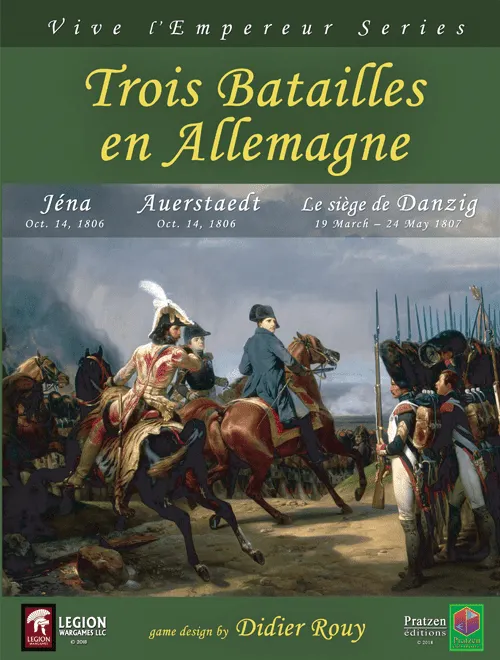
Regelhilfe für Trois Batailles en Allemagne
Verständliche Erklärungen zu Spielzügen, Karteneffekten und strittigen Situationen mit Verweisen auf offizielle Quellen und gespeichertem Fragenverlauf.
Für 2 Personen
Was möchtest du wissen?
Antworten stammen aus dem offiziellen Regelheft, mit Seitenangabe zum Nachprüfen.
Trois Batailles en Allemagne ist ein Brettspiel aus dem Jahr 2020 für 2 Personen und mit 120–480 Minuten pro Partie. Entwickelt wurde es von Didier Rouy; die wichtigsten Mechaniken sind Dice Rolling und Hexagon Grid.
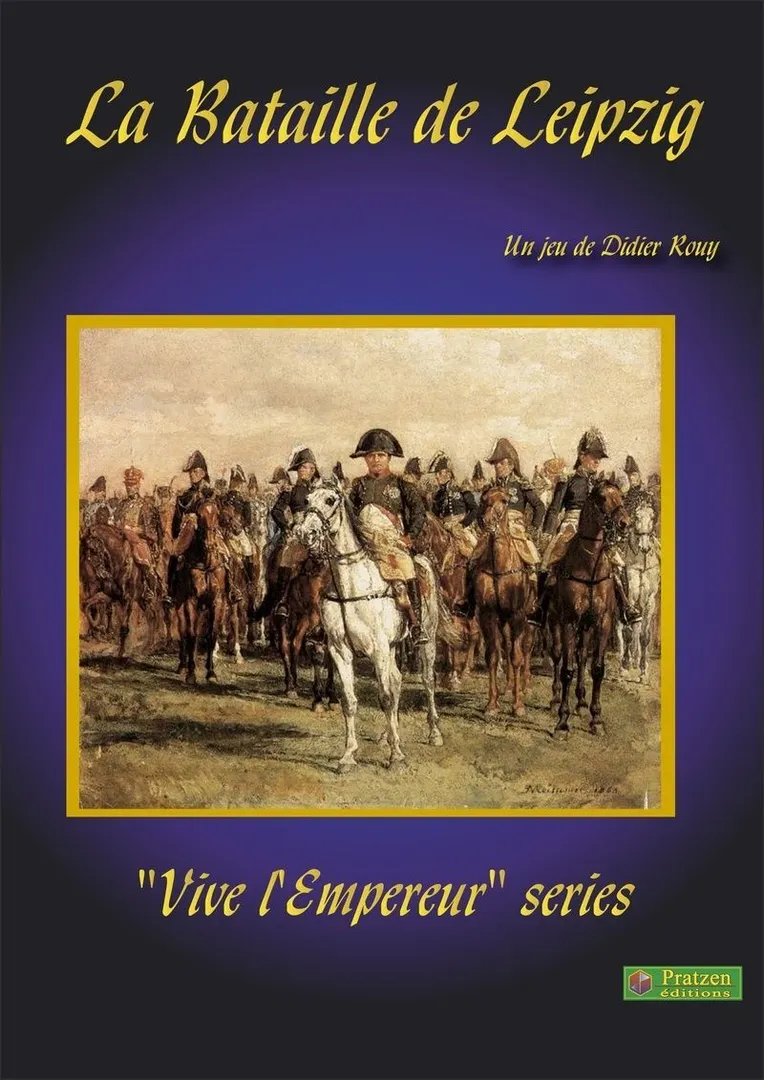
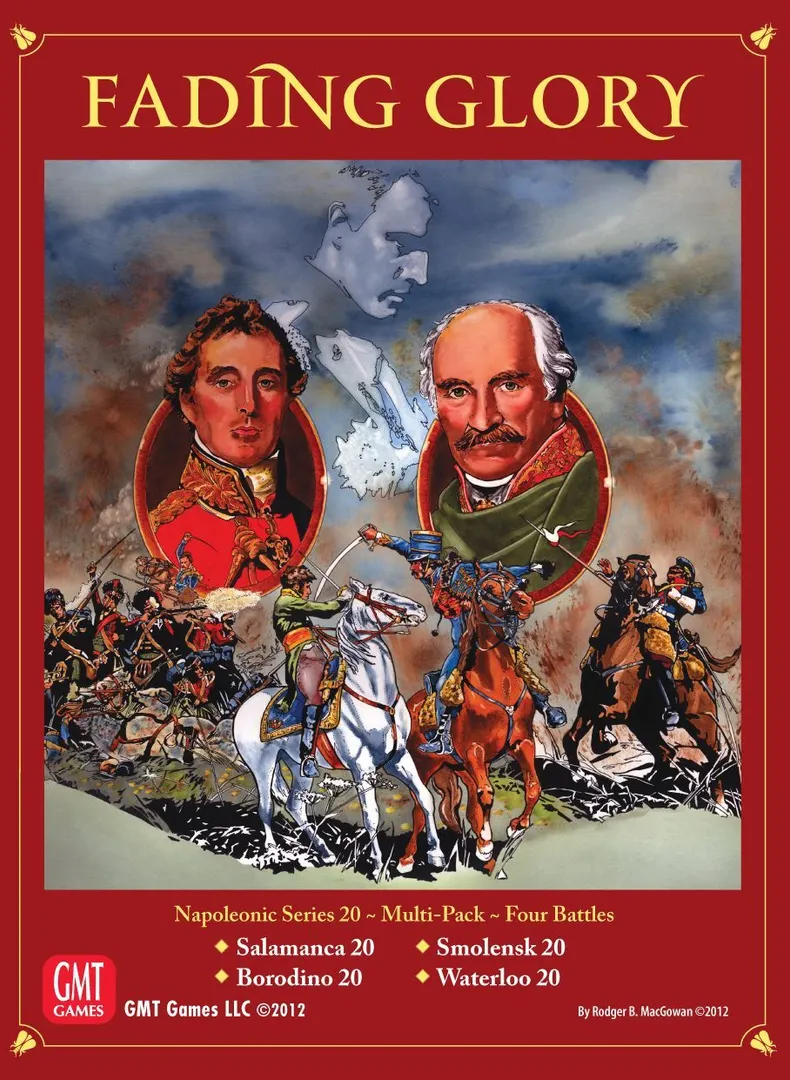
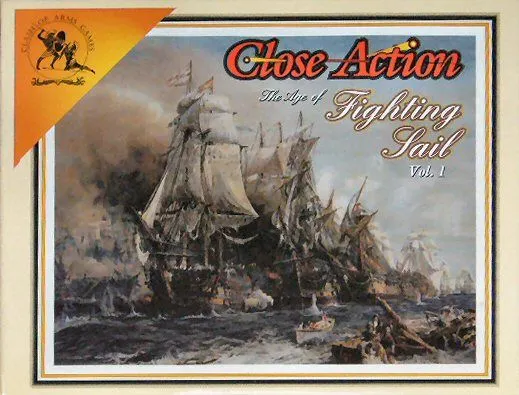
Auf Englisch
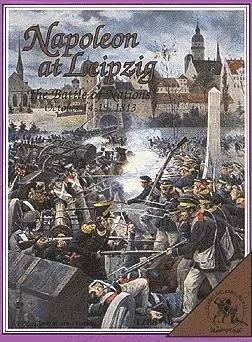
Vive l'Empereur Series - Vol. IX Vive l'Empereur Series is a simulation of the battles fought during the Napoleonic Era in Europe, between 1805 and 1815. The scale is the regiment, a good compromise between the brigade level (with no formations) and the detailed battalions. The scale is 250 m/hex and a turn is 30 minutes. Jéna, fought on 14 October 1806, is the turning point of the 1806 campaign against Prussia. Eventually a crushing French victory, starting in the fog by Lannes engaging a single Prussian division under Tauentzien, it escalated into a full battle against Hohenlohe and half of the Prussian army, at first not fully grasping what he was facing, engaging his army piece-meal. While starting outnumbered, the French are at the top of their military value and the masterful concentration of the army during the day makes Jéna the epitome of victories. Auerstaedt, was fought on the same day, opposing Davout and his Third corps to the main Prussian army under Brunswick and the King of Prussia. An unexpected battle, as more troops enter the battlefield on both sides, a masterpiece where Davout earned his title of Duke of Auerstaedt. At the end of that day, the two Prussian armies, both beaten in this double battle, join in a common rout, followed by a legendary pursuit lead by Murat to the destruction of the arrogant Prussian army in a few weeks. Both battles comes with many what-ifs and a total of 15 scenarios, using troops from both armies not historically engaged. Several scenarios give finally a real chance to the unlucky Prussians. Le siège de Danzig, simulates the siege of the great fortress of Danzig between March and May 1807, between the Eylau part of the campaign of Poland and its conclusion at Friedland. It is played on two maps, an operational map of the region of Danzig, using the regular Vive l’Empereur rules, and a siege map where the French player will build a siege network to get closer to the mighty walls to breach them. A lot happens on both maps, sorties, relief Russian forces under Kamenski, the Danzig morale that conditions victory goes up and down depending on the progress of the siege works and other events. The players will have to be patient, the siege can be won or lost on the last turn of play. —description from the publisher
Laut Katalog unterstützt Trois Batailles en Allemagne 2 Personen. Das ist die vom Verlag angegebene Spielerzahl, das Spiel ist also genau für diese Anzahl von Mitspielenden ausgelegt. Varianten für andere Gruppengrößen sind, sofern vorhanden, in der Anleitung deiner Ausgabe beschrieben; prüfe sie, bevor du eine andere Konfiguration aufbaust.
Die angegebene Spieldauer für Trois Batailles en Allemagne beträgt 120–480 Minuten. Das ist die Schätzung des Verlags für eine vollständige Partie. Die tatsächliche Dauer hängt von der Gruppe, der Personenzahl und der Regelkenntnis ab: Erste Partien dauern meist länger, erfahrene Gruppen sind oft schneller fertig. Aufbau und Regelerklärung sind in dieser Schätzung nicht enthalten.
Trois Batailles en Allemagne hat bei BoardGameGeek eine Komplexitätswertung von 3,0 von 5 und gilt damit als mittelschweres Spiel. Die Wertung zeigt, wie viel Regelwissen, Planung und Entscheidungen eine typische Partie verlangt. Schwerere Spiele brauchen bei der ersten Erklärung mehr Zeit, daher hilft vor dem Spieleabend eine Vorbereitungsanleitung.
Trois Batailles en Allemagne gehört zu diesen Kategorien: Wargame und Napoleonic. Die wichtigsten Mechaniken sind Dice Rolling und Hexagon Grid. Kategorien beschreiben Thema und Setting eines Spiels, Mechaniken dagegen, was die Spielenden in ihrem Zug tatsächlich tun. Jede Mechanik führt zu einer Katalogseite mit ähnlichen Spielen, falls du etwas Vergleichbares suchst.
Als Autoren von Trois Batailles en Allemagne sind angegeben: Didier Rouy. Diese Angaben stammen aus den veröffentlichten Spieldaten und nennen die für das Spieldesign verantwortlichen Personen, nicht die Illustratoren oder Verlage. Die Autorenseiten auf MeepleRules sammeln weitere Titel derselben Autoren – praktisch, wenn dir ein Spiel gefällt und du ähnliche Spiele suchst.
Im Katalog ist Trois Batailles en Allemagne als Grundspiel aufgeführt. Es lässt sich eigenständig mit dem Material aus der Schachtel spielen und benötigt keinen weiteren Titel. Erweiterungen, sofern es welche gibt, ergänzen neues Material oder neue Regeln und sind im Katalog separat mit einem Verweis auf dieses Grundspiel aufgeführt.