
- BGG-Rang
- BGG #4.448
- BGG-Bewertung
- 6,3
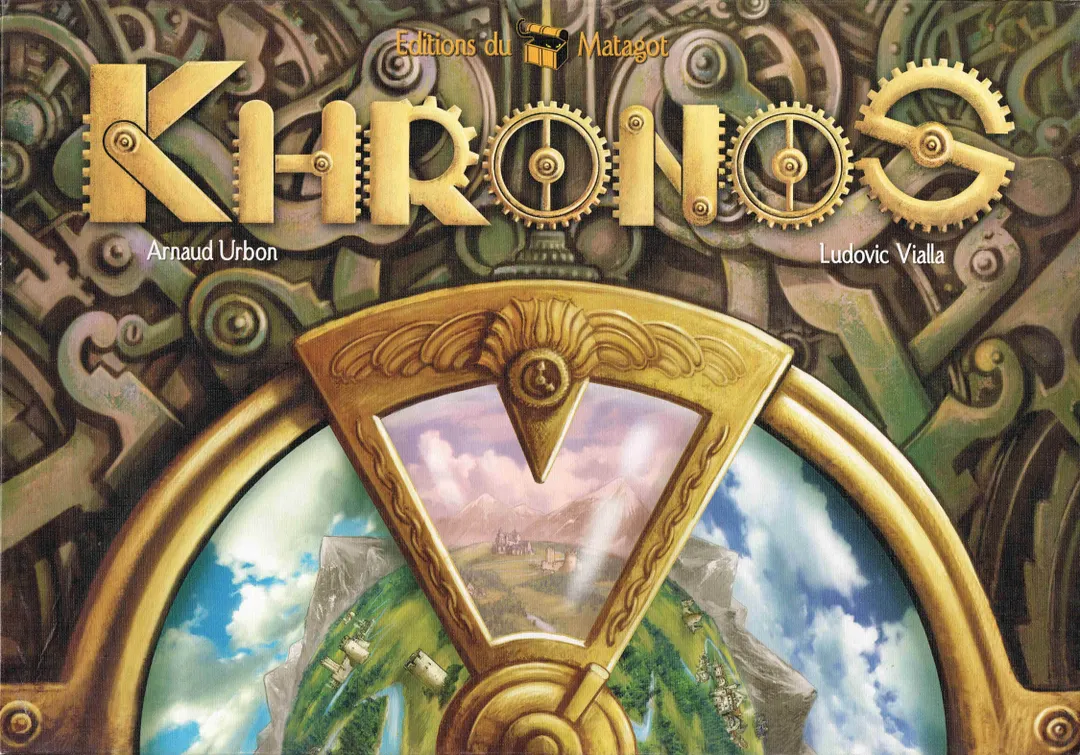
Khronos
- 2–5 Spieler
- 90 Min.
- Komplexität 3,6/5
- 2006
2007
Regelhilfe für Utopia
Verständliche Erklärungen zu Spielzügen, Karteneffekten und strittigen Situationen mit Verweisen auf offizielle Quellen und gespeichertem Fragenverlauf.
Für 2 Personen
Was möchtest du wissen?
Antworten stammen aus dem offiziellen Regelheft, mit Seitenangabe zum Nachprüfen.
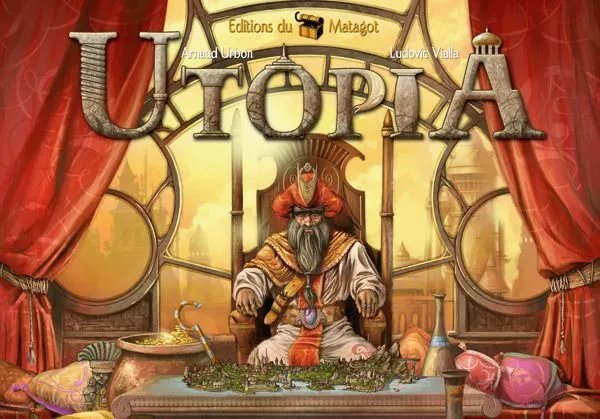
Utopia ist ein Brettspiel aus dem Jahr 2007 für 2–5 Personen, mit 60 Minuten pro Partie und ab 12 Jahren. Entwickelt wurde es von Ludovic Vialla und Arnaud Urbon; die wichtigsten Mechaniken sind Area Movement und Area Majority / Influence.


Auf Englisch
The king of Utopia has invited princes of the greatest civilizations of antiquity to come and live within the walls of his city, welcoming in doing so, the architectural wealth of their far-away cities. As the King’s Minister, your Sovereign has given you the mission to welcome and accompany these princes and princesses who will present themselves at the gates of the city. Every development added to the city made by your guests increases your prestige. Online play Jeux sur un Plateau (turn-based) Components: 40 Monument Figures: 8 for each of the 5 civilizations (Mayan, Persian, Egyptian, Greek and Chinese) 4 Wonder Figures 5 Minister Figures: 1 of each color (used for Score Track) 200 Prince Tokens: 40 of each color 40 Bases: 8 of each color 10 Privilege tokens: 2 of each color 40 Guest tokens: 2 per civilization for each of the four islands on the board 50 Action Cards: 10 for each civilization 5 Rule Summary Cards: 1 per player 1 Bag Basic Game play: Turn order (after the first player) is derived from who has the highest score on the perimtere score track yet has not had a turn. Each game turn is broken down into three phases: Phase 1: Welcoming the Princes Phase 2: Development of the City Phase 3: Calculation of Prestige Points Phase 1: Welcoming the Princes In the first phase, Guest tokens are placed on the board near ship icons but corresponding to the symbol on each token. These guest tokens are then replaced with Prince tokens that is their own color, or of the same civilization as the chosen Guest or in any District of the island indicated by the Guest or any combination of these. This is repeated three times until all Guest tokens have been removed from the board. While this is happening, players may Build a Wonder or Take Control of a District. At any point during their turn, if a player has one prince of each of the 5 civilizations on one island (regardless of which Districts they are in), he may immediately construct a Wonder and receives 6 Prestige Points. There may only be one Wonder per island and a player does not have to construct Wonders. At any point during their turn, if a player possesses 3 princes of the same civilization in the same District, and that District is not already controlled by another player, he may decide to take control of the District by placing a Monument on that District. There can only be one Monument per District, and this space, once acquired, cannot be retaken. For taking control of a District the player gains Prestige Points during Phase 3: Calculation of Prestige Points. Also, if the District belongs to an island where a Wonder has been constructed, the owner of the Wonder immediately scores the number of Prestige Points indicated on the District. Phase 2: Development of the City Each player receives 5 Action cards and discards based on their score in the score track. The person in the lead discards two cards, the last player doesn't discard any and all other players discard one. Four types of actions are possible and occur multiple times in a player's turn: 1) Move one or two princes: If a player decides to move two princes with a single action card, these two princes must be within the same District and make the same movement. LAND MOVEMENT: By discarding an action card, a player may move one or two princes of that civilization to an adjacent District (Districts are separated by alleys or bridges). SEA MOVEMENT: By discarding an action card, a player may move one or two princes of that civilization from one maritime District (showing a ship) to another maritime District. These two Districts must be in the same maritime sector or in two adjacent maritime sectors. (The division of the maritime sectors is indicated by the dotted lines originating from the 3 lighthouses of the city). 2) Add a prince: By discarding an Action Card, a player may place a prince in a District occupied by a Monument of that civilization. 3) Remove a Prince: If the player possesses a prince in a District occupied by a Monument of that civilization, regardless of the player who controls the District, that player may, with an Action Card of that civilization, remove the Prince from the board. For this action the player immediately gains 2 Prestige Points. Th e player’s Minister figure is moved up two places on the Score Track. or 4) Influence the King (altering the Prestige Scale): If the player possesses a prince in a District occupied by a Monument of that civilization, regardless of the player who controls the District, that player may, with an Action Card of that civilization, remove the Prince from the board. For this action the player immediately gains 2 Prestige Points. The player’s Minister figure is moved up two places on the Score Track. The value of each civilization, indicated on the Prestige Scale, determines the point value of the districts controlled by each player at the end of the turn. By discarding an Action Card, a player may increase the value of a civilization by 1. The Value figure of the civilization changes places with the figure directly above it. With two Action cards, a player may reduce the value of a civilization to 1. All the other figures are moved up accordingly. At the end of their turn a player can only have a maximum of 5 Action Cards. Phase 3: Calculation of Prestige Points Once all the players have carried out their actions, the points for the round are calculated. Each player, in turn order, gains points for each District that they control. The value of each civilization is indicated on the Prestige Scale. The players’ Minister figures are moved up the Score Track. If one or more players have reached at least 50 Prestige Points at the end of this phase, the game ends. The player with the most points wins.
Laut Katalog unterstützt Utopia 2–5 Personen. Diese Spanne entspricht der vom Verlag angegebenen Spielerzahl, das Spiel lässt sich also für jede Gruppengröße innerhalb dieser Spanne aufbauen. Aufbau, einzelne Regeln und Wertungsdetails können je nach Personenzahl trotzdem abweichen; prüfe daher die genaue Konfiguration in der Anleitung deiner Ausgabe.
Die angegebene Spieldauer für Utopia beträgt 60 Minuten. Das ist die Schätzung des Verlags für eine vollständige Partie. Die tatsächliche Dauer hängt von der Gruppe, der Personenzahl und der Regelkenntnis ab: Erste Partien dauern meist länger, erfahrene Gruppen sind oft schneller fertig. Aufbau und Regelerklärung sind in dieser Schätzung nicht enthalten.
Im Katalog wird Utopia ab 12 Jahren empfohlen. Das ist die Empfehlung des Verlags und berücksichtigt Leseanforderungen, Regelkomplexität und Kleinteile, nicht nur das Thema. Jüngere Kinder können oft mit Hilfe eines Erwachsenen mitspielen; beachte die Altersangabe deiner Ausgabe und die Brettspielerfahrung deiner Gruppe.
Utopia hat bei BoardGameGeek eine Komplexitätswertung von 2,7 von 5 und gilt damit als eher leichtes Spiel. Die Wertung zeigt, wie viel Regelwissen, Planung und Entscheidungen eine typische Partie verlangt. Schwerere Spiele brauchen bei der ersten Erklärung mehr Zeit, daher hilft vor dem Spieleabend eine Vorbereitungsanleitung.
Utopia gehört zu diesen Kategorien: City Building. Die wichtigsten Mechaniken sind Area Movement und Area Majority / Influence. Kategorien beschreiben Thema und Setting eines Spiels, Mechaniken dagegen, was die Spielenden in ihrem Zug tatsächlich tun. Jede Mechanik führt zu einer Katalogseite mit ähnlichen Spielen, falls du etwas Vergleichbares suchst.
Als Autoren von Utopia sind angegeben: Ludovic Vialla und Arnaud Urbon. Diese Angaben stammen aus den veröffentlichten Spieldaten und nennen die für das Spieldesign verantwortlichen Personen, nicht die Illustratoren oder Verlage. Die Autorenseiten auf MeepleRules sammeln weitere Titel derselben Autoren – praktisch, wenn dir ein Spiel gefällt und du ähnliche Spiele suchst.
Im Katalog ist Utopia als Grundspiel aufgeführt. Es lässt sich eigenständig mit dem Material aus der Schachtel spielen und benötigt keinen weiteren Titel. Erweiterungen, sofern es welche gibt, ergänzen neues Material oder neue Regeln und sind im Katalog separat mit einem Verweis auf dieses Grundspiel aufgeführt.