
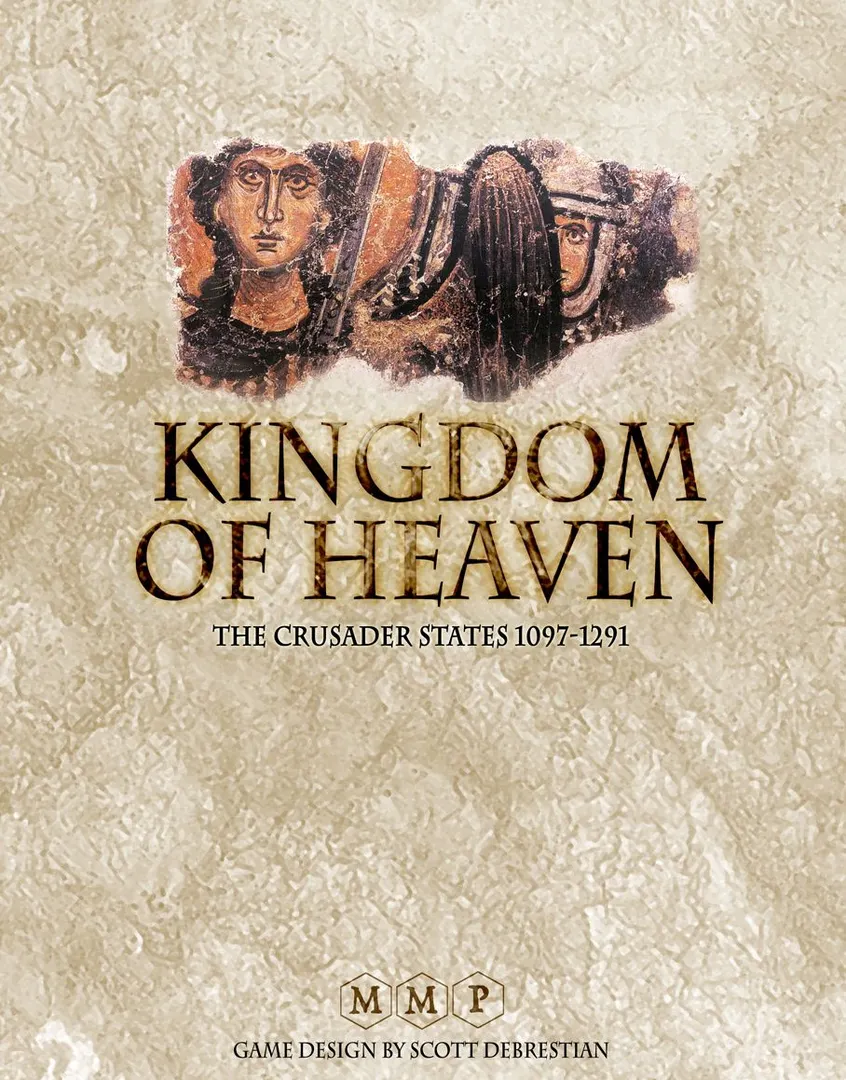
- BGG-Rang
- BGG #5.209
- BGG-Bewertung
- 7,6
Kingdom of Heaven: The Crusader States 1097-1291
- 2 Spieler
- 180 Min.
- Komplexität 3,3/5
- 2012
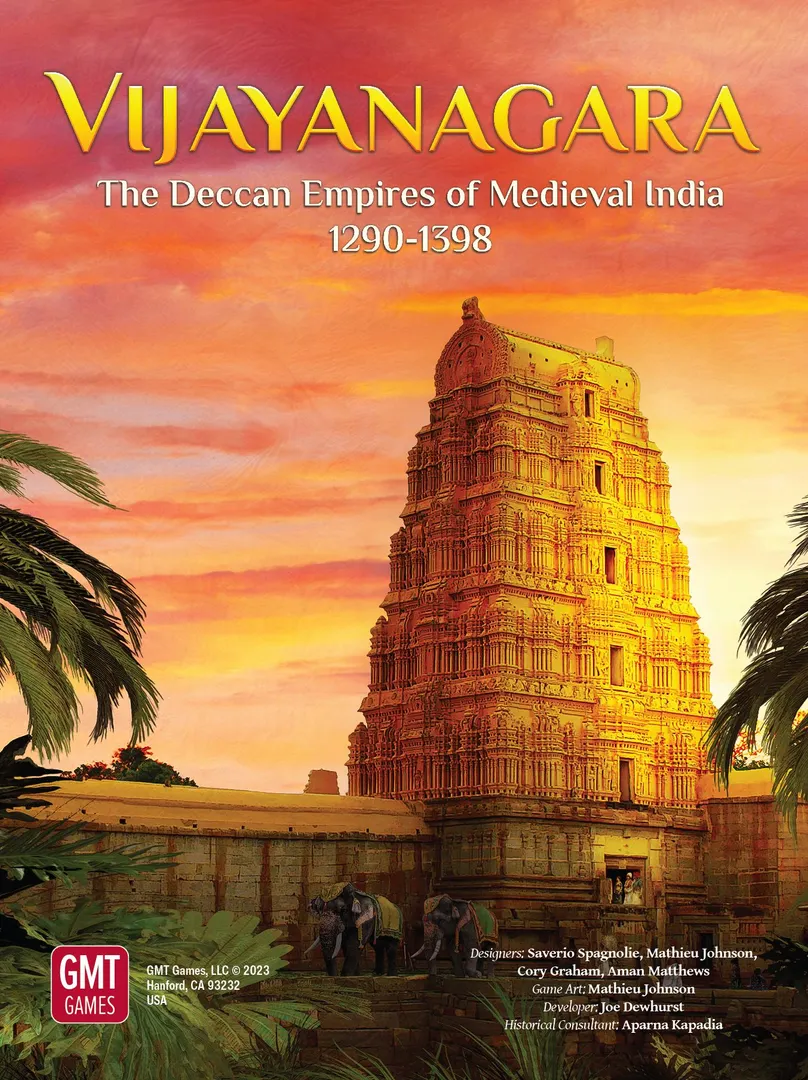
2024
Regelhilfe für Vijayanagara: The Deccan Empires of Medieval India, 1290-1398
Verständliche Erklärungen zu Spielzügen, Karteneffekten und strittigen Situationen mit Verweisen auf offizielle Quellen und gespeichertem Fragenverlauf.
Für 1 Person
Was möchtest du wissen?
Antworten stammen aus dem offiziellen Regelheft, mit Seitenangabe zum Nachprüfen.
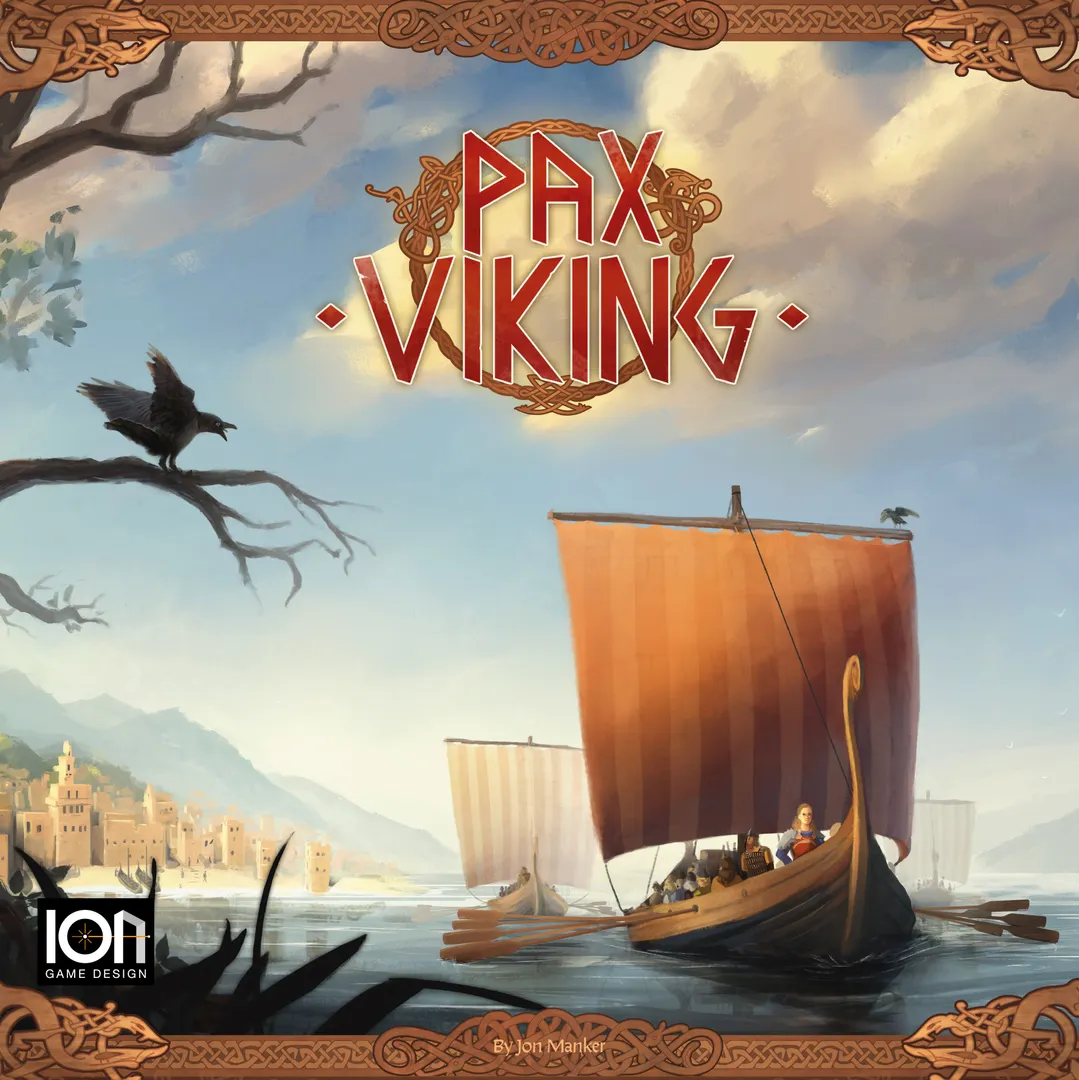
Vijayanagara: The Deccan Empires of Medieval India, 1290-1398 ist ein Brettspiel aus dem Jahr 2024 für 1–3 Personen, mit 60–120 Minuten pro Partie und ab 13 Jahren. Entwickelt wurde es von Saverio Spagnolie, Mathieu Johnson, Cory Graham und Aman Matthews; die wichtigsten Mechaniken sind Variable Player Powers, Area Majority / Influence und Simulation.



Auf Englisch
Vijayanagara: The Deccan Empires of Medieval India, 1290-1398 depicts the epic, century-long rise and fall of medieval kingdoms in India over two dynastic periods, for 1-3 players. Vijayanagara is the first game in the new Irregular Conflicts Series (ICS). With gameplay inspired by GMT’s COIN system, players will take on the asymmetric roles of the Delhi Sultanate, the Bahmani Kingdom, and the Vijayanagara Empire, navigating event cards and unique action menus as they contest to write themselves into medieval Indian history. Players will rally local amirs and rajas to their cause, construct epic temples, forts, and qasbahs, and battle for supremacy over the Deccan Plateau. Highlights 1. A sweeping, century-long narrative and numerous epic events. 2. Playtime ~90 minutes. 3. Three asymmetric Factions with different strengths and abilities. 4. A fourth non-player Faction (Mongols) operated by the Bahmani and Vijayanagara players. 5. A new battle-resolution system with strength-dependent risk mitigation. Vijayanagara is intended for players new to asymmetric wargames and veteran COIN players alike. The factions have distinct capabilities and each is faced with different strategic decisions, offering a very high degree of replayability. The game is streamlined: all player actions and most rules are visible on the table on player aids and cards. Gameplay and turn order is organized around a deck of unique event cards. With each new card, factions have the option to carry out the event or to select from faction-specific Commands and special Decrees; Commands such as the Conscription of new troops, Governing in Tributary Provinces, and Migration to begin life anew, and Decrees ranging from Demanding Tribute, Conspiring with Delhi’s Governors to betray the Sultan, and forming new Alliances with minor regional powers. -description from publisher's website
Laut Katalog unterstützt Vijayanagara: The Deccan Empires of Medieval India, 1290-1398 1–3 Personen. Diese Spanne entspricht der vom Verlag angegebenen Spielerzahl, das Spiel lässt sich also für jede Gruppengröße innerhalb dieser Spanne aufbauen. Aufbau, einzelne Regeln und Wertungsdetails können je nach Personenzahl trotzdem abweichen; prüfe daher die genaue Konfiguration in der Anleitung deiner Ausgabe.
Die angegebene Spieldauer für Vijayanagara: The Deccan Empires of Medieval India, 1290-1398 beträgt 60–120 Minuten. Das ist die Schätzung des Verlags für eine vollständige Partie. Die tatsächliche Dauer hängt von der Gruppe, der Personenzahl und der Regelkenntnis ab: Erste Partien dauern meist länger, erfahrene Gruppen sind oft schneller fertig. Aufbau und Regelerklärung sind in dieser Schätzung nicht enthalten.
Im Katalog wird Vijayanagara: The Deccan Empires of Medieval India, 1290-1398 ab 13 Jahren empfohlen. Das ist die Empfehlung des Verlags und berücksichtigt Leseanforderungen, Regelkomplexität und Kleinteile, nicht nur das Thema. Jüngere Kinder können oft mit Hilfe eines Erwachsenen mitspielen; beachte die Altersangabe deiner Ausgabe und die Brettspielerfahrung deiner Gruppe.
Vijayanagara: The Deccan Empires of Medieval India, 1290-1398 hat bei BoardGameGeek eine Komplexitätswertung von 3,1 von 5 und gilt damit als mittelschweres Spiel. Die Wertung zeigt, wie viel Regelwissen, Planung und Entscheidungen eine typische Partie verlangt. Schwerere Spiele brauchen bei der ersten Erklärung mehr Zeit, daher hilft vor dem Spieleabend eine Vorbereitungsanleitung.
Vijayanagara: The Deccan Empires of Medieval India, 1290-1398 gehört zu diesen Kategorien: Wargame und Medieval. Die wichtigsten Mechaniken sind Variable Player Powers, Area Majority / Influence und Simulation. Kategorien beschreiben Thema und Setting eines Spiels, Mechaniken dagegen, was die Spielenden in ihrem Zug tatsächlich tun. Jede Mechanik führt zu einer Katalogseite mit ähnlichen Spielen, falls du etwas Vergleichbares suchst.
Als Autoren von Vijayanagara: The Deccan Empires of Medieval India, 1290-1398 sind angegeben: Saverio Spagnolie, Mathieu Johnson, Cory Graham und Aman Matthews. Diese Angaben stammen aus den veröffentlichten Spieldaten und nennen die für das Spieldesign verantwortlichen Personen, nicht die Illustratoren oder Verlage. Die Autorenseiten auf MeepleRules sammeln weitere Titel derselben Autoren – praktisch, wenn dir ein Spiel gefällt und du ähnliche Spiele suchst.
Im Katalog ist Vijayanagara: The Deccan Empires of Medieval India, 1290-1398 als Grundspiel aufgeführt. Es lässt sich eigenständig mit dem Material aus der Schachtel spielen und benötigt keinen weiteren Titel. Erweiterungen, sofern es welche gibt, ergänzen neues Material oder neue Regeln und sind im Katalog separat mit einem Verweis auf dieses Grundspiel aufgeführt.