

- BGG-Rang
- BGG #7.445
- BGG-Bewertung
- 7,6
Neuroriders
- 2–4 Spieler
- 20–40 Min.
- Komplexität 2,8/5
- 2024
2024
Regelhilfe für Villa Panda
Verständliche Erklärungen zu Spielzügen, Karteneffekten und strittigen Situationen mit Verweisen auf offizielle Quellen und gespeichertem Fragenverlauf.
Für 2 Personen
Was möchtest du wissen?
Antworten stammen aus dem offiziellen Regelheft, mit Seitenangabe zum Nachprüfen.
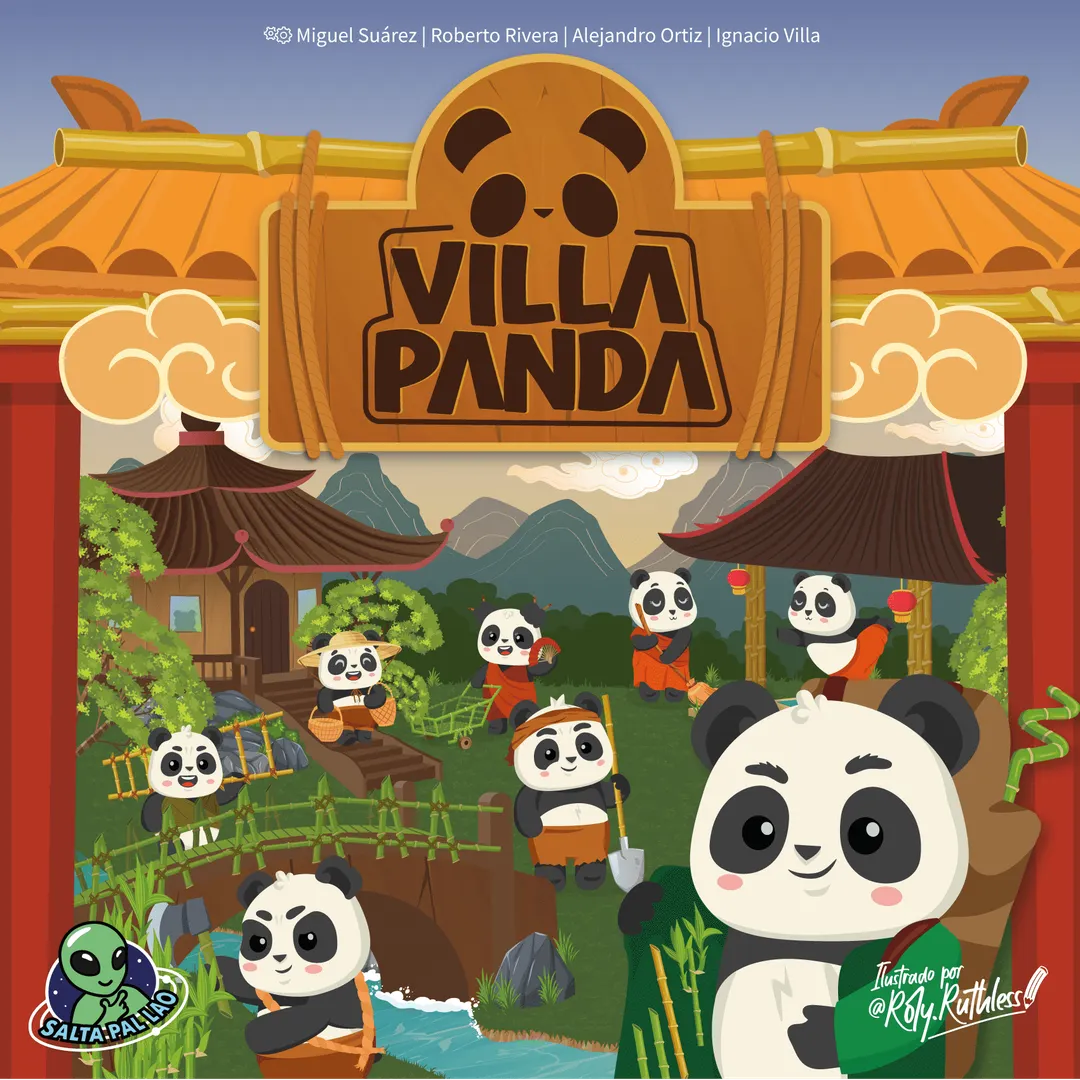
Villa Panda ist ein Brettspiel aus dem Jahr 2024 für 2–4 Personen, mit 45–90 Minuten pro Partie und ab 10 Jahren. Entwickelt wurde es von Miguel Suárez Olivares, Roberto D. Rivera, Alejandro Ortiz Peña und Ignacio Villa Toro; die wichtigsten Mechaniken sind Race, Dice Rolling und Open Drafting.


Auf Englisch
In the green and peaceful hills of Villa Panda, a new challenge awaits. Each player takes on the role of a hungry panda, aspiring to become the leader of this charming village. To achieve this honor and reach the necessary 12 victory points, you will need to build, plan, and expand your influence, hiring other pandas to strengthen your position. With a building erected, each new panda under your command, and each cunning strategy implemented, you will accumulate points that will bring you closer to the prestigious title of Panda Leader. The game takes place in successive rounds, and in each round, the active player will develop three phases: 1) Dice throwing: he will throw two dice in front of everyone. 2) Card activation: In order, the sum of both dice activates the Panda cards of ALL players. The active player then selects the result of a die and activates only his cards with that value. 3) Actions Phase: Place your meeple in an area of the main board to obtain specific resources (between water, bamboo, bao, or gold) or perform a specific action between; Market (exchange resources), Build (buildings, overlapping panda), Hire Panda and Activate Panda. The first player to get 12 points triggers the end of the game. The entire round of players will be played until reaching the player who triggered the end of the game again, who will play one last turn. The player with the most points is the winner of the game. —description from the publisher (English) En las verdes y tranquilas colinas de Villa Panda, te espera un nuevo desafío. Cada jugador asume el papel de un panda hambriento que aspira a convertirse en el líder de esta encantadora villa. Para lograr este honor y alcanzar los 12 puntos de victoria necesarios, necesitarás construir, planificar y expandir tu influencia, contratando a otros pandas para fortalecer tu posición. Con cada edificio erigido, cada nuevo panda bajo tu mando y cada astuta estrategia implementada, acumularás puntos que te acercarán al prestigioso título de Líder Panda. El juego se desarrolla en rondas sucesivas, y en cada ronda, el jugador activo desarrollará tres fases: 1) Lanzamiento de dados: lanzará dos dados a la vista de todos. 2) Activación de cartas: En orden, el resultado de la suma de ambos dados activa las cartas Panda de TODOS los jugadores. Luego, el jugador activo selecciona el resultado de un dado y activa solo sus cartas con ese valor. 3) Fase de Acciones: Coloca a tu meeple en un área del tablero principal para obtener recursos específicos (entre agua, bambú, bao u oro) o realizar una acción específica entre; Comercializar (intercambiar recursos), Construir (edificios, ubicando pandas solapados), Contratar Panda y Activar Panda. El primer jugador que consiga 12 puntos activará el final del juego. Se jugará una ultima ronda hasta llegar nuevamente al jugador que provocó el final del juego, quien jugará un último turno. El jugador con más puntos de victoria será el ganador. ¡Prepárate para una aventura llena de astucia, estrategia y competidores adorables en tu camino hacia la cima de Villa Panda ! —description from the publisher (Spanish)
Laut Katalog unterstützt Villa Panda 2–4 Personen. Diese Spanne entspricht der vom Verlag angegebenen Spielerzahl, das Spiel lässt sich also für jede Gruppengröße innerhalb dieser Spanne aufbauen. Aufbau, einzelne Regeln und Wertungsdetails können je nach Personenzahl trotzdem abweichen; prüfe daher die genaue Konfiguration in der Anleitung deiner Ausgabe.
Die angegebene Spieldauer für Villa Panda beträgt 45–90 Minuten. Das ist die Schätzung des Verlags für eine vollständige Partie. Die tatsächliche Dauer hängt von der Gruppe, der Personenzahl und der Regelkenntnis ab: Erste Partien dauern meist länger, erfahrene Gruppen sind oft schneller fertig. Aufbau und Regelerklärung sind in dieser Schätzung nicht enthalten.
Im Katalog wird Villa Panda ab 10 Jahren empfohlen. Das ist die Empfehlung des Verlags und berücksichtigt Leseanforderungen, Regelkomplexität und Kleinteile, nicht nur das Thema. Jüngere Kinder können oft mit Hilfe eines Erwachsenen mitspielen; beachte die Altersangabe deiner Ausgabe und die Brettspielerfahrung deiner Gruppe.
Villa Panda hat bei BoardGameGeek eine Komplexitätswertung von 2,6 von 5 und gilt damit als eher leichtes Spiel. Die Wertung zeigt, wie viel Regelwissen, Planung und Entscheidungen eine typische Partie verlangt. Schwerere Spiele brauchen bei der ersten Erklärung mehr Zeit, daher hilft vor dem Spieleabend eine Vorbereitungsanleitung.
Villa Panda gehört zu diesen Kategorien: Card Game, Animals und Dice. Die wichtigsten Mechaniken sind Race, Dice Rolling und Open Drafting. Kategorien beschreiben Thema und Setting eines Spiels, Mechaniken dagegen, was die Spielenden in ihrem Zug tatsächlich tun. Jede Mechanik führt zu einer Katalogseite mit ähnlichen Spielen, falls du etwas Vergleichbares suchst.
Als Autoren von Villa Panda sind angegeben: Miguel Suárez Olivares, Roberto D. Rivera, Alejandro Ortiz Peña und Ignacio Villa Toro. Diese Angaben stammen aus den veröffentlichten Spieldaten und nennen die für das Spieldesign verantwortlichen Personen, nicht die Illustratoren oder Verlage. Die Autorenseiten auf MeepleRules sammeln weitere Titel derselben Autoren – praktisch, wenn dir ein Spiel gefällt und du ähnliche Spiele suchst.
Im Katalog ist Villa Panda als Grundspiel aufgeführt. Es lässt sich eigenständig mit dem Material aus der Schachtel spielen und benötigt keinen weiteren Titel. Erweiterungen, sofern es welche gibt, ergänzen neues Material oder neue Regeln und sind im Katalog separat mit einem Verweis auf dieses Grundspiel aufgeführt.