
- BGG-Rang
- BGG #4.308
- BGG-Bewertung
- 6,3
Toledo
- 2–4 Spieler
- 45–60 Min.
- Komplexität 2,2/5
- 2008
2000
Regelhilfe für Way Out West
Verständliche Erklärungen zu Spielzügen, Karteneffekten und strittigen Situationen mit Verweisen auf offizielle Quellen und gespeichertem Fragenverlauf.
Für 3 Personen
Was möchtest du wissen?
Antworten stammen aus dem offiziellen Regelheft, mit Seitenangabe zum Nachprüfen.
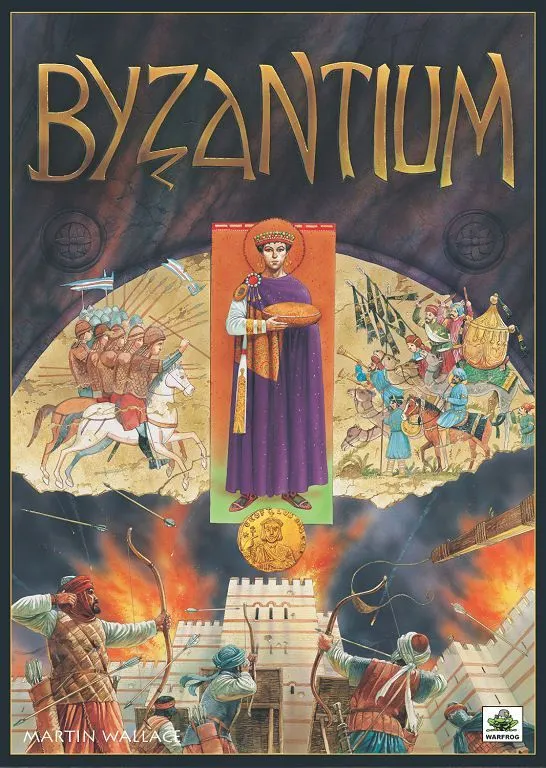
Way Out West ist ein Brettspiel aus dem Jahr 2000 für 3–5 Personen, mit 90–120 Minuten pro Partie und ab 12 Jahren. Entwickelt wurde es von Martin Wallace; die wichtigsten Mechaniken sind Tile Placement und Worker Placement.






Auf Englisch
In this western themed game, players are looking to drive cattle across the west, establishing towns. If you don't like the way something is going, you can fight other players for control with your cowboys. You can rob the bank, rustle cattle, and shoot those pesky farmers! Gameplay: To Start each player receives a set of colored player counters, matching turn order token, and two black action tokens and either $20 or $25 depending on number of players. The dice are rolled to determine the start player. Each player in turn order will place one of their cowboy counters in a town box of any of the 5 towns on the map until each player has placed 3 cowboys. Each turn the players will bid for turn order, take actions and move the turn marker one space. To bid for turn order each player places an amount of money under their turn order token in current player order. Players may either raise or drop out. If a player drops out all money bid so far is paid to the bank and their turn order token is placed in the furthest available spot from start player space on the turn order track. This continues until one player remains and becomes the start player for the round. During the action phase each player will take 1 action in turn order. After everyone has taken a turn they repeat the procedure. The actions available are limited in number so turn order is important in doing what a player wishes to do. Actions available are: Buy Cattle in a town containing their cowboy(s), Purchase more Cowboys, Move Cowboys to different towns, Move Cattle from one town to another, Purchase Buildings or Transport counters in a town, Take a Farmer(reduces income and victory points from Cattle in the town they are placed), or Gunfight. There are six different building and transport counters: StageCoach (these earn $1 per cowboy when cowboys are placed in or moved from the town containing the player's StageCoach), Train (this doubles the income gained from all players Cattle in the same town and doubles victory points gained from Cattle at game end), Bank (earns its owner $2 for each building or transport counter in the same town), Store (earns the owner $1 for each Cattle counter belonging to other players in the town and $2 per Farmer counter in town), Hotel (earns $1 for each cowboy belonging to other players in same town), Jail (the sheriff in the Jail acts as an extra cowboy controlled by owner that can be added to Gunfights). Cattle and Farmers also earn money for players during an income round. Each Cattle counter earns its owner $2 UNLESS the town also contains a Farmer (it only earns $1 if this is the case). Oh, the Farmer and Cowmen can't be friends. Gunfights can be started to take over another players Building or Tranport counter, rustle Cattle, rob a Bank or remove a Farmer or Jail. The player choosing the Gunfight selects the target of the attack. All Cowboys belonging to each player in the town will be involved. The remaining player's Cowboys in the town are not involved. However; the owner of the Jail can choose to help themselves, if they are attacking, or they can add the Sheriff to the defender if wished. Farmers that are attacked defend as a single cowboy. Banks and Trains both have an intrinsic 1 Cowboy defense in addition to those in town of owner's color. The player with the fewest Cowboys fires first and immediately removes casualties. Each 5 or 6 rolled kills a Cowboy. If the number of Cowboys is tied then firing is simultaneous. A player may retreat instead of firing by moving each cowboy involved to a different town (only 1 per town) and loses the engagement. If the attacker wins they take control of the target of the attack and may replace the counter (up to 2 counters if rustling Cattle) with one of their color (except for Banks, Farmers and Jails). A Jail or Farmer is removed from play and a Bank is robbed. The successful robber rolls 3 die 6 and takes that amount of money from the owner of the Bank (the Bank remains under owner's control). If the owner of the Bank cannot pay the full amount (then pays all they have to the robber and the Bank is removed). Each time a player wins a Gunfight they take a Wanted Counter. If none remain they take it from another player their of choice. Victory: After taking turns 3,6,9 and 12 income is paid to players as delineated above. The game ends after round 12. Victory points are awarded for each Building or Transport counter (1 point per size of town). So a building in a Town with 4 Building or Transport Counters including itself is worth 4 points to the owning player. Each Cattle Counter is worth one victory point for the owner. If a train is in the town each Cattle Counter is worth 2 points. If a Farmer is in the town Cattle are worth 1 victory point less. To illustrate, if a Farmer is in same town Cattle counters are worthless unless a Train is also present in the town. In this case, they would be worth 1 point each. The player with the most Building/Transport counters and Cattle in a town is considered to control the town and scores bonus points equal to the size of the town (Cattle do not affect town size but do affect control). The Player with most money gains 5 victory points (2 each in case of a tie). The Player with the most Wanted counters scores 4 victory points. The player with most Points wins.
Laut Katalog unterstützt Way Out West 3–5 Personen. Diese Spanne entspricht der vom Verlag angegebenen Spielerzahl, das Spiel lässt sich also für jede Gruppengröße innerhalb dieser Spanne aufbauen. Aufbau, einzelne Regeln und Wertungsdetails können je nach Personenzahl trotzdem abweichen; prüfe daher die genaue Konfiguration in der Anleitung deiner Ausgabe.
Die angegebene Spieldauer für Way Out West beträgt 90–120 Minuten. Das ist die Schätzung des Verlags für eine vollständige Partie. Die tatsächliche Dauer hängt von der Gruppe, der Personenzahl und der Regelkenntnis ab: Erste Partien dauern meist länger, erfahrene Gruppen sind oft schneller fertig. Aufbau und Regelerklärung sind in dieser Schätzung nicht enthalten.
Im Katalog wird Way Out West ab 12 Jahren empfohlen. Das ist die Empfehlung des Verlags und berücksichtigt Leseanforderungen, Regelkomplexität und Kleinteile, nicht nur das Thema. Jüngere Kinder können oft mit Hilfe eines Erwachsenen mitspielen; beachte die Altersangabe deiner Ausgabe und die Brettspielerfahrung deiner Gruppe.
Way Out West hat bei BoardGameGeek eine Komplexitätswertung von 2,6 von 5 und gilt damit als eher leichtes Spiel. Die Wertung zeigt, wie viel Regelwissen, Planung und Entscheidungen eine typische Partie verlangt. Schwerere Spiele brauchen bei der ersten Erklärung mehr Zeit, daher hilft vor dem Spieleabend eine Vorbereitungsanleitung.
Way Out West gehört zu diesen Kategorien: American West. Die wichtigsten Mechaniken sind Tile Placement und Worker Placement. Kategorien beschreiben Thema und Setting eines Spiels, Mechaniken dagegen, was die Spielenden in ihrem Zug tatsächlich tun. Jede Mechanik führt zu einer Katalogseite mit ähnlichen Spielen, falls du etwas Vergleichbares suchst.
Als Autoren von Way Out West sind angegeben: Martin Wallace. Diese Angaben stammen aus den veröffentlichten Spieldaten und nennen die für das Spieldesign verantwortlichen Personen, nicht die Illustratoren oder Verlage. Die Autorenseiten auf MeepleRules sammeln weitere Titel derselben Autoren – praktisch, wenn dir ein Spiel gefällt und du ähnliche Spiele suchst.
Im Katalog ist Way Out West als Grundspiel aufgeführt. Es lässt sich eigenständig mit dem Material aus der Schachtel spielen und benötigt keinen weiteren Titel. Erweiterungen, sofern es welche gibt, ergänzen neues Material oder neue Regeln und sind im Katalog separat mit einem Verweis auf dieses Grundspiel aufgeführt.